In short
In a snake word search nothing runs straight and nothing is filler: the words crawl through touching squares and, between them, use up the whole grid. That one rule changes how the puzzle is built, how it is solved and what a good book of it looks like. This guide covers the trail the grid is cut from, a solving method you can print in the introduction, the twelve presets, word lists that actually fill a grid, and how to position the book on Amazon KDP.
On this page
A Word Search With No Spare Letters
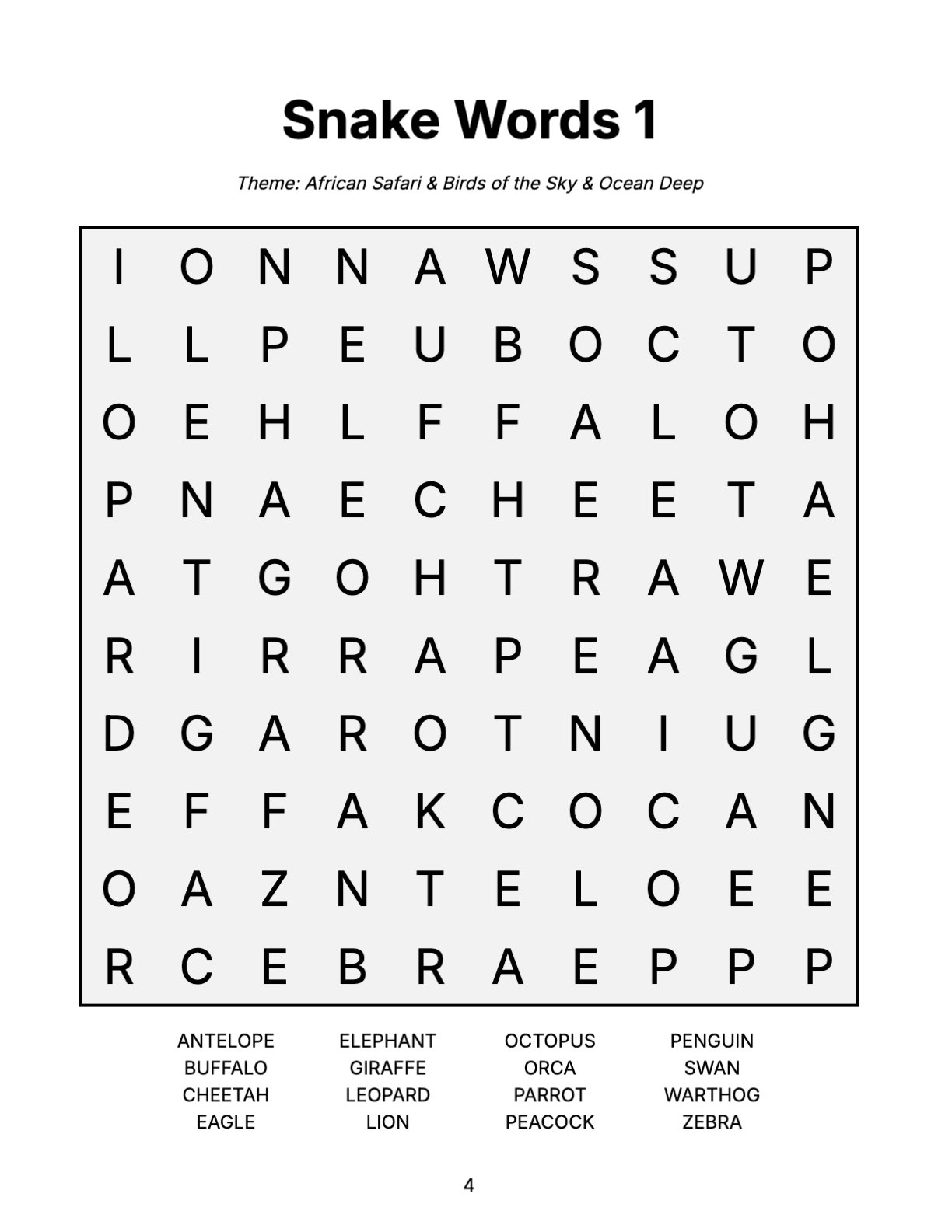
A classic word search hides straight words and pads the rest of the grid with random letters. A snake word search keeps the word list and the grid but drops both habits. Every word moves one square at a time, up, down, left or right, never diagonally, and it may turn at any letter. No square belongs to two words, and no square belongs to none: once the last word is marked, every letter on the page has been used.
Solvers feel the difference at once. Scanning rows is useless, because a word rarely stays in one; instead the solver finds a first letter and follows its neighbors. Each word found also takes squares away from the words still missing, so the puzzle gets easier as it goes, much like a jigsaw. It is also known as a bending or twisting word search.
One Trail Through Every Square
Wisdom Effect builds each grid from a single trail that visits every square once, then cuts the trail into words. The Bends setting decides how much the trail is reshaped before the cut: with Few it runs in long rows with an occasional corner, with Some it wanders now and then, with Many it twists at almost every letter. The words are then written onto their pieces of the trail, some of them backwards.
Because the letters must add up to the grid, the grid size sets the word count. A 10×10 puzzle needs words with 100 letters between them; a 14×14 puzzle needs 196. The word list stops at 30 words to stay readable, so on 14×14 the longest word must have at least 7 letters (196 ÷ 30 rounds up to 7), which is why the Expert preset allows words of up to 12.
Bending words can be read along more than one path, for example when two equal letters sit side by side. Before a grid is printed, the generator counts every way each word can be traced; where a word has a second way, it swaps, turns or replaces words on the trail until every word traces exactly once. Words that read the same backwards (LEVEL) and words hidden inside another (ANT in PLANT, either way round) are never put in one puzzle.
How to Solve One, Corner by Corner
Begin in the corners. A corner square touches only two others, so the word that uses it is easy to pin down. Say the top left corner holds K and the list contains DUCK. K must be the last letter, so the snake arrives from the square to its right or the one below it: look there for a C, then for a U beside the C, and the word is done in four steps.
Rare letters work the same way. A Q, X or Z belongs to very few words in the list, and its two to four neighbors often leave only one way on. Edges come next, since an edge square has only three neighbors.
Two more facts help, and both follow from the trail. First, the ends of the snakes meet: next to either end of a word you have marked, a touching square almost always holds the first or last letter of another word. Second, in puzzles with few bends each word is written from its upper end, or its left end when both ends share a row, so it can be read downwards and to the right like a newspaper puzzle. And the last word is free: whatever squares remain spell it.
Solving order
- Start in the corners, where a square has only two neighbors.
- Then rare letters, then edge squares.
- Look beside the ends of found words for the next word.
- With few bends, every word starts at its upper or left end.
Twelve Presets Across Three Editions
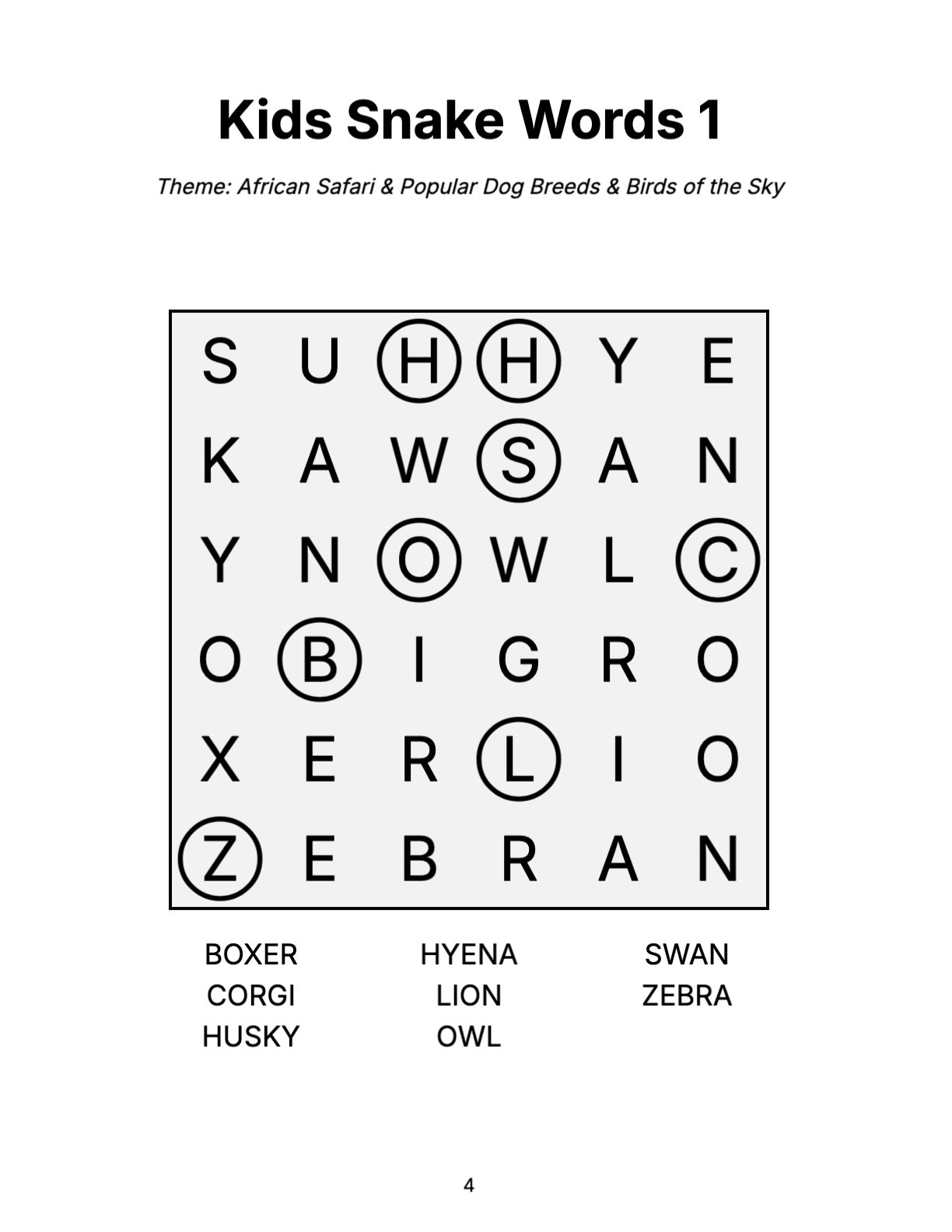
Each edition has four one-click levels that set the grid, the word lengths, the bends and whether a small circle marks the first letter of every word. The circles change the task more than any other setting: the solver no longer searches, only follows.
| Edition and level | Grid | Word lengths | Bends | First letters circled |
|---|---|---|---|---|
| Standard Easy | 8×8 | 3–6 | Few | Yes |
| Standard Medium | 10×10 | 4–8 | Some | No |
| Standard Hard | 12×12 | 4–10 | Many | No |
| Standard Expert | 14×14 | 5–12 | Many | No |
| Kids Tiny / Small | 5×5 / 6×6 | 3–4 / 3–5 | Few | Yes |
| Kids Big / Giant | 7×7 / 8×8 | 3–6 | Some | Yes |
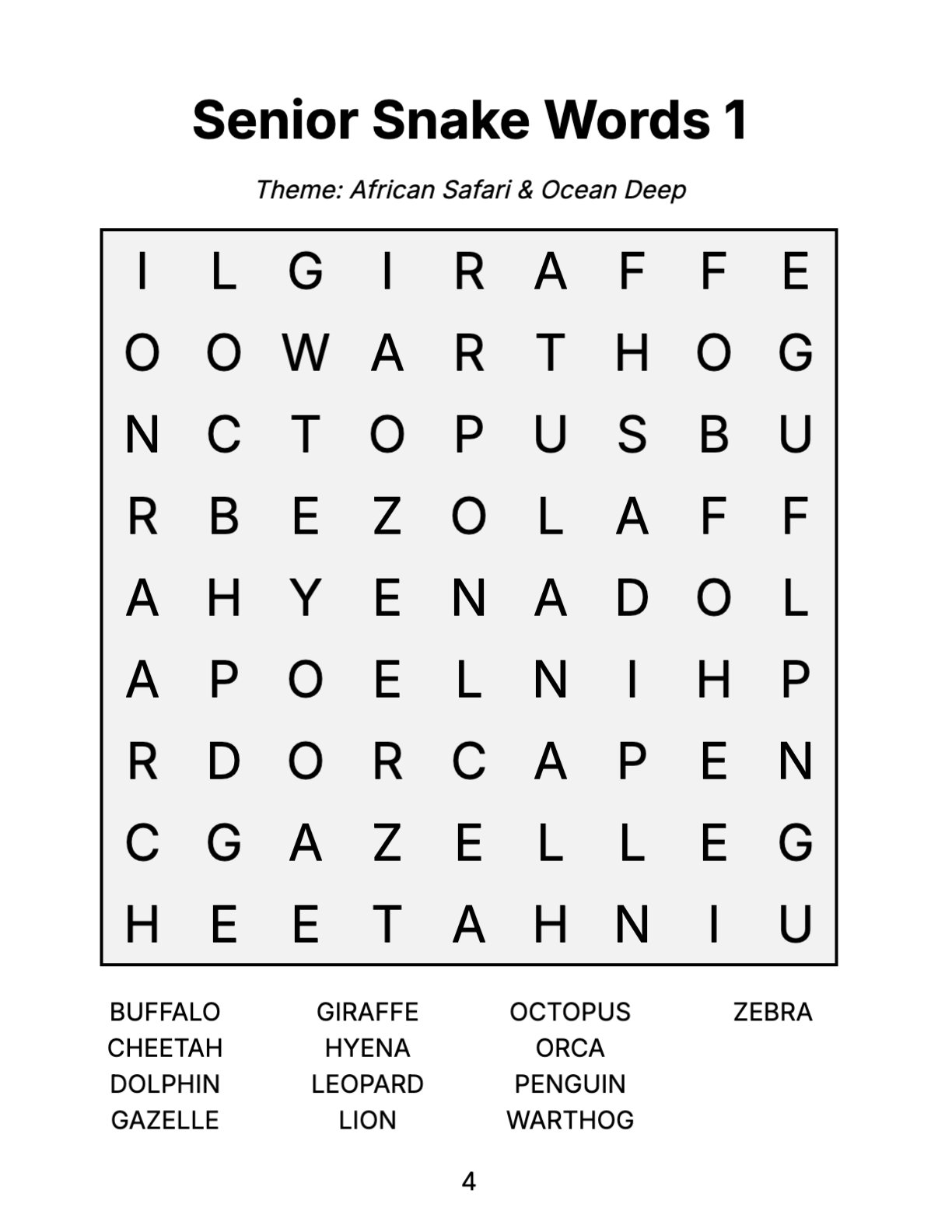
| Senior Relaxed / Classic | 7×7 / 9×9 | 3–6 / 4–7 | Few | Relaxed only |
| Senior Challenging / Master | 10×10 / 12×12 | 4–8 / 4–10 | Some | No |
Word Lists That Fill the Grid
The 900+ curated themes need no planning: when a big grid needs more letters than one list has, the theme lends words from its next lists. Your own lists need a little planning. Each row of the list is one puzzle and its title prints as the theme; a 10×10 puzzle wants roughly 100 letters, so a row of eight short words will not fill it alone. Following rows lend words to a short one, and only when the whole list runs out do squares stay empty and print shaded.
Mix lengths on purpose. A list of only 3-letter words fills a grid with many tiny snakes that read as noise; a list of only long words cannot close the last gap. Three to four lengths per puzzle give the generator room. The word check under the settings shows which words it had to drop and how many of the first puzzles would leave squares empty, so you can fix the list before you export.
Words print in the book language. The themes are translated into German, French, Spanish, Italian, Dutch, Portuguese, Polish and Swedish, and letters such as Ä, Ñ or Ł stay in the grid, while other accents are dropped. Phrases of up to two words are fine; digits are not.
Who Buys Snake Word Searches and How to Title Them
Three groups stand out. Parents and teachers want reading practice that is not a worksheet, and a small grid where every square is part of a word suits early readers well. Adults who find classic word searches too quick like the Hard and Expert grids, where words twist at almost every letter. Older solvers want calm pages in large print, so the Senior edition keeps bends low and puts one puzzle on each page.
Say the twist in the title or subtitle, since buyers do not know the name yet: "Snake Word Search for Kids: 60 Bending Word Puzzles with Circled First Letters" or "Large Print Twisting Word Search: Calm Puzzles Where Every Letter Counts". A season works as well, because holiday editions bring seasonal word lists. For trims, 8.5×11 or the 8.5×8.5 square suit children and seniors; a 6×9 adult book is easier to read at one puzzle per page.
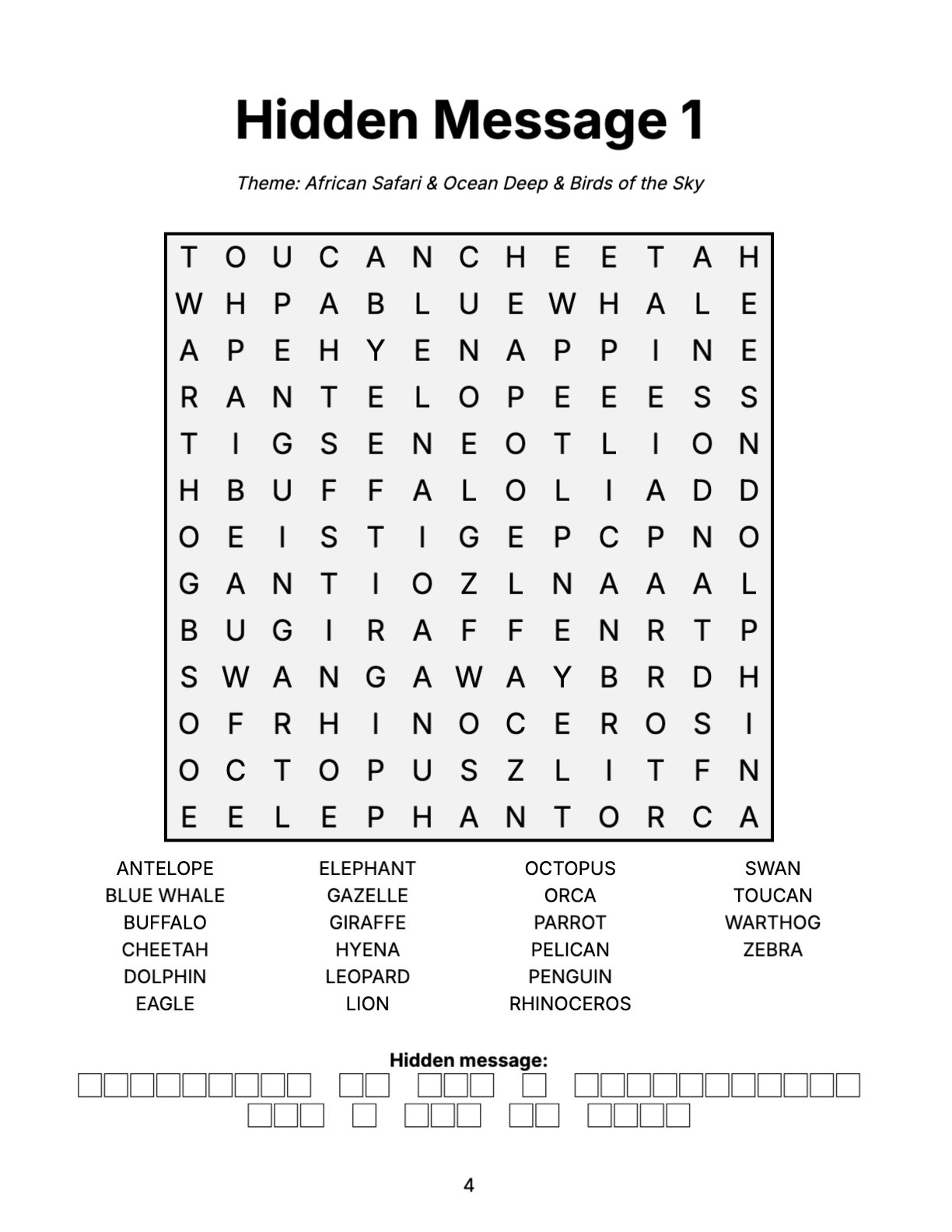
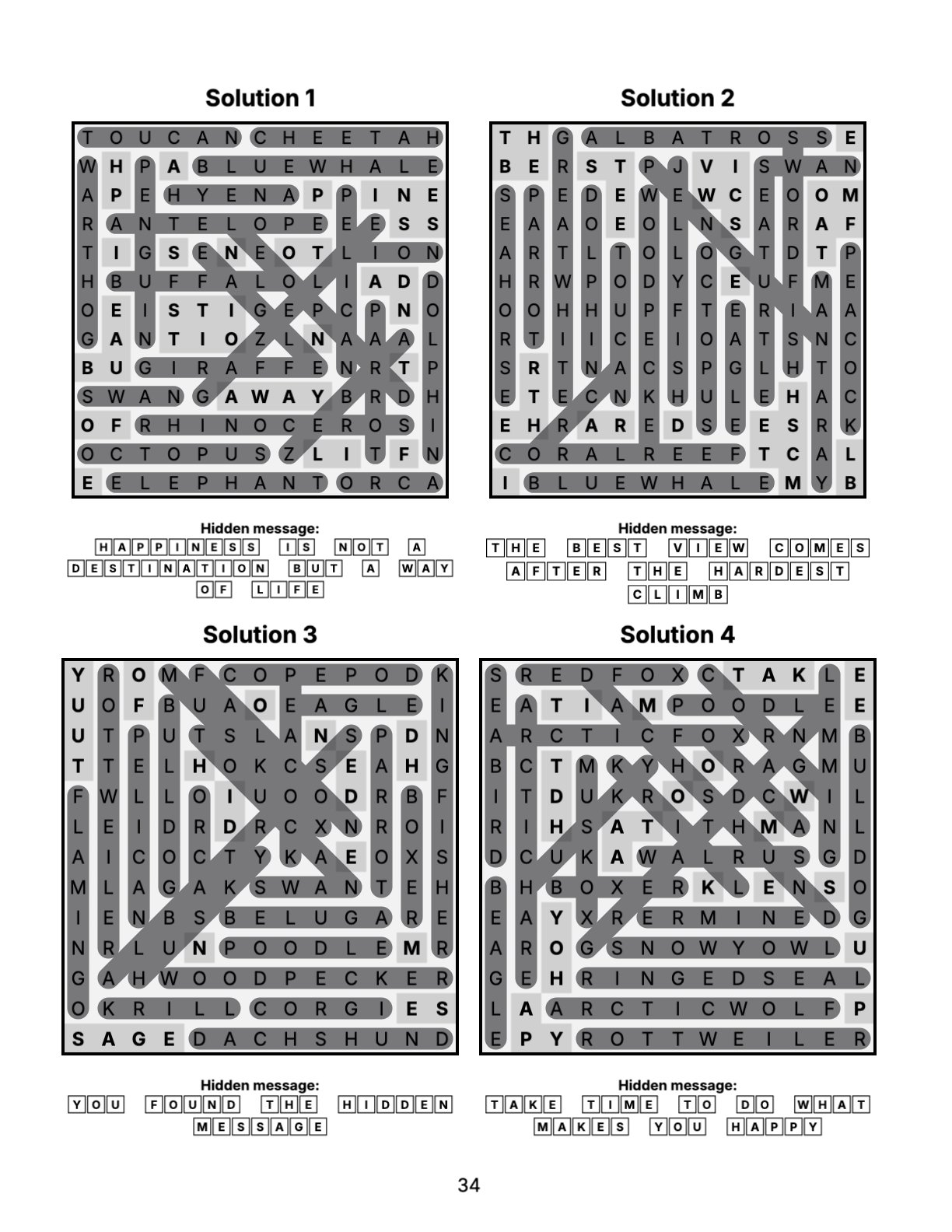
Snake grids also make a strong chapter. A mixed activity book can pair them with the hidden message word search, the other word search without random filler, or with the winding word search, whose words bend diagonally too.
Making the Book in Wisdom Effect
On /create pick Standard, Kids or Senior, then the Snake Word Search card, or add the type as one chapter of a Mixed Book. Choose a level, a theme or your own list, and adjust the grid, word lengths, bends and circles if you like. The Book Code under the settings fixes the puzzles: keep it to print the same book again, change it for a new one.
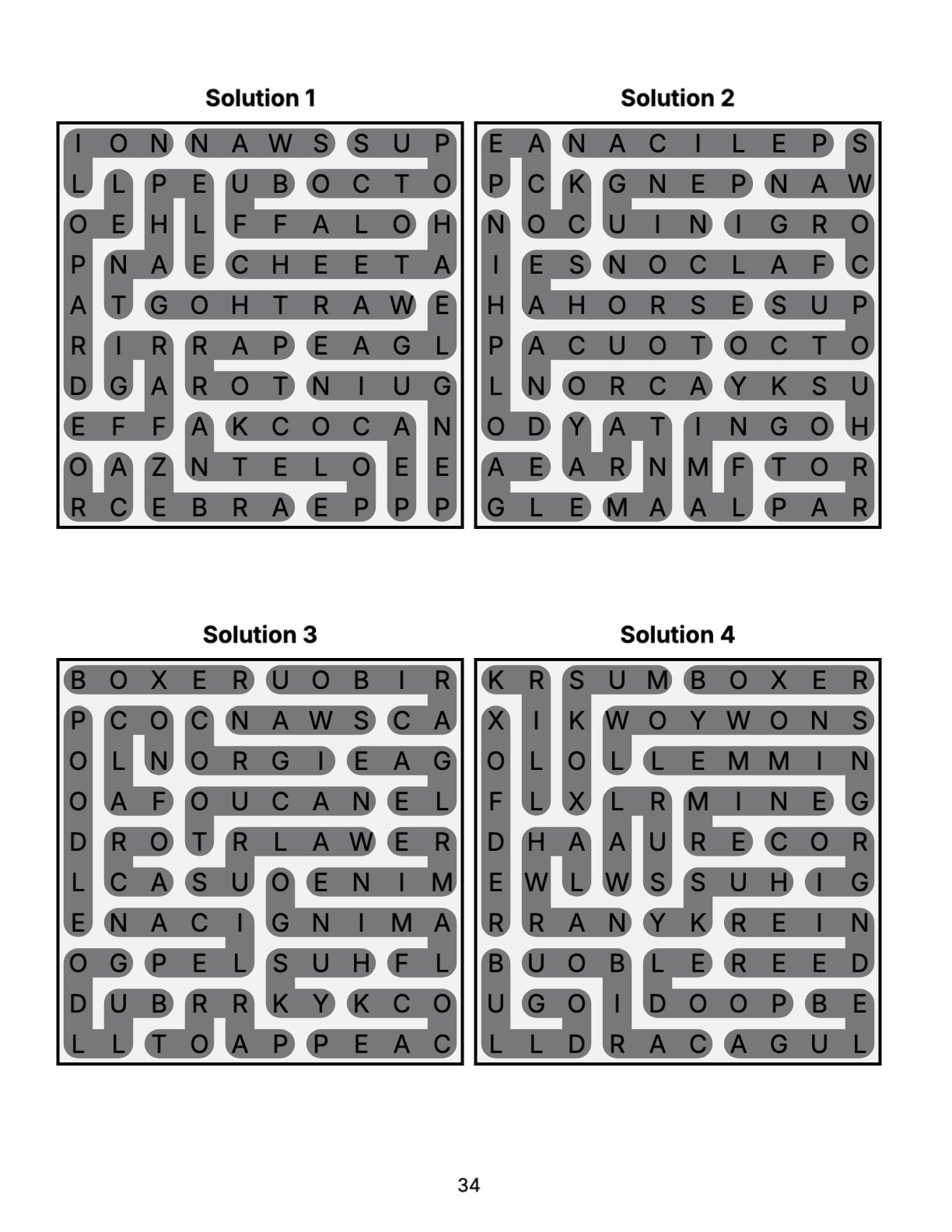
Standard books print one or two puzzles per page and up to nine solutions per answer page; Kids and Senior books one puzzle and up to four solutions, larger. Each puzzle costs 1 credit, whatever the grid size, so a 50-puzzle book costs 50; Starter, Pro, Publisher and the free trial all include the type. In the editor you choose the cell style and the color of the snakes on the answer key, then export. The editor guide walks through trim, page count, cover and export step by step.
Tools for This Guide
Snake Word Search Book Generator
Snake word search books where words bend and fill every square, in 9 languages, with Kids and Large Print editions.
OpenFree Snake Word Search Generator
Print one snake word search for free, from a ready theme or your own spelling list, answers included.
OpenKids Puzzle Book Generator
Children’s activity books that combine snake grids with mazes, classic word searches and other easy puzzles.
OpenFrequently Asked Questions
Can a snake word search hide a message in the leftover letters?
No, because it has no leftover letters: the words use every square. For a message spelled by the unused letters, make a hidden message word search instead; both types can share one mixed book.
Is there a free printable snake word search generator?
Yes. The free tool on Wisdom Effect makes one page as a PDF in US Letter or A4, from five themes or your own 4 to 30 words, with an answer page you can switch off. It is for personal and classroom use.
Do the words ever go diagonally?
No. A snake moves only up, down, left or right. A word search whose words also step corner to corner is a winding word search.
Why do some squares print shaded?
Your word list was too short to fill the grid, so those squares have no letter. Add words, allow more word lengths or choose a smaller grid; the word check tells you before export.
How many words does one puzzle have?
As many as it takes to fill the grid, up to 30. A 10×10 grid with words of 4 to 8 letters lists between 13 and 25 words, since their letters must add up to 100.
What does a snake word search book cost to make?
One credit per puzzle at every size, so 60 puzzles cost 60 credits. Exporting the same book again after design changes costs nothing.