In short
A hidden message word search has no random filler letters: once every word is found, the letters left over, read row by row, spell a secret phrase. A good book sizes each message to its grid, never lets a word hide twice and writes its words and messages in the reader’s language. This guide explains each decision and shows, screen by screen, how to make a complete book in Wisdom Effect — in English, German, French, Spanish, Italian, Dutch, Portuguese, Polish or Swedish.
On this page
- 1.What a Hidden Message Word Search Is
- 2.How Long the Message Can Be
- 3.Pick the Audience: Grid, Words and Directions
- 4.Books for Every Amazon Marketplace
- 5.Answer Keys
- 6.Step 1: Create the Book
- 7.Step 2: Language, Difficulty and Words
- 8.Step 3: The Hidden Messages
- 9.Step 4: Book Settings, Design and Export
- 10.Frequently Asked Questions
What a Hidden Message Word Search Is
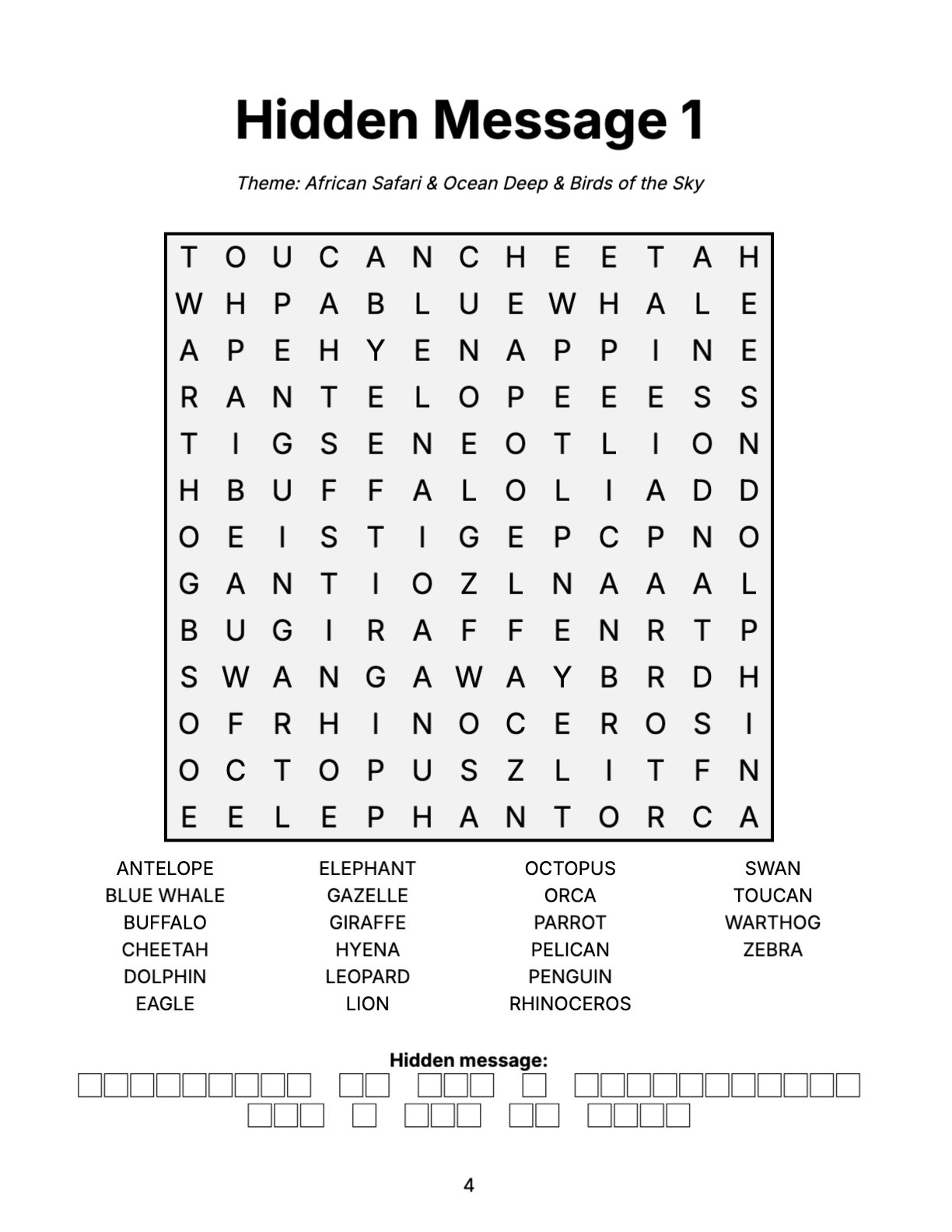
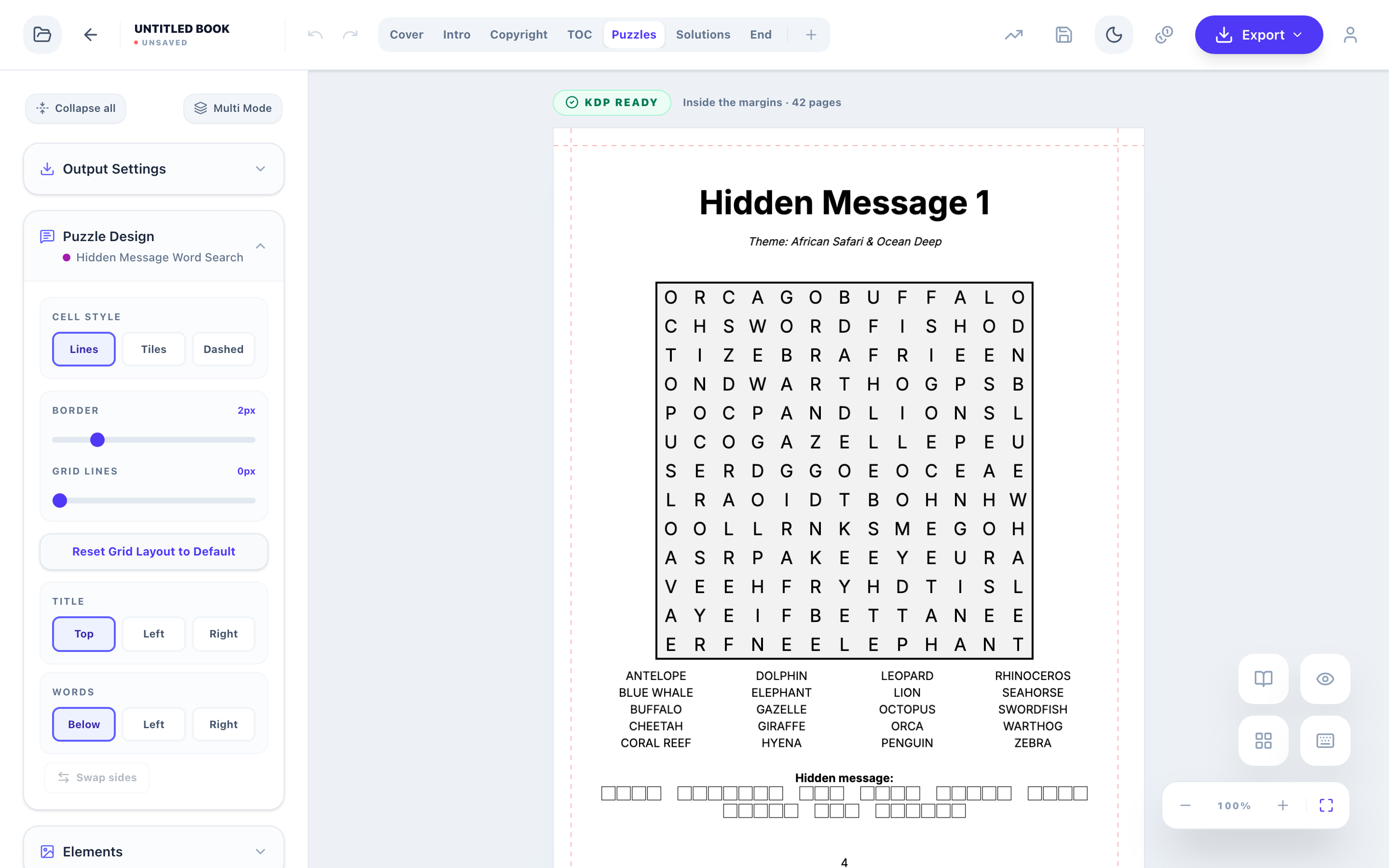
It looks like a classic word search: a square letter grid with a themed word list under it. The difference is the filler. In a classic puzzle the cells no word uses hold random letters. Here they hold a message: when the solver has circled every word, the letters left over, read left to right and top to bottom, spell a phrase such as GOOD THINGS TAKE TIME.
That small reward at the end is why the format is popular in activity books for seniors, classrooms and holidays. Answer boxes under the word list show how many letters each word of the message has, so the solver knows when it is complete. It also makes a strong chapter of a mixed activity book.
How Long the Message Can Be
The message and the words share the grid, so its length decides how many words the puzzle can hold. Too long, and only a handful of words fit around it; too short, and the grid needs so many words that the leftover letters are hard to place without creating accidental extra words. A message of 10–25% of the cells works best: 16 to 42 letters on a 13×13 grid, 6 to 16 on a kids 8×8 grid.
Wisdom Effect checks every message against the grid size before it generates: messages that do not fit are skipped, and the configurator tells you how many of yours fit. Each puzzle gets the next unused message, so a 60-puzzle book repeats a phrase only when the list runs out.
| Grid | Cells | Shortest message | Longest message |
|---|---|---|---|
| 8×8 (kids) | 64 | 6 | 16 |
| 10×10 | 100 | 10 | 25 |
| 12×12 (senior) | 144 | 14 | 36 |
| 13×13 | 169 | 16 | 42 |
| 15×15 | 225 | 22 | 56 |
Pick the Audience: Grid, Words and Directions
Children do best with a small grid, short words that run only right and down and a short cheerful message (YOU ARE A STAR). Adults like a 13×13 grid with diagonals; experts a 15×15 grid with words in all eight directions. Seniors prefer a 10–14 cell grid in large print with words that run straight.
Unlike a classic word search, you do not choose the number of words: the grid decides it, because the words have to fill every cell the message does not use. A 13×13 puzzle typically holds 25 to 30 words.
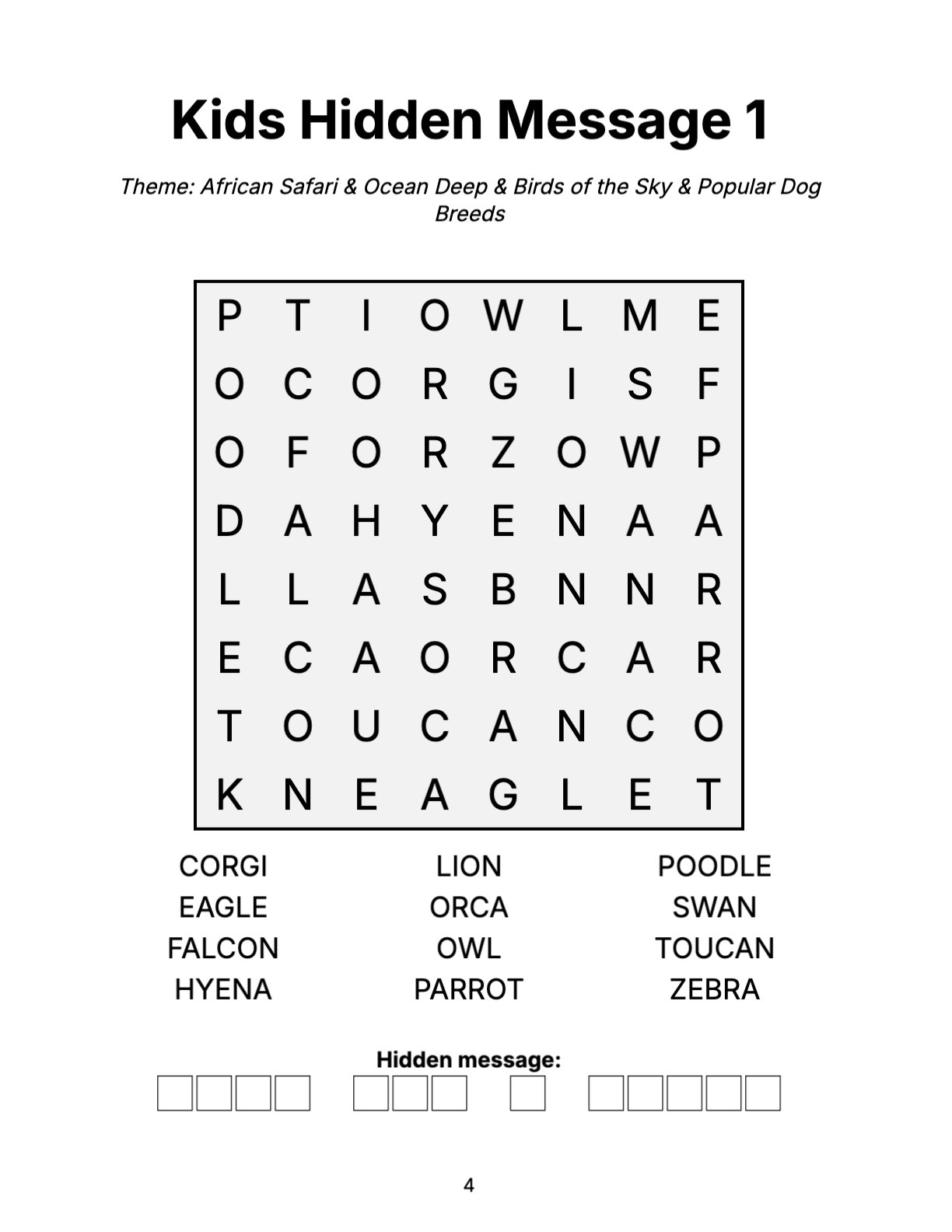
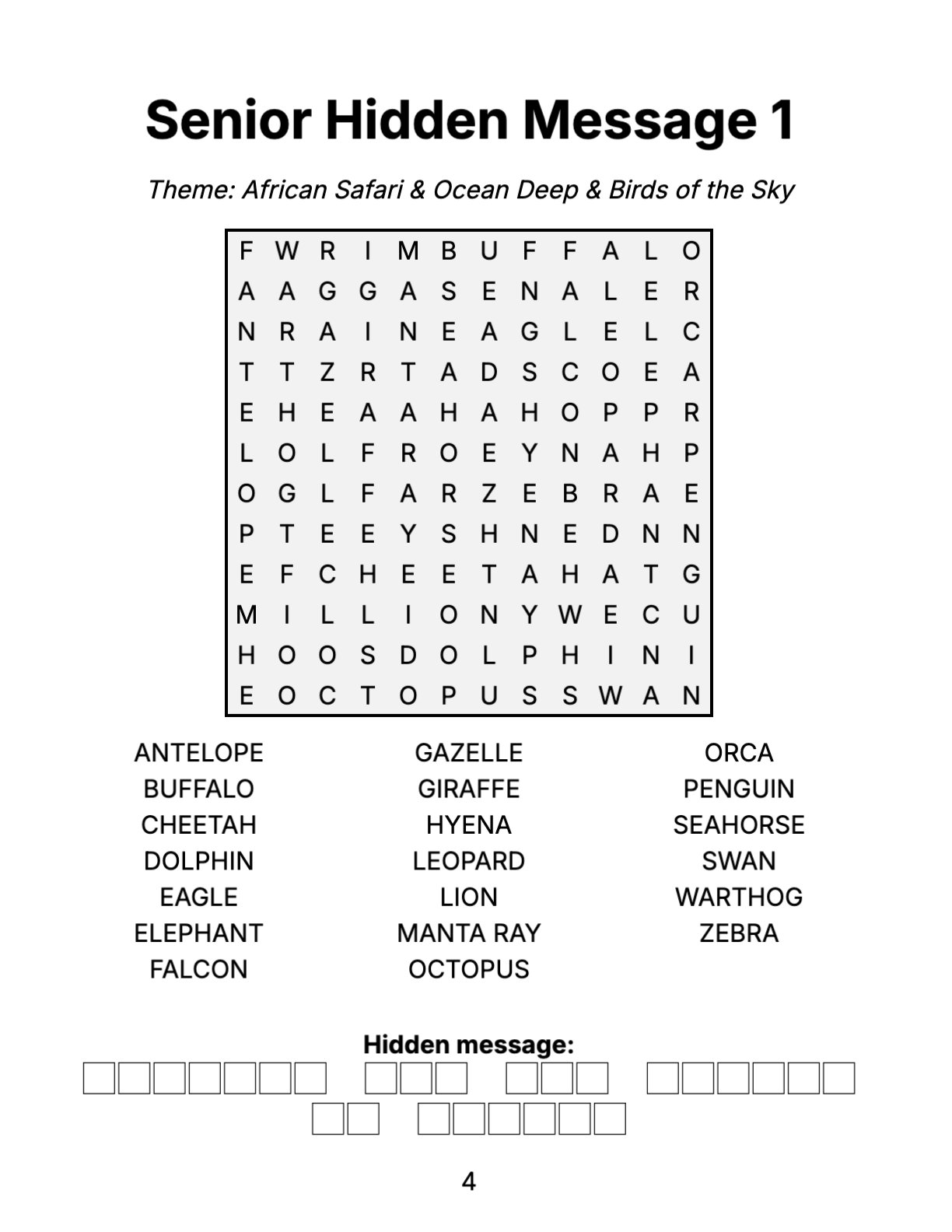
| Edition | Grid | Word length | Directions | Messages |
|---|---|---|---|---|
| Kids | 7×7 to 10×10 | 3–7 letters | Right and down | Short kids phrases |
| Standard | 10×10 to 15×15 | 3–15 letters | Straight, + diagonals or all 8 | Proverbs and kind phrases |
| Senior | 10×10 to 14×14 | 3–12 letters | Straight, + diagonals or all 8 | Proverbs and kind phrases, large print |
Books for Every Amazon Marketplace
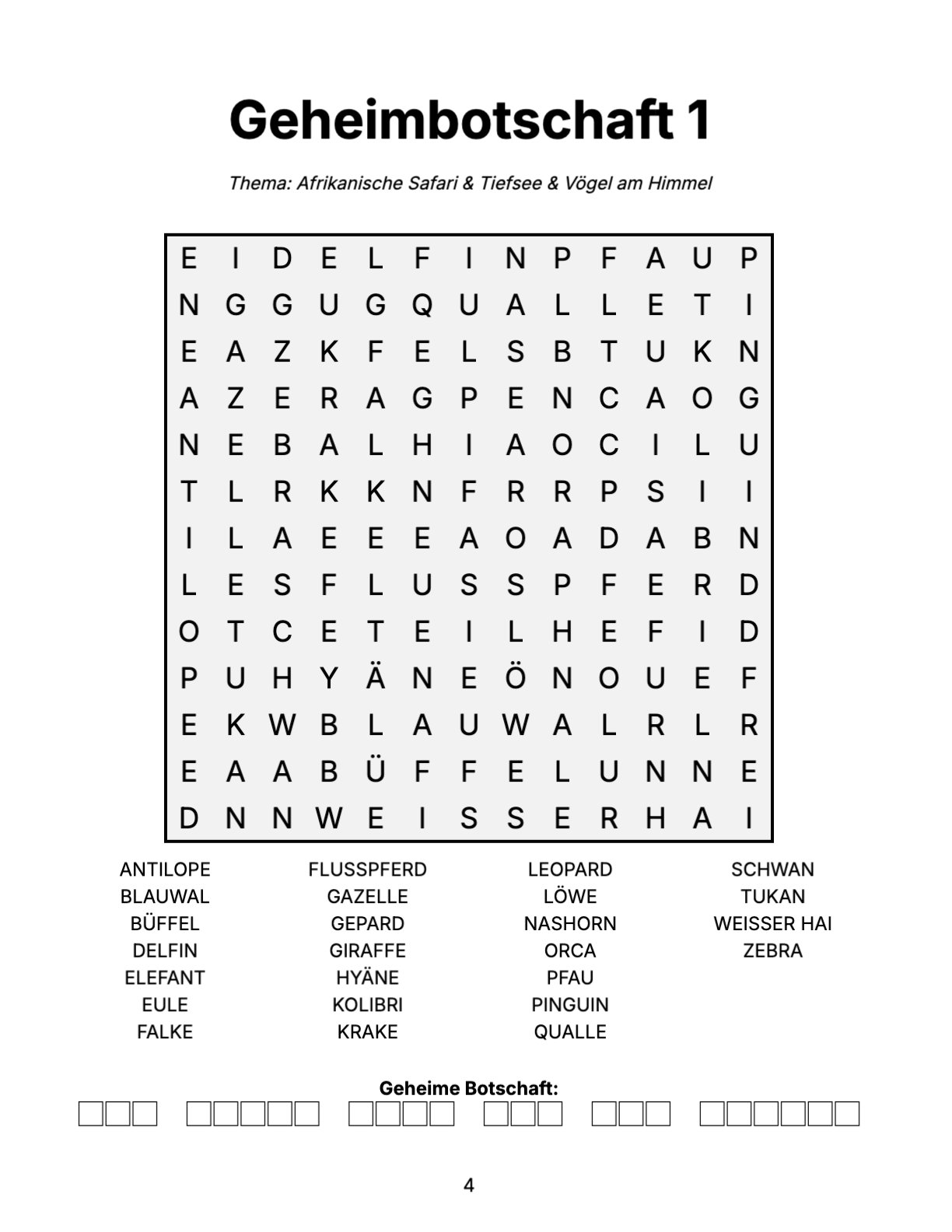
A hidden message only works when the reader understands it, so the whole puzzle has to be in their language: the words, the message, the filler logic and the page texts. Wisdom Effect translates the 900+ curated themes into German, French, Spanish, Italian, Dutch, Portuguese, Polish and Swedish and ships a set of built-in messages written for each language, with holiday phrases for seasonal books.
The grid keeps the letters puzzle solvers expect in each language: Ä, Ö and Ü in German books (ß becomes SS), Ñ in Spanish, Ł and Ż in Polish, Å in Swedish. French, Italian, Dutch and Portuguese grids drop accents, as their puzzle magazines do. German books can also spell umlauts out (AE, OE, UE). Choose the language once in the configurator; the editor keeps it.
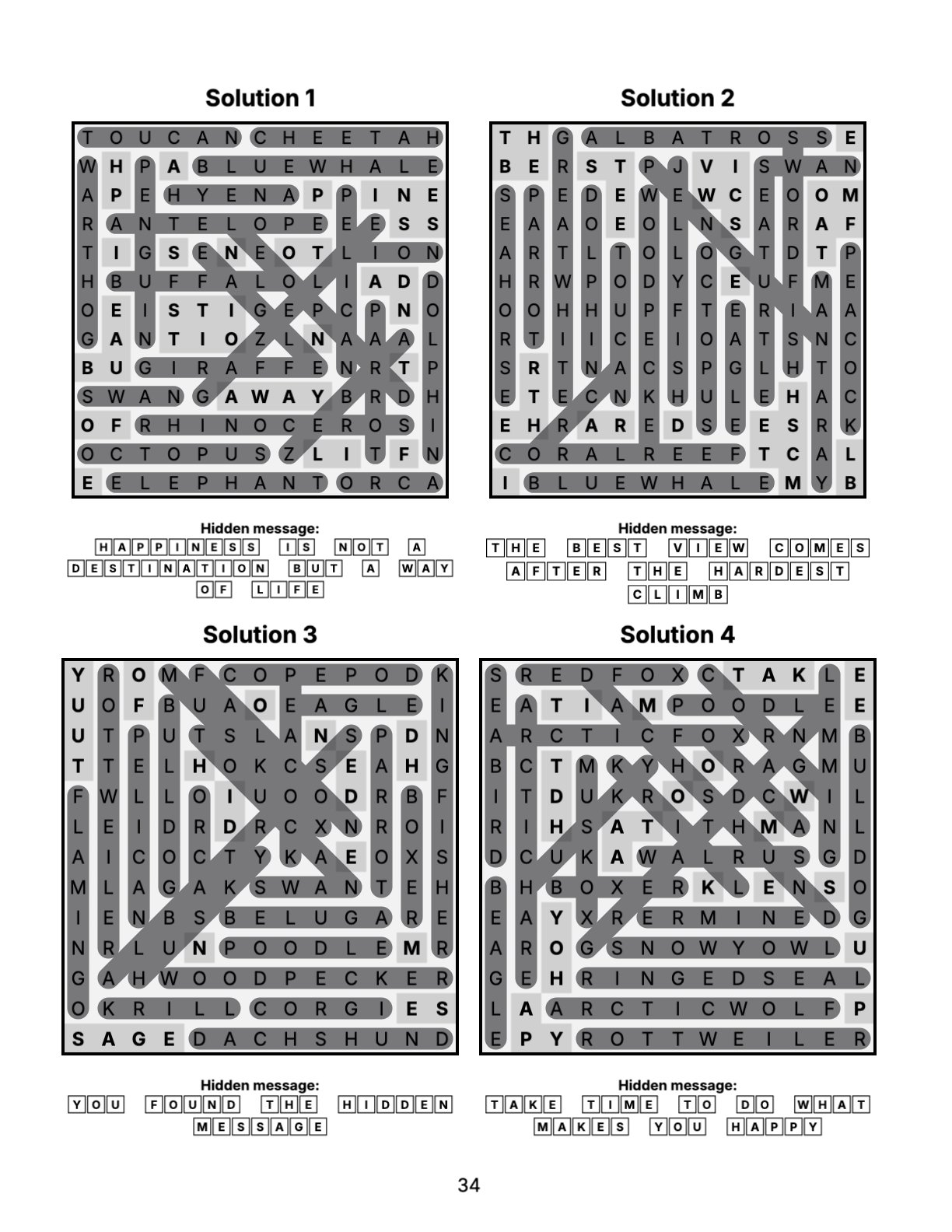
Answer Keys
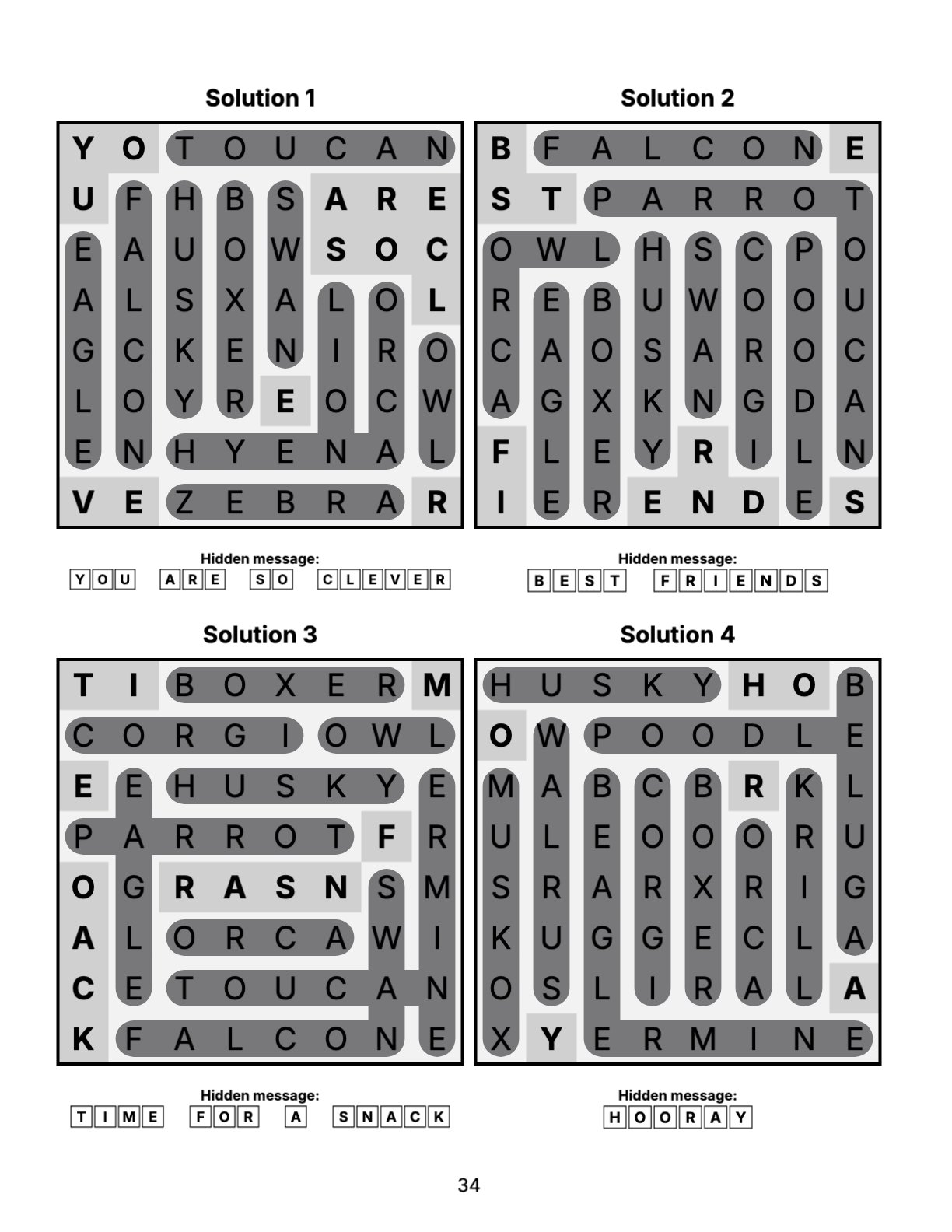
The answer key marks every word with a see-through gray band, leaves the message letters bold and fills the answer boxes in, so the solver can check both the words and the phrase. Standard books fit 1, 2, 4, 6 or 9 solutions per page; Kids and Senior books fewer, in bigger print. The band color can be changed in the editor (Color Palette).
Behind the scenes the generator makes sure the answer key is the only answer: every word reads in exactly one place in the grid, no word is part of another word in the same puzzle, and the message letters never spell a list word by accident.
Step 1: Create the Book
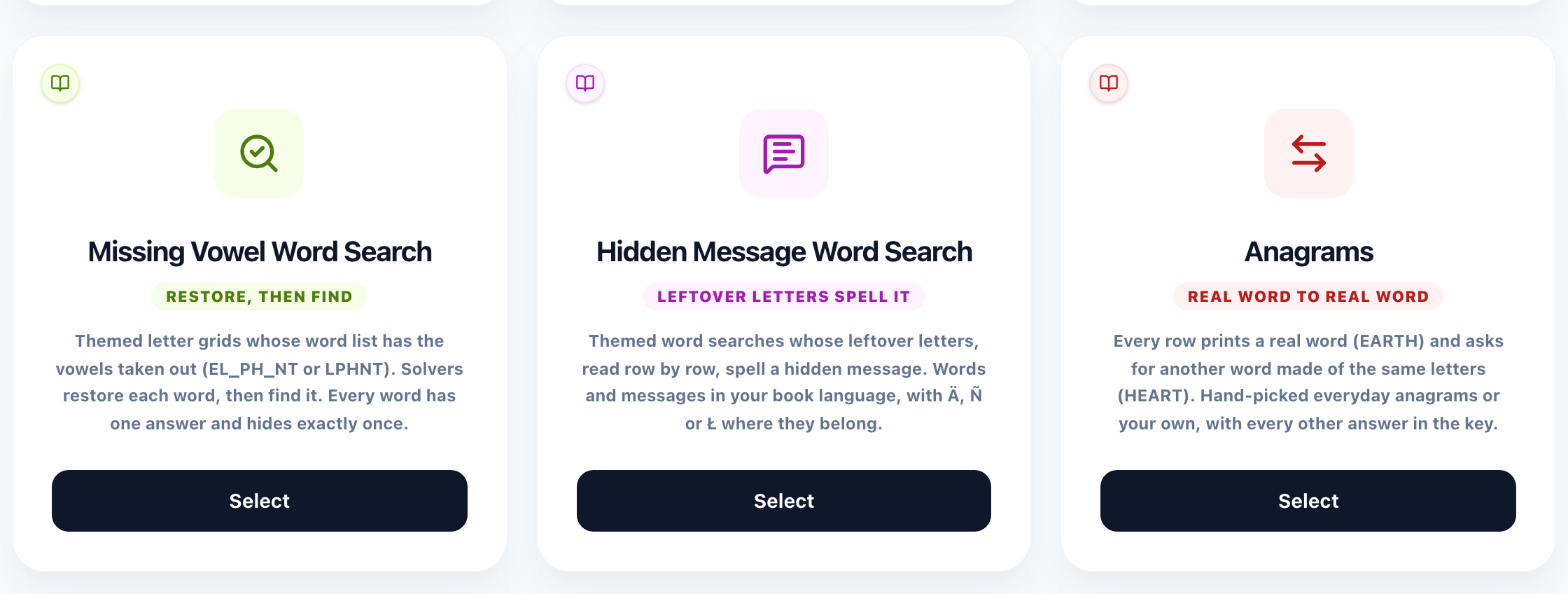
On /create choose the edition at the top (Standard, Kids or Senior) and click the Hidden Message Word Search card. Holiday editions such as Christmas or Halloween add holiday word lists, holiday messages, colors and title fonts. The book type can also be one chapter of a Mixed Book.
Step 2: Language, Difficulty and Words
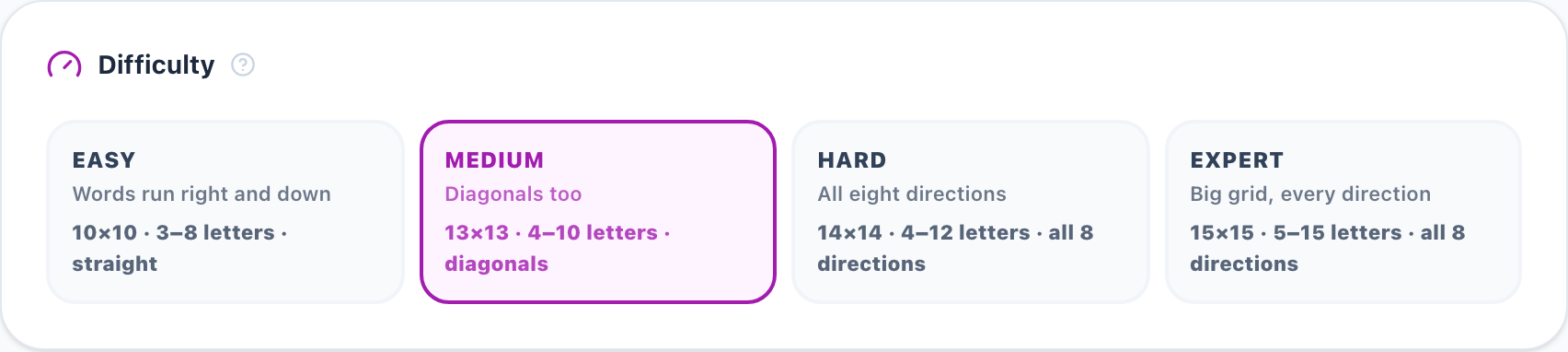
Book Language sets the language of the words, the messages and every text the app prints. Difficulty sets the grid, the word lengths and the directions in one click: Easy (10×10, right and down), Medium (13×13, with diagonals), Hard (14×14, all eight directions) and Expert (15×15, long words in every direction). Kids books offer Tiny, Small, Big and Giant (ages 5 to 9+), Senior books Relaxed, Classic, Challenging and Master.
Word Source picks a curated theme, all themes mixed or your own word lists (one puzzle per row). The configurator lists every word of your own list it cannot use and why — a phrase of three or more words, letters outside the language, a word too long for the grid.


Step 3: The Hidden Messages
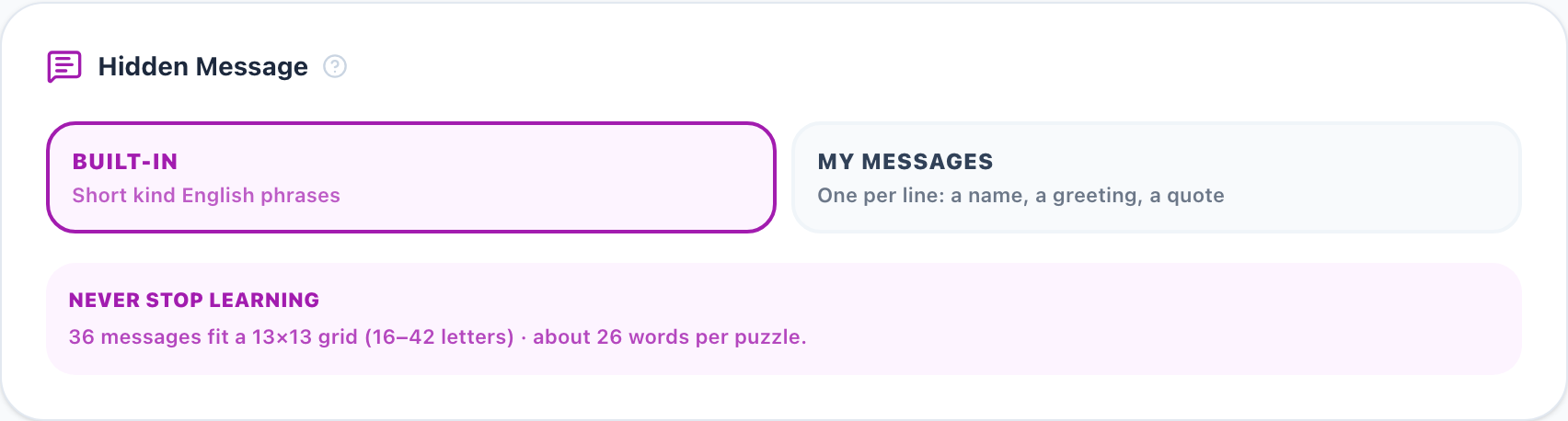
Hidden Message chooses between the built-in phrases of the book language and your own list. Built-in messages are short kind phrases and proverbs (kids books get kids phrases, seasonal books holiday ones first). With My Messages, type one message per line — a name, a birthday wish, a classroom motto. The panel shows how many of them fit the grid, the first message as an example and about how many words each puzzle will have.
Step 4: Book Settings, Design and Export
Pick the trim size, the number of puzzles (1 hidden message word search puzzle of up to 15×15 = 1 credit, 2 at Expert) and puzzles and solutions per page. The page preview shows the first puzzle and solution page, and the KDP summary counts the pages and checks the page range KDP prints in the trim size (24–590 pages at 8.5×11 on white paper, up to 828 at 8×10 and smaller).
Launch Hidden Message Editor opens the book. The Puzzle Design panel sets the weight of the grid border and the cell lines; the band color of the answer key is in Color Palette. The other panels change fonts, colors and the cover and edit the title, copyright, contents and end pages. When the book is ready, export the interior PDF and the cover PDF for KDP, or PNG and SVG files. You can also try a single page for free before you make the whole book.
Key rules
- Size each message to its grid: 10–25% of the cells.
- Let the grid decide the number of words; choose the audience with the grid size, word lengths and directions.
- Write the words, the messages and the page texts in the reader’s language.
- Check the answer key and the KDP page count before you export.
Tools for This Guide
Hidden Message Word Search Book Generator
Hidden message word search books in nine languages — built-in or your own messages, Kids & Large Print editions.
OpenFree Hidden Message Word Search Generator
A free printable hidden message word search page with your own message and an answer key.
OpenLarge Print Puzzle Book Generator
Large print puzzle books for seniors: hidden message word search, sudoku, word search and more.
OpenFrequently Asked Questions
What is a hidden message word search?
A word search without random filler letters: after every word is found, the letters left over, read row by row, spell a secret phrase.
How many puzzles should a hidden message word search book have?
Most books contain 50–100 puzzles, one per page, plus the answer key at the back. KDP needs at least 24 pages for a paperback.
Can I use my own messages?
Yes. Type one message per line. Each puzzle gets the next unused message; messages too short or too long for the grid are skipped and counted in the configurator.
Can I make the book in German or Spanish?
Yes: German, French, Spanish, Italian, Dutch, Portuguese, Polish and Swedish, with translated theme words, built-in messages in the language and its letters (Ä, Ñ, Ł, Å…) in the grid. Other languages than English need the Publisher plan or the free trial.
How many credits does a hidden message word search book cost?
One credit per puzzle of up to 15×15 cells, so a 30-puzzle book costs 30 credits; an Expert puzzle (a grid over 14×14) costs 2. The book type is part of the Pro and Publisher plans.