In short
A nonogram hides a picture behind numbers. The best-known kind is black and white, with clues along the top and the left side, but the idea survives a surprising amount of change: the numbers can count empty squares or colored ones, they can move inside the grid, and the grid can become a hexagon of triangles or give way to curves. Here are seven variations, each with a real puzzle page and its answer page, the rule that sets it apart, a first move that works on the page shown, the plan that includes it, and a link that opens it in the book configurator.
On this page
What a Nonogram Variation Changes
All seven keep the same deal with the solver: shade the right cells and a picture appears, and the numbers are enough to find it without guessing. They differ in three places. One is the meaning of a clue, which can count shaded squares, empty squares, squares of one color, or half squares cut along a diagonal. Another is where the clues stand: in strips outside the grid, or as digits written inside it. The last is the grid itself: usually square, once a hexagon cut into triangles, and once no grid at all, only areas cut out by curves.
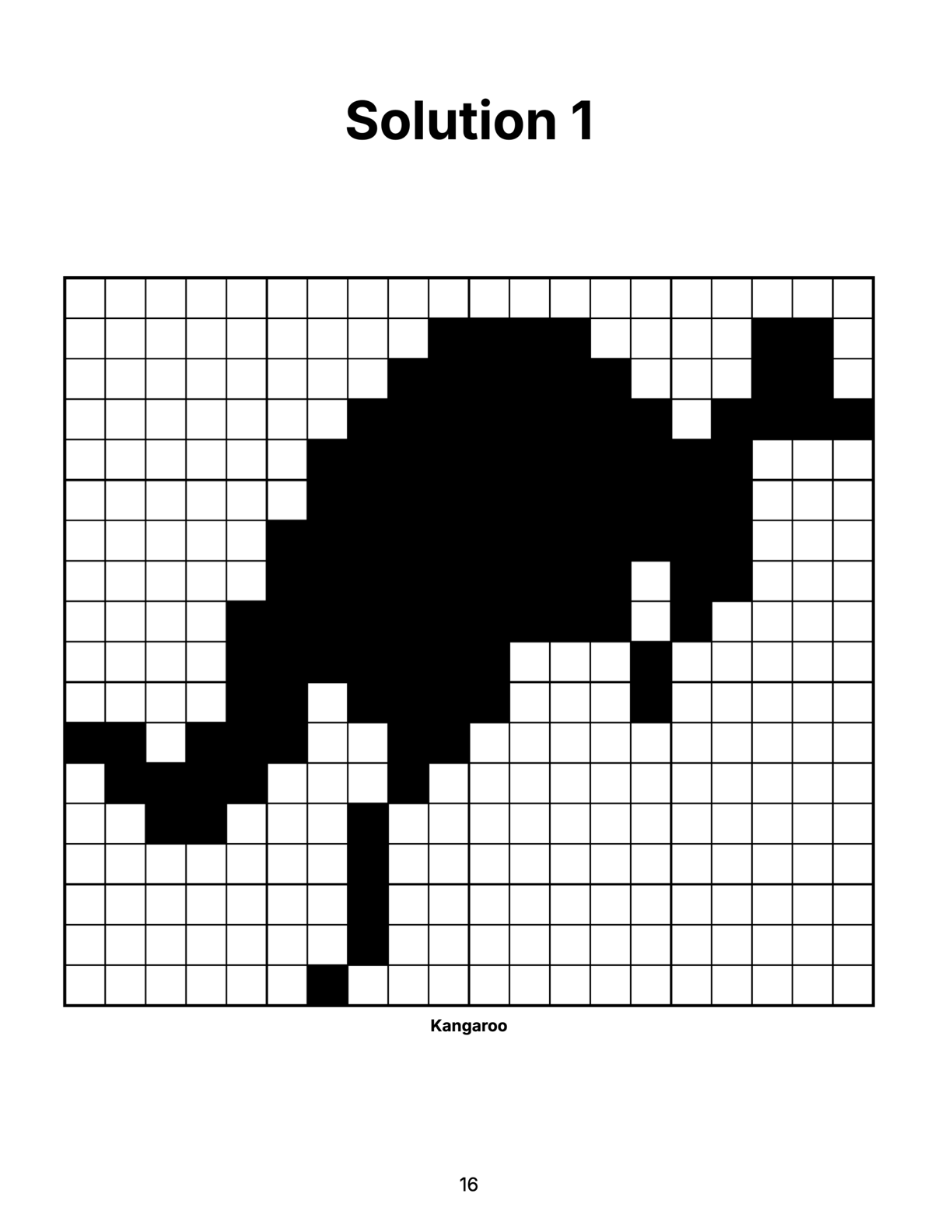
Every puzzle shown here was solved by a computer before printing, with no more logic than its level allows. Where the clues by themselves would allow two different pictures, the book prints a square that is already decided, shaded or dotted, and checks again; two of the pages below have one. The pictures are a puzzle and its answer from a real book of each type, made with the preset the configurator opens with and printed one puzzle and one solution per page on 8.5×11 inch paper. Which plan a type needs is in the right-hand column: Pro for the classic nonogram, Publisher for the other six. The free trial covers all seven, with watermarked pages.
| Variation | Grid | What a clue tells you | Credits per puzzle | Included from |
|---|---|---|---|---|
| Classic | Square | Lengths of the shaded blocks, in order | 1 (2 above 20×20) | Pro |
| Color | Square | Block lengths, each printed in its block’s color | 2 | Publisher |
| Zebra | Square | Shaded strips count filled runs, white strips empty runs | 2 | Publisher |
| Triangle | Square | Full blocks and single half squares | 2 | Publisher |
| Mosaic | Square, no clue strips | Shaded cells in the 3×3 block around the digit | 2 | Publisher |
| Hexagon | Hexagon of triangles | Block lengths along three directions | 2 | Publisher |
| Curved | Square frame cut by curves into areas | Blocks of shaded areas along one side of a curve | 2 | Publisher |
1. Classic Nonogram: Black Blocks, Clues on Two Sides
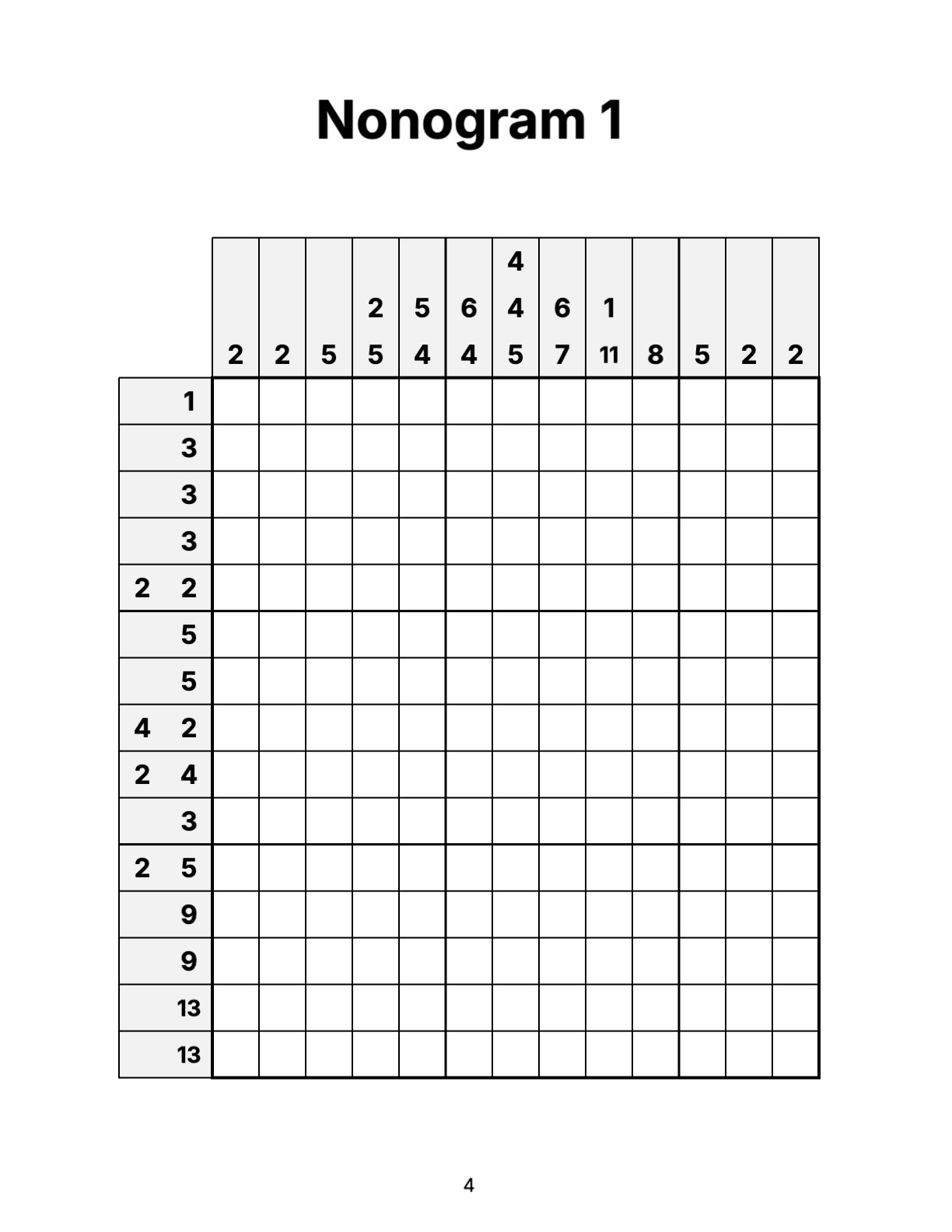
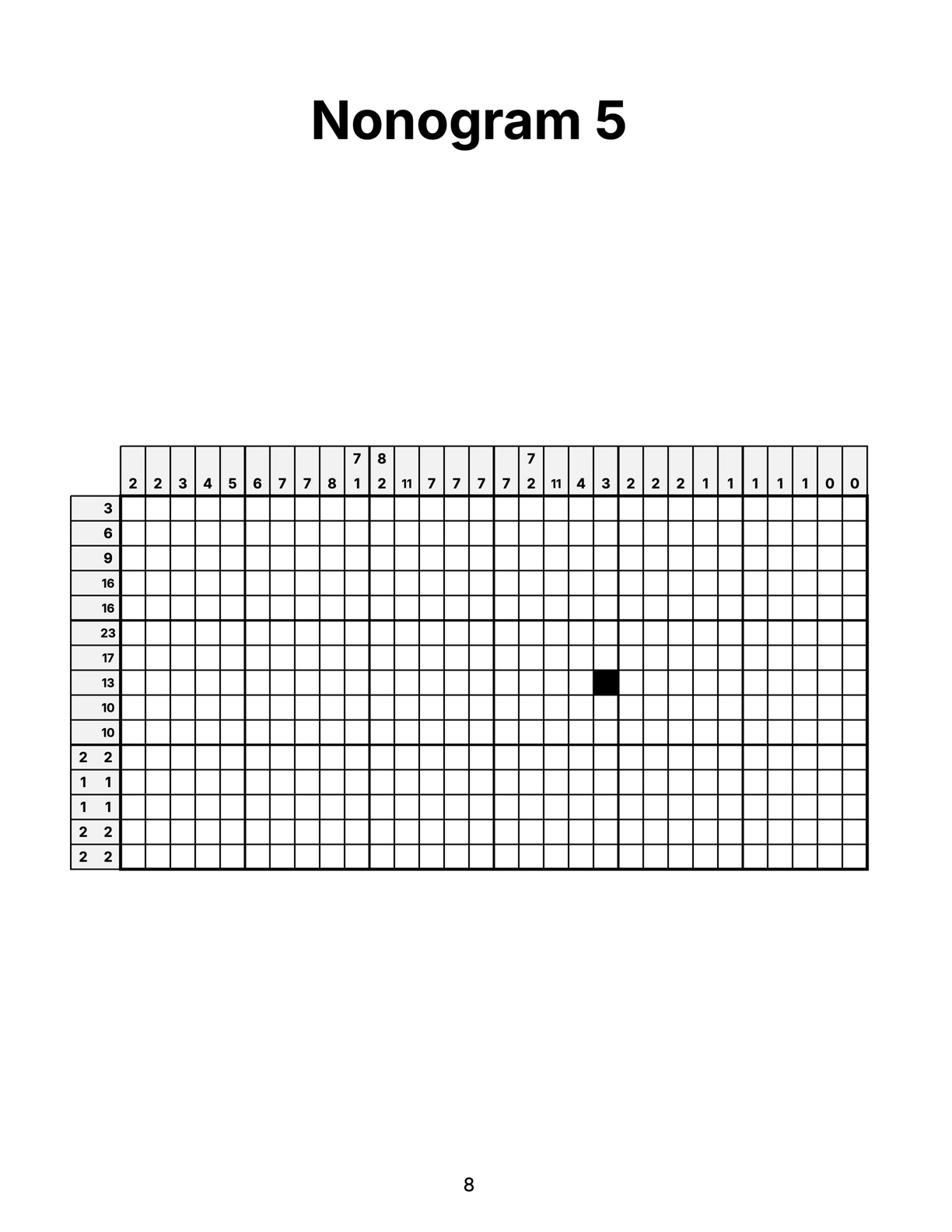
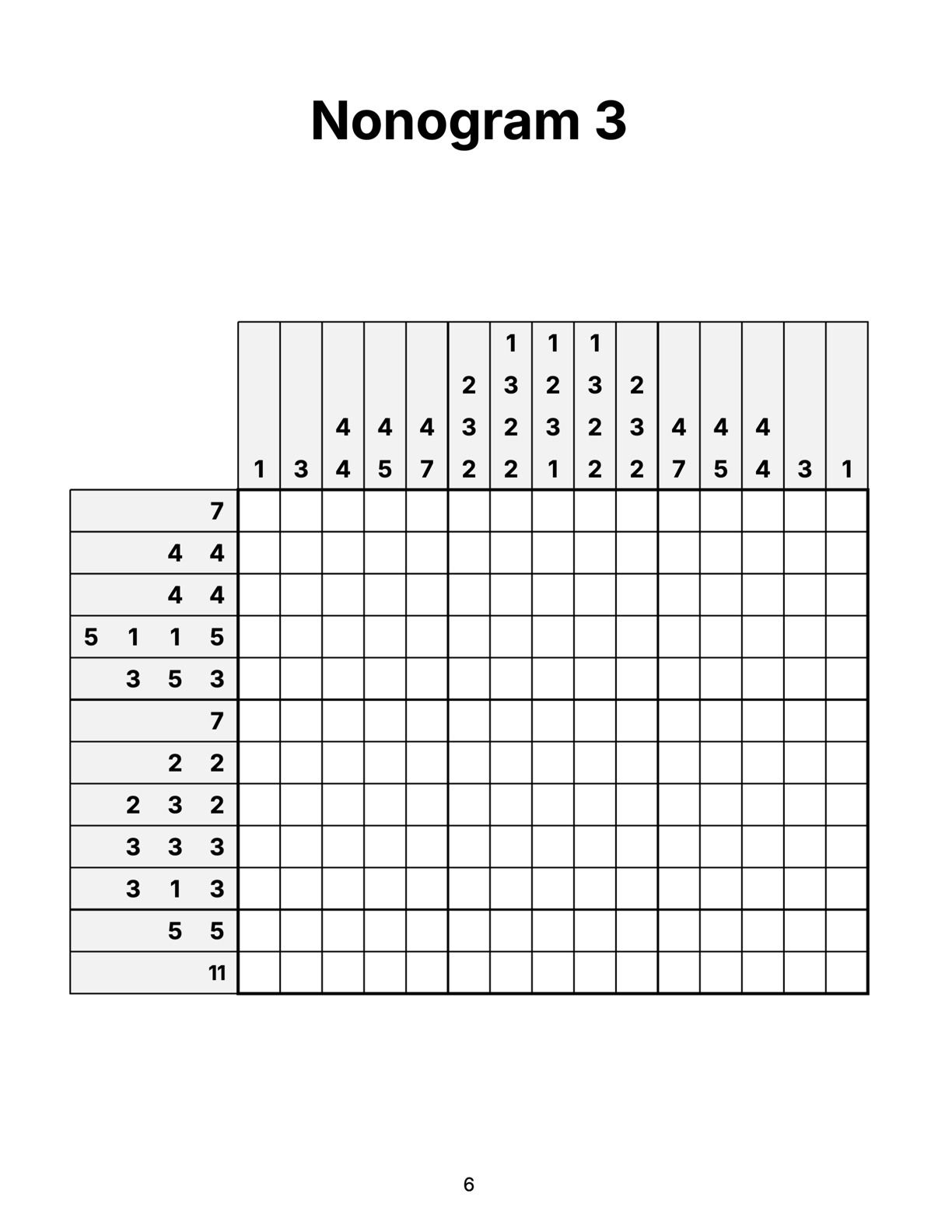
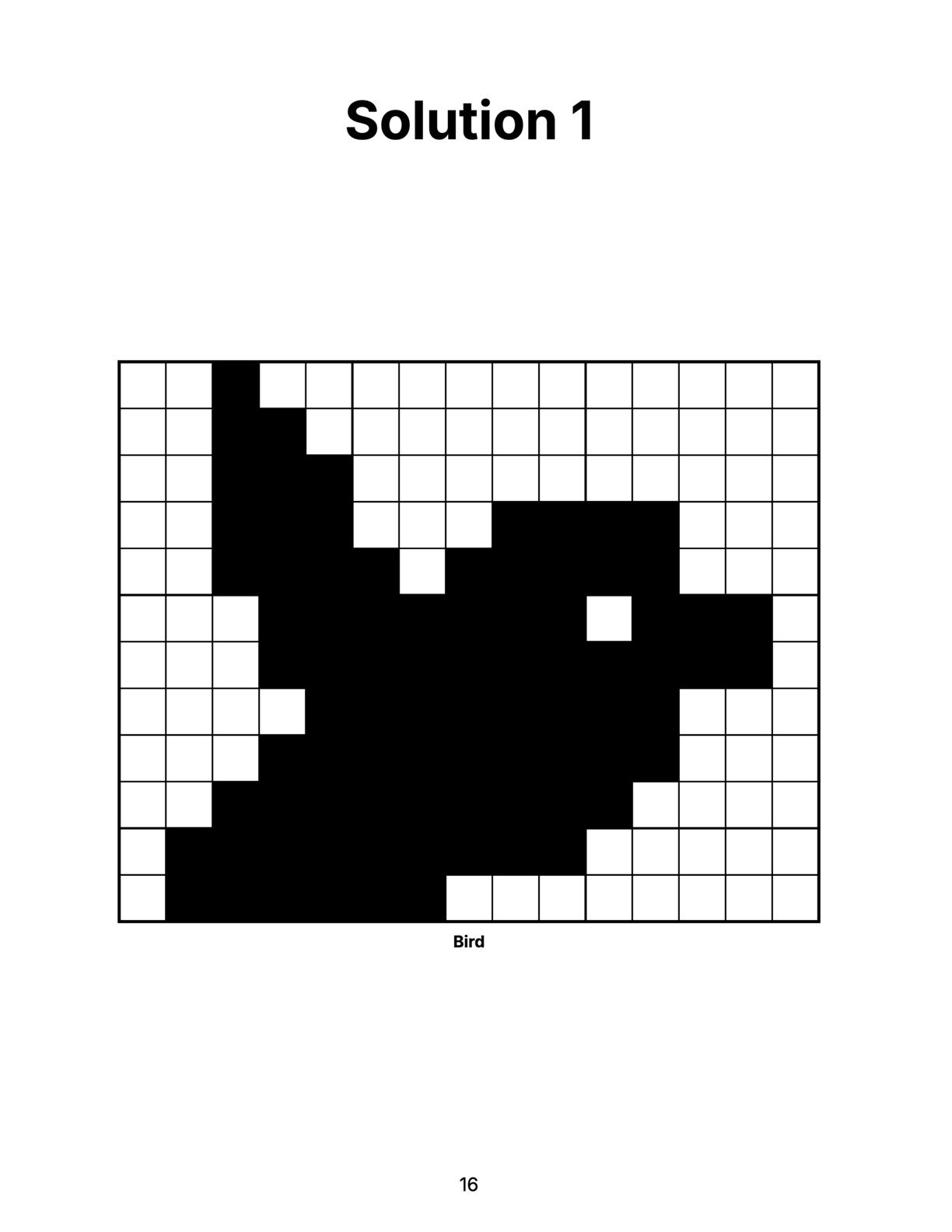
The numbers left of a row and above a column give the lengths of the shaded blocks in that line, in the order they come. Two blocks always have at least one empty square between them, and nothing says how far the first one starts from the edge; finding that out is the puzzle. The idea comes from Japan in the late 1980s, and the same puzzle also goes by hanjie and paint by numbers.
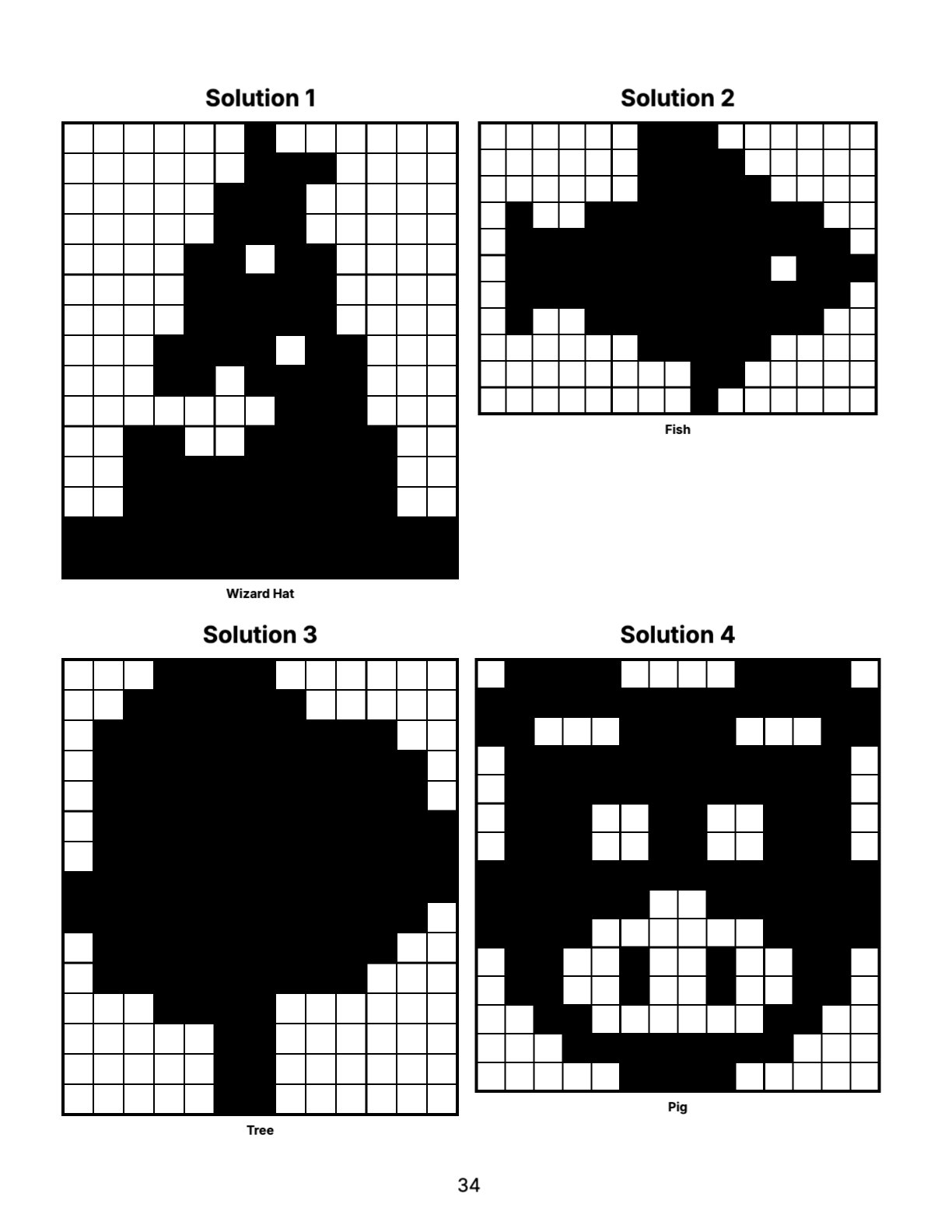
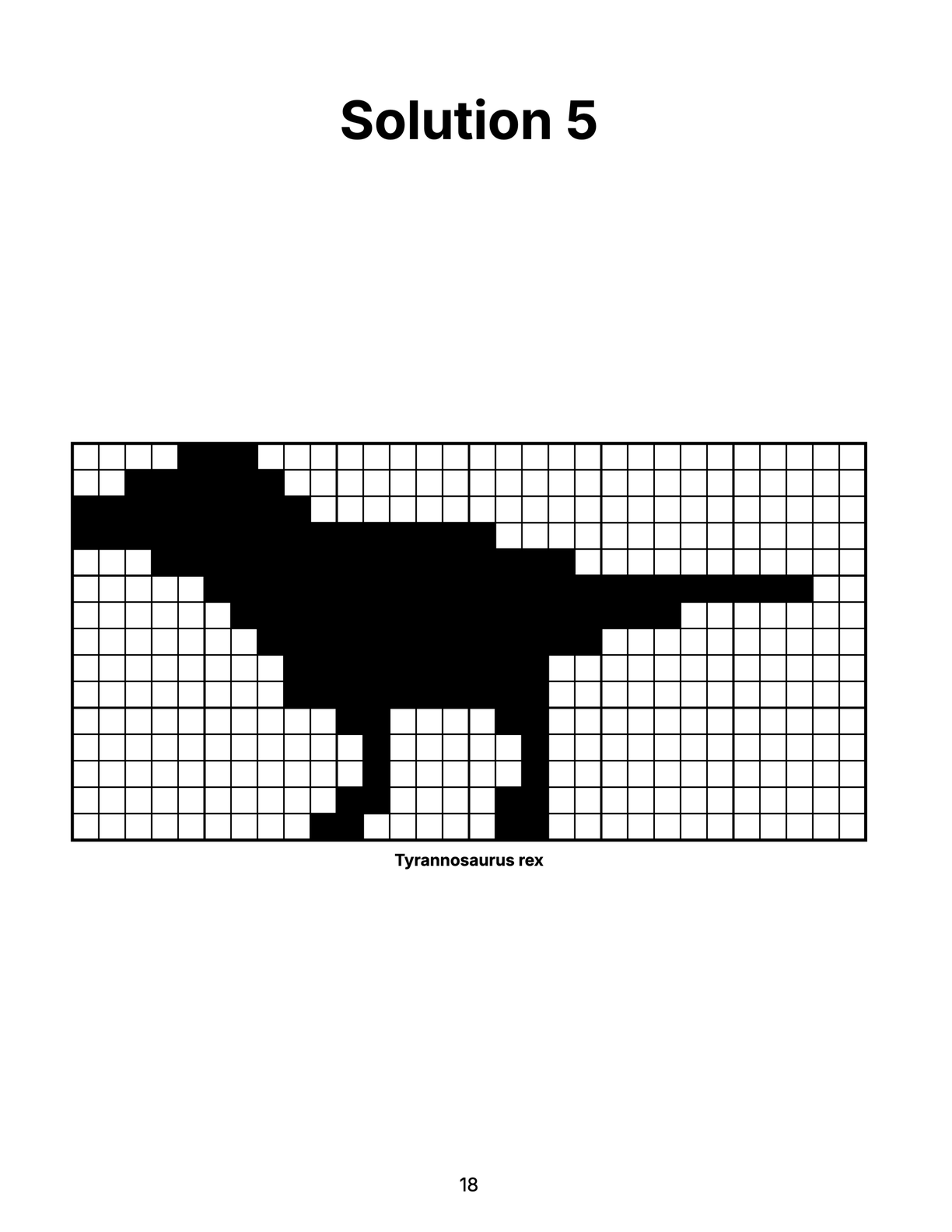
Begin with lines whose clues nearly fill them. The page below is 15 squares wide, and its fourth row reads 5 1 1 5: twelve shaded squares plus three gaps make exactly 15, so the row has one possible layout and can be drawn in at once. The fifth column, 4 7 in a column of 12, leaves no room either. Where a clue is long but not exact, push the block to one end and then the other: the bottom row’s 11 can shift by four squares, so squares 5 to 11 are shaded either way. Every square you settle is a new fact for the line crossing it.
In the generator the classic type has Kids, Standard and Large Print editions, grids up to 30×30, and pictures from a library, from symmetric patterns or, on Publisher, from your own images. Open the classic nonogram configurator; the nonogram book guide goes through grid sizes, the 1–100 score and book titles.
2. Color Nonogram: Blocks of Different Colors May Touch
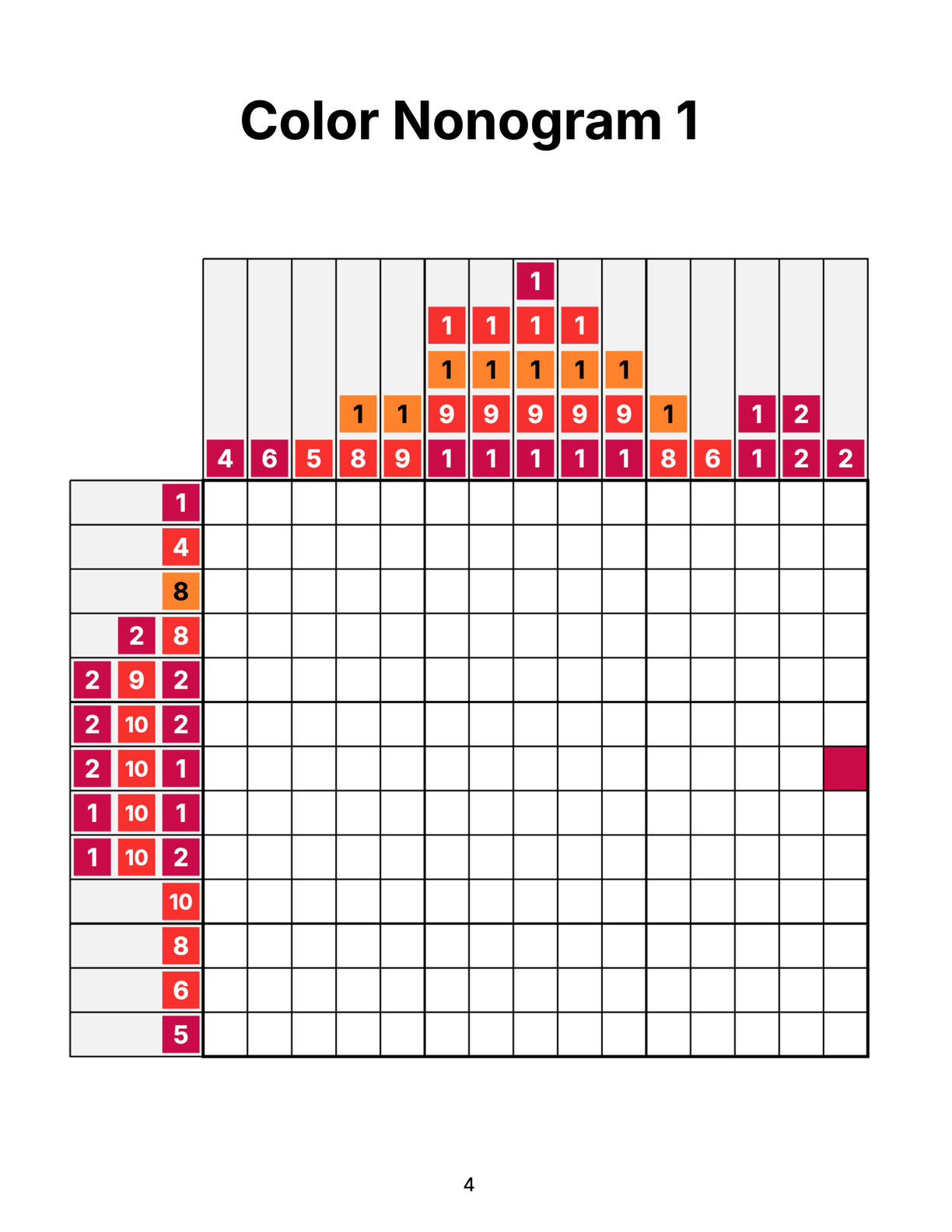
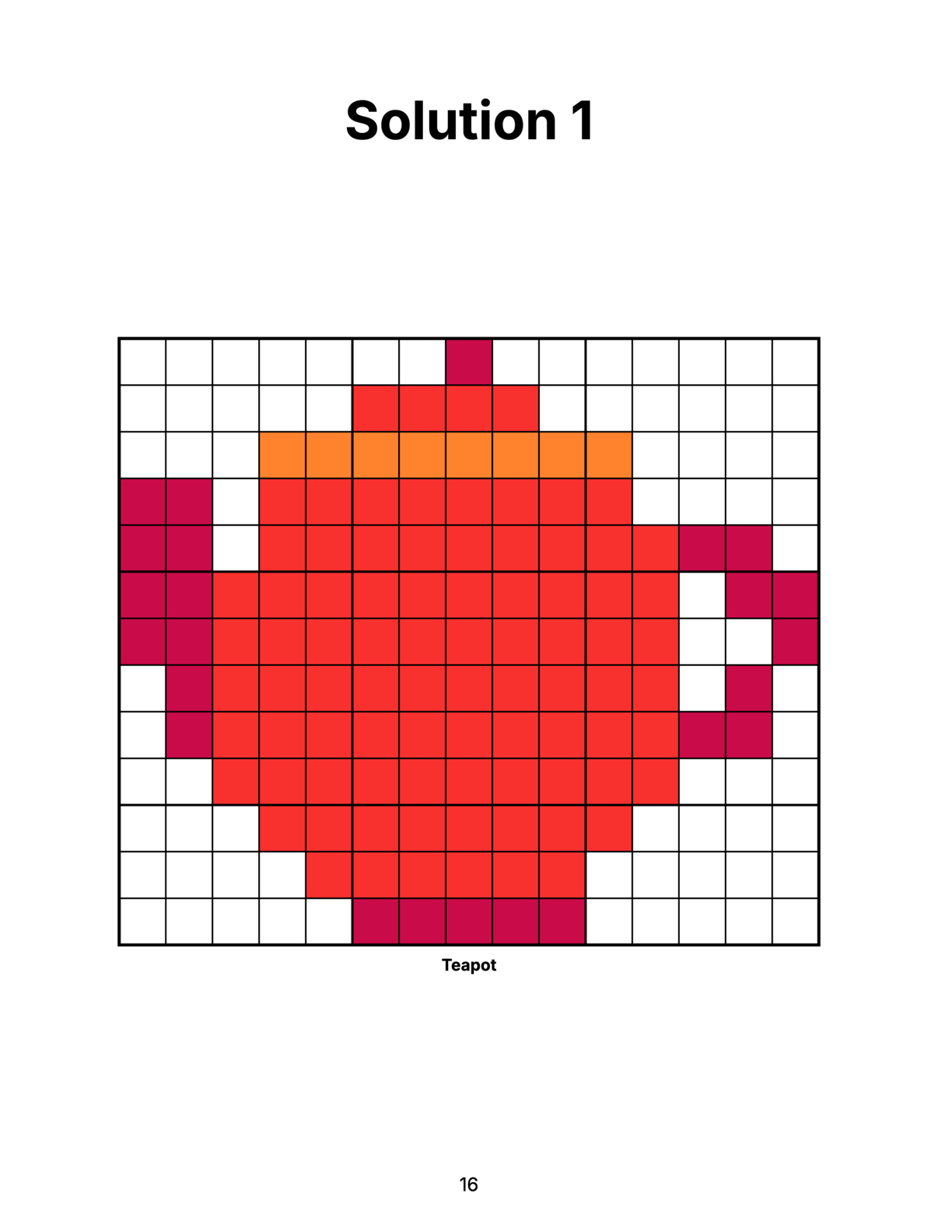
Each clue number sits on a swatch in the color of its block, and the finished grid is a small picture in up to four colors. Neighboring blocks of one color keep the classic rule and need at least one empty square between them. Blocks of different colors do not, so a bright red run may end exactly where a dark crimson one begins.
That single change packs the rows much tighter. On the page below, the sixth row reads crimson 2, red 10, crimson 2 in a row of 15. Since neighboring blocks differ in color, the three need only 14 squares, so none can move by more than one: the second square is crimson, squares 4 to 12 are red and the fourteenth is crimson before anything else is known. Printed in black, those numbers would take 16 squares, one more than the row has. Colors also exclude each other, because a cell can only take a color listed by both its row and its column. The crimson square already painted at the end of the seventh row is a given, printed because the clues alone did not settle the picture at this level.
Color books need a color interior on Amazon KDP, which costs more per printed page than black ink, so they fit gift books and children’s books where the color is part of the appeal. The type has Kids, Standard and Large Print editions. Start a color nonogram book, or see the color nonogram guide for palettes and color printing.
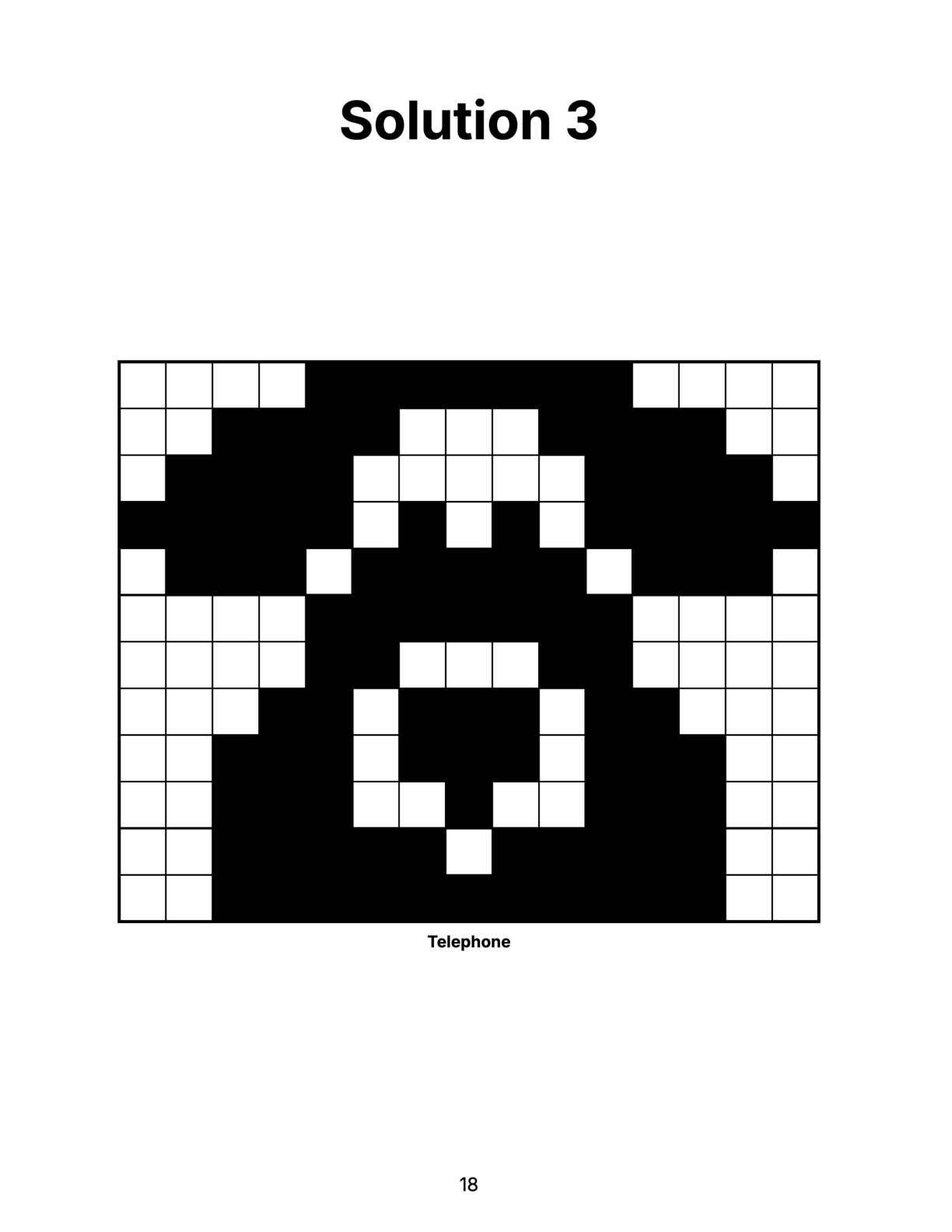
3. Zebra Nonogram: Every Other Line Counts the Gaps
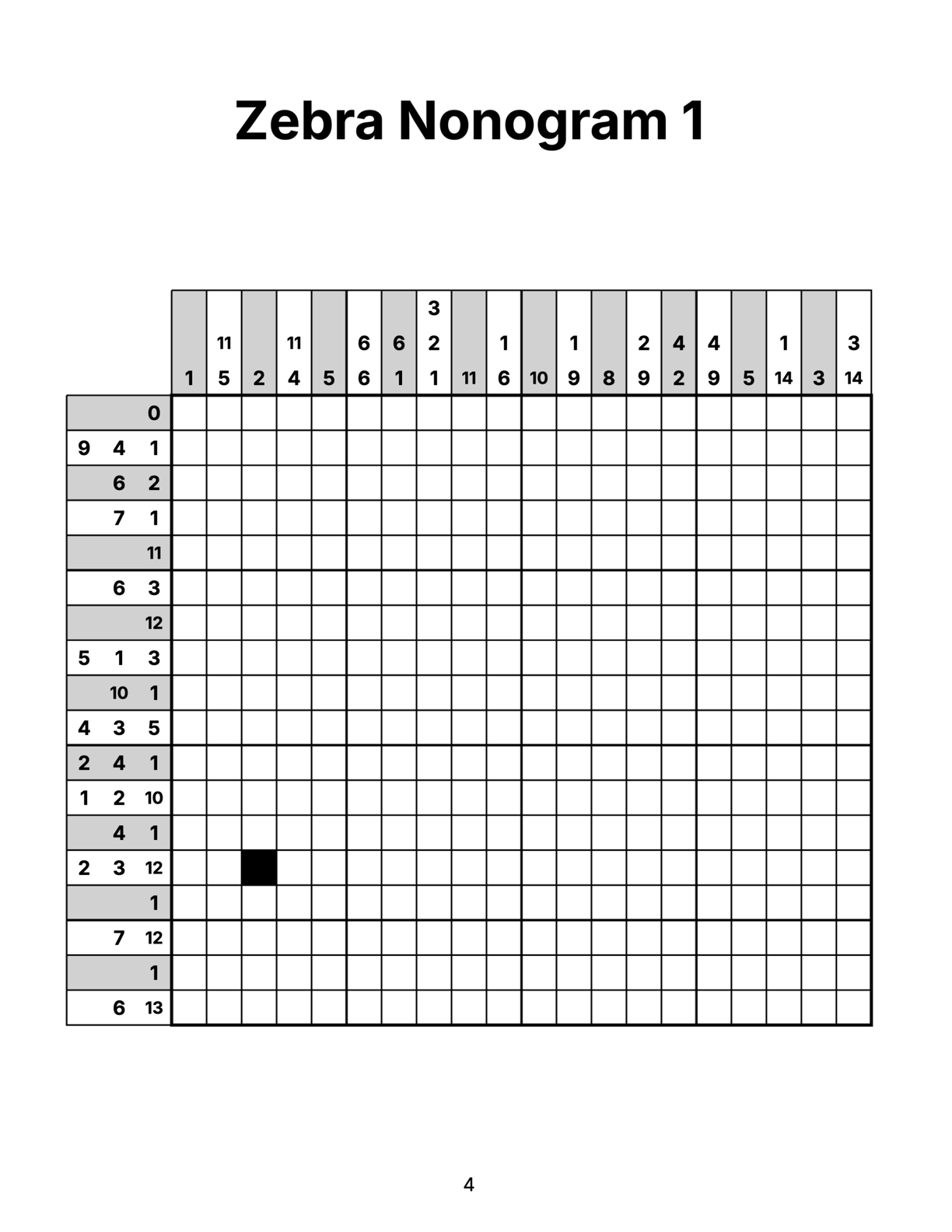
The clue strips alternate, one line shaded, the next one white. A number in a shaded strip is the usual clue, a block of filled squares. A number in a white strip describes the empty side of its line instead: runs of empty squares, in order, with at least one filled square between two runs. So a 0 in a shaded strip means an empty line, while a 0 in a white strip means a line filled from end to end.
Treat a white line like any other, only with the roles swapped: the runs you slide and overlap are made of dots. The page below is 20 squares wide and 18 tall. Its last column is white and reads 3 14, and seventeen empty squares plus one filled square between the two runs use all 18, so the column is settled at once: three dots, one filled square, fourteen dots. The top row is shaded and reads 0, so it stays empty, and the black square in the fourteenth row is a given.
Zebra books start at Hard 20×20, since the strips need room on the page, and there is no Kids edition; the Large Print edition gives each puzzle a page of its own. Create a zebra nonogram book; the zebra nonogram guide works through more white lines.
4. Triangle Nonogram: Half Squares Make Diagonal Edges
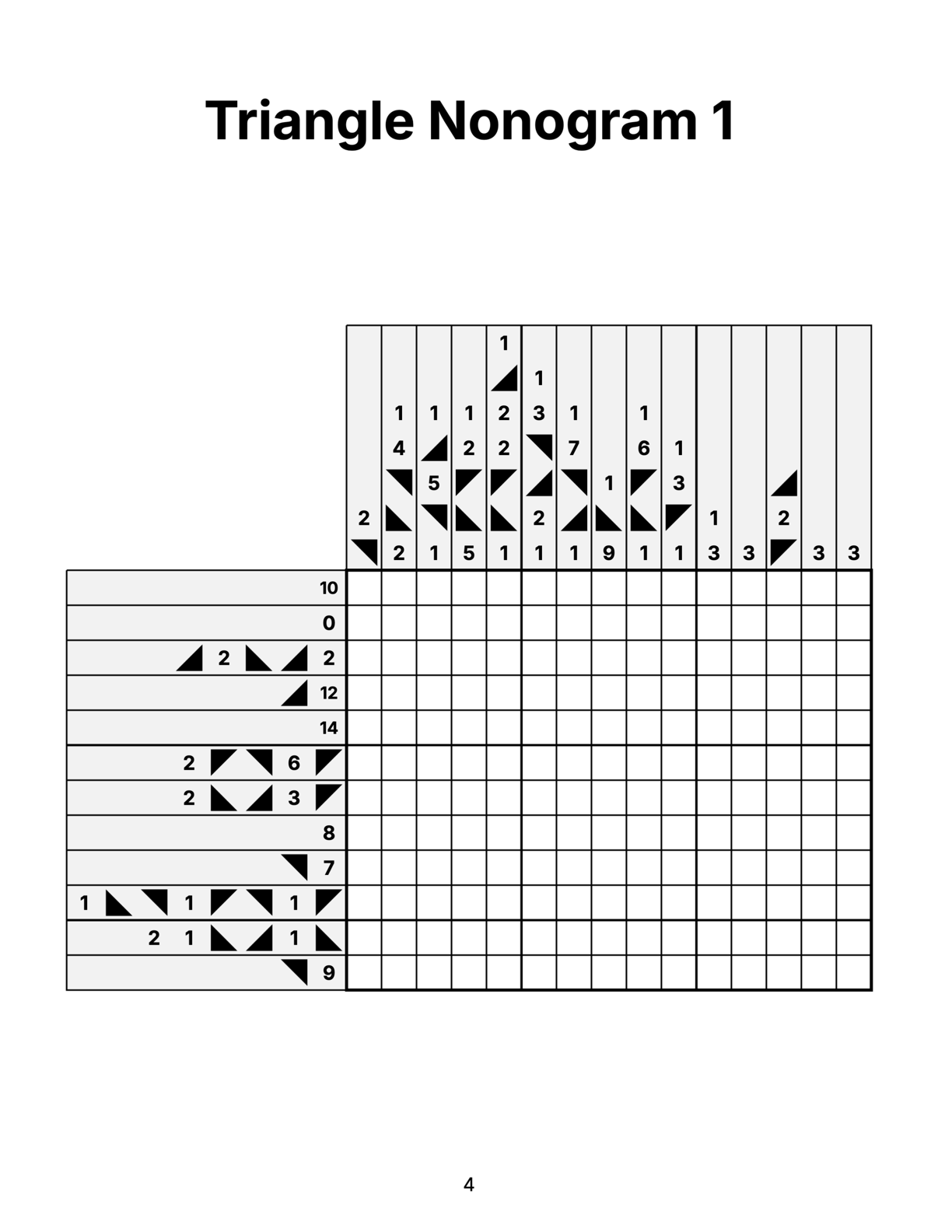
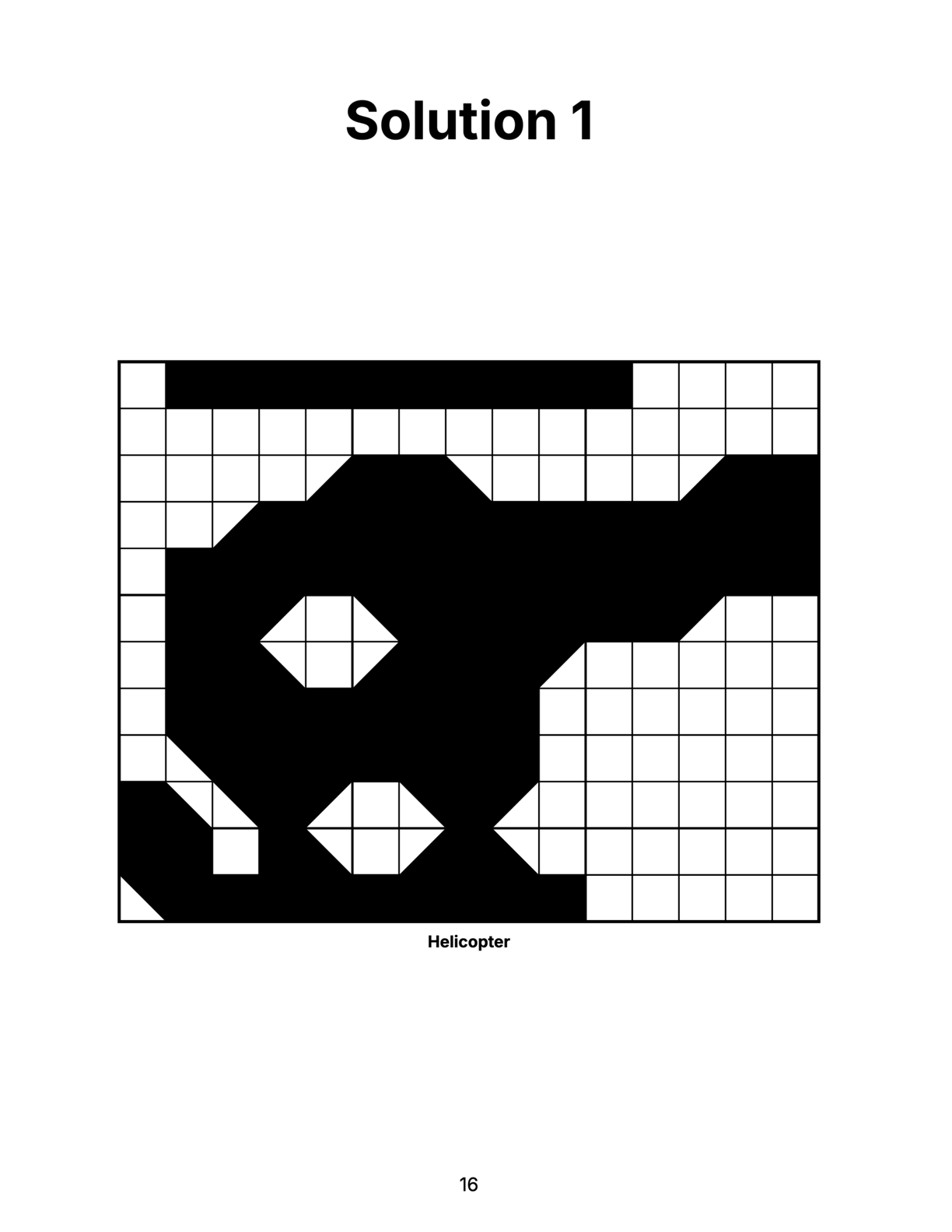
Here a cell can be blank, fully shaded, or cut by a diagonal and shaded on one side, with the shaded half in one of its four corners. The clue lists mix two kinds of item. Each number gives a run of fully shaded cells, and a small triangle stands for one half square of exactly that shape. Solved, the half squares turn the stepped outline of a pixel picture into clean 45° slopes, like the edges of the helicopter below.
The spacing rule changes as well: full blocks still need an empty square between them, but a triangle may touch anything. The page below is 15 squares wide. Its fifth row reads 14, so only one end square can stay empty and squares 2 to 14 are full. The fourth row is a triangle followed by 12; with no gap required, the two items need 13 squares, the block can move by two, and squares 4 to 13 are full however it lies. The second row reads 0 and stays empty.
When you make a book you never place a triangle yourself: the generator derives them from the inner corners of each picture. There is no Kids edition. Build a triangle nonogram book, and the triangle nonogram guide explains the four shapes in detail.
5. Mosaic: The Clues Move Inside the Grid
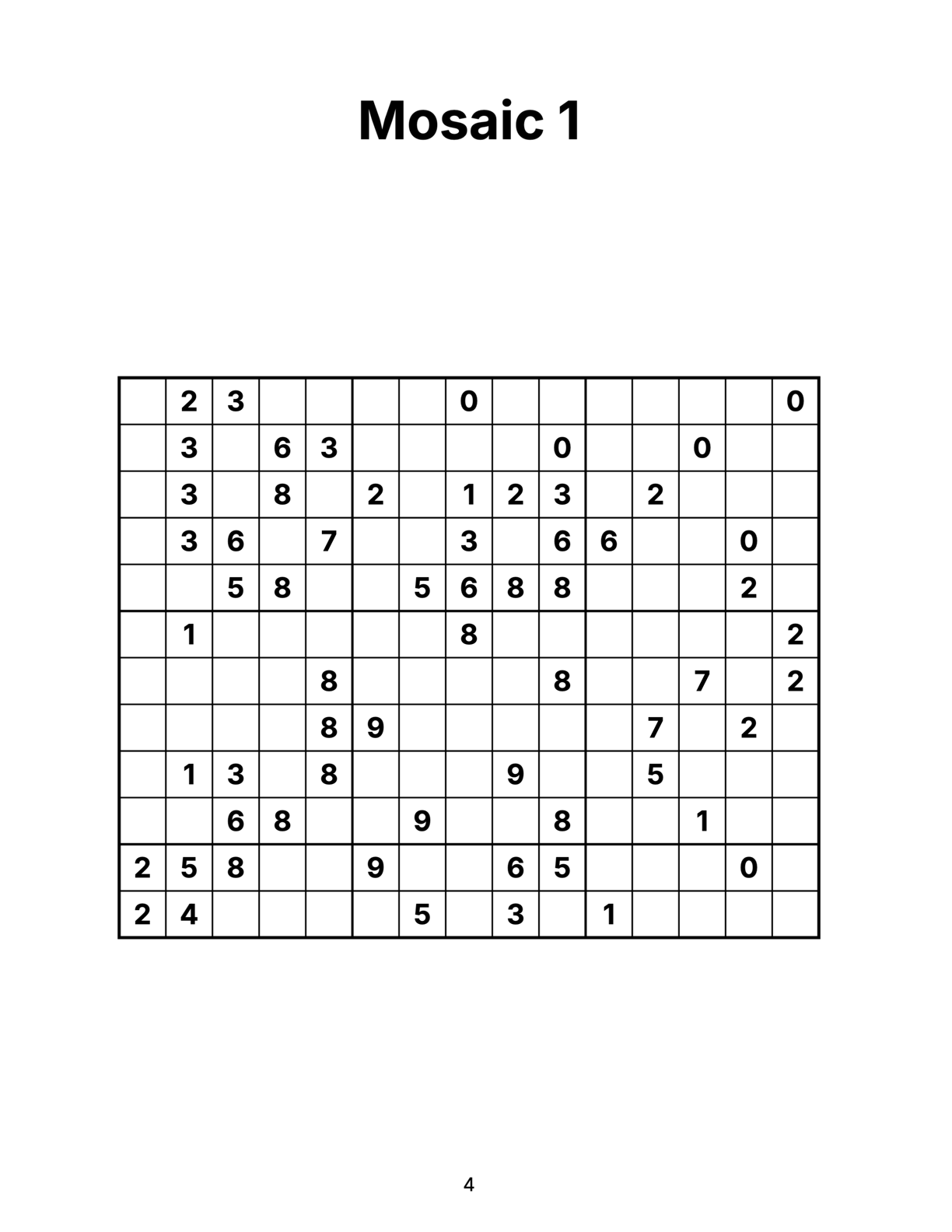
A mosaic has no clue strips at all. Some squares hold a digit from 0 to 9, and each digit counts the shaded squares in the 3×3 block centered on it: its own square and the eight around it. At an edge that block shrinks to six squares, in a corner to four. A digit can sit on a shaded or an empty square, so it never tells you about its own square directly.
Take the certain digits first. On the page below, the 0 in the top right corner clears its four squares, and each of the four 9s in the lower half shades a whole block of nine. After that, go digit by digit: once a digit has all the shaded squares it asks for, dot the rest of its block, and once every open square left in its block is needed to reach its count, shade them all. A Medium mosaic like this one prints a digit in about a third of the squares and now and then needs two overlapping digits compared; Hard ones may need a trial.
Mosaics use the nonogram picture library, patterns or your own images, in Kids, Standard and Large Print editions. Open the mosaic configurator, and the mosaic book guide explains how the generator decides which digits to print.
6. Hexagon Nonogram: Three Directions Instead of Two
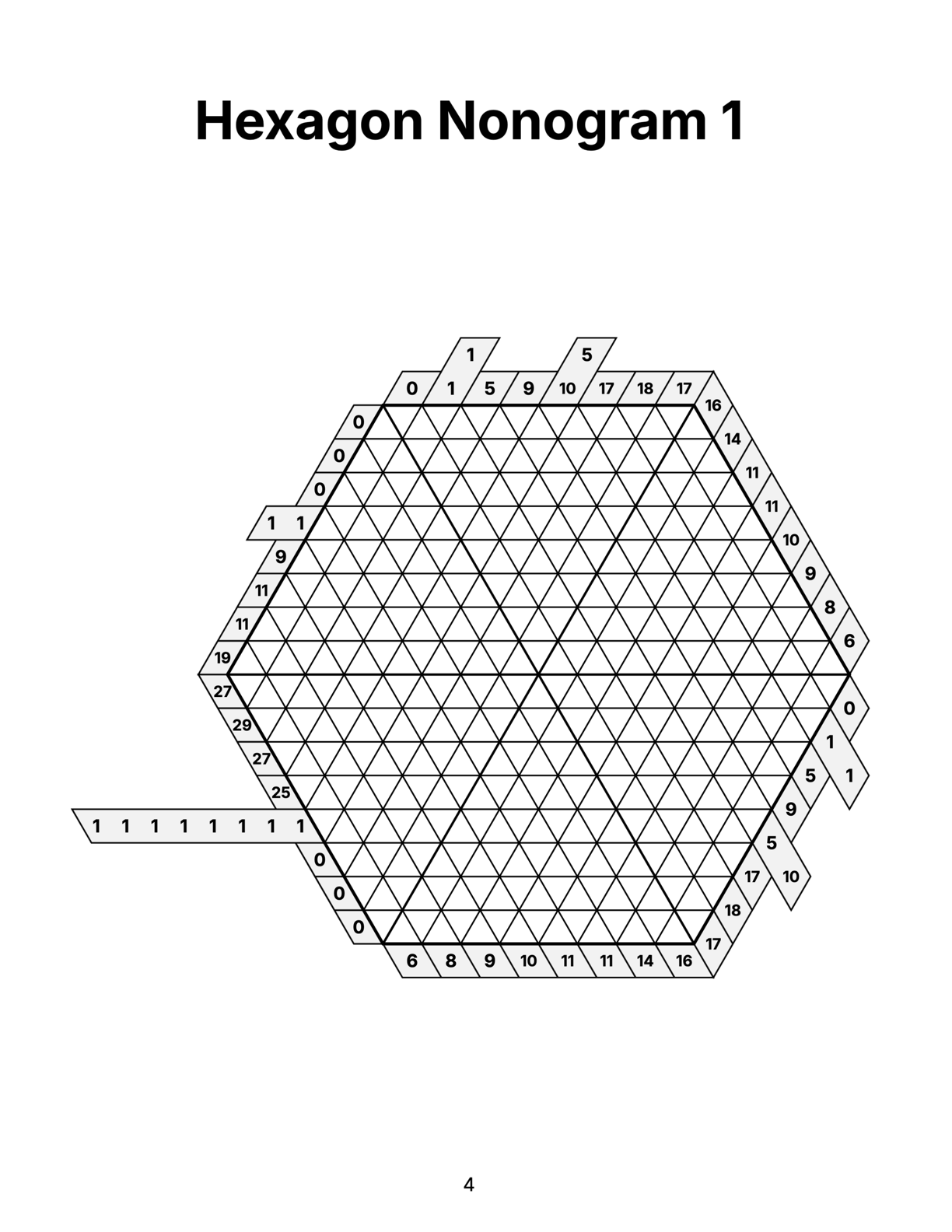
The grid is a regular hexagon cut into small triangles, and triangles line up in three directions: horizontal rows and two families of slanted strips. Every triangle lies on one line of each kind, so clue bands surround the hexagon on three sides, each listing the shaded blocks of its line in order. Neighboring triangles in a strip share a side, which makes a block look like a short zigzag ribbon.
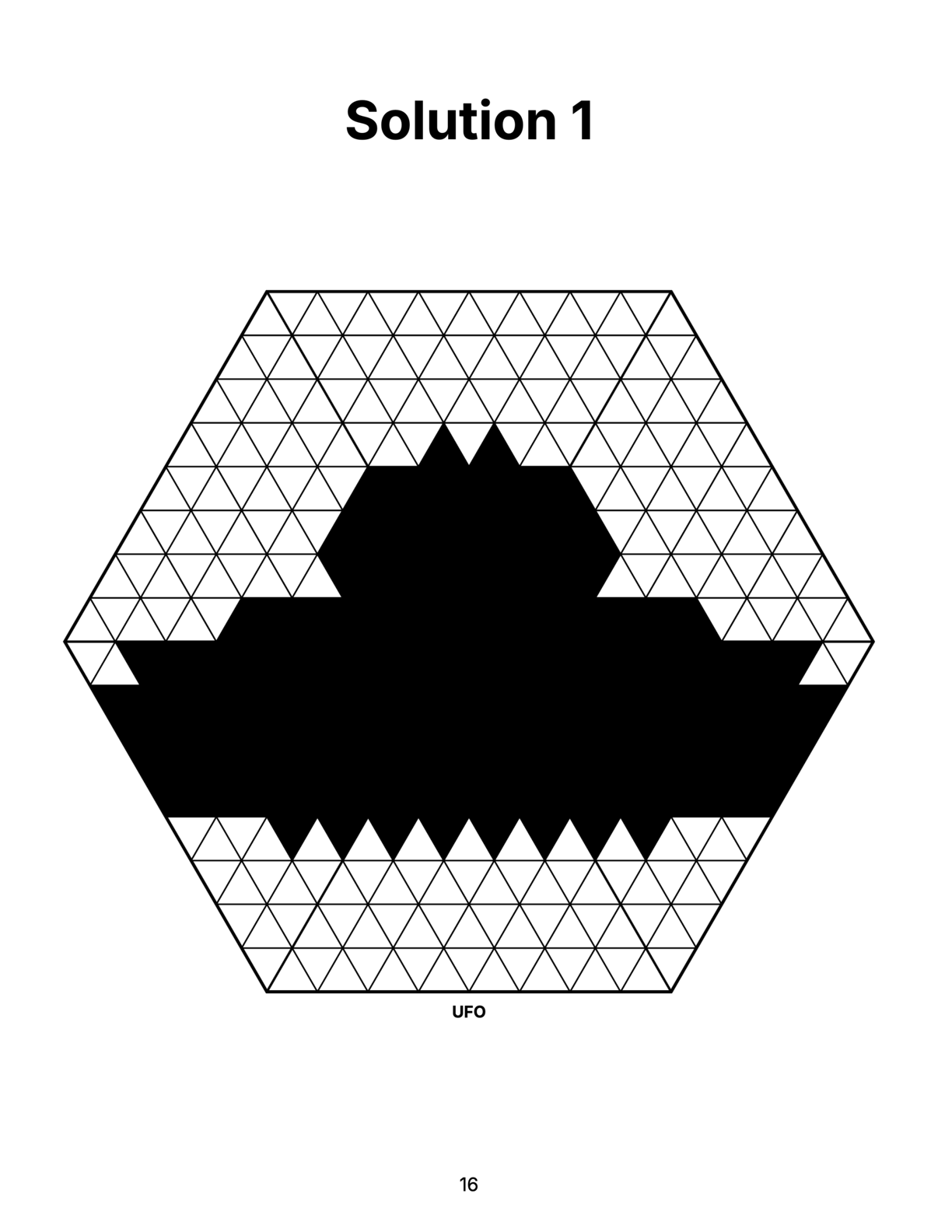
Line lengths vary a lot. On the side 8 hexagon below, the rows along the top and bottom edges hold 17 triangles and the two middle rows 31, so compare every clue with the length of its own line. Right under the middle, the first row reads 27 out of 31, which makes 23 of its triangles certain, and the next three read 29, 27 and 25, exactly their lengths, so they are shaded completely. The three rows at the top and the three at the bottom read 0. From there each marked triangle feeds two slanted lines at once.
The size of a hexagon is its side, 4 to 12 triangles, and Medium uses 8. Pictures come from a library drawn for hexagons or from patterns repeating around the center; your own images are not offered for this type. Create a hexagon nonogram book; the hexagon nonogram guide covers the sizes and levels.
7. Curved Nonogram: The Lines Are Curves
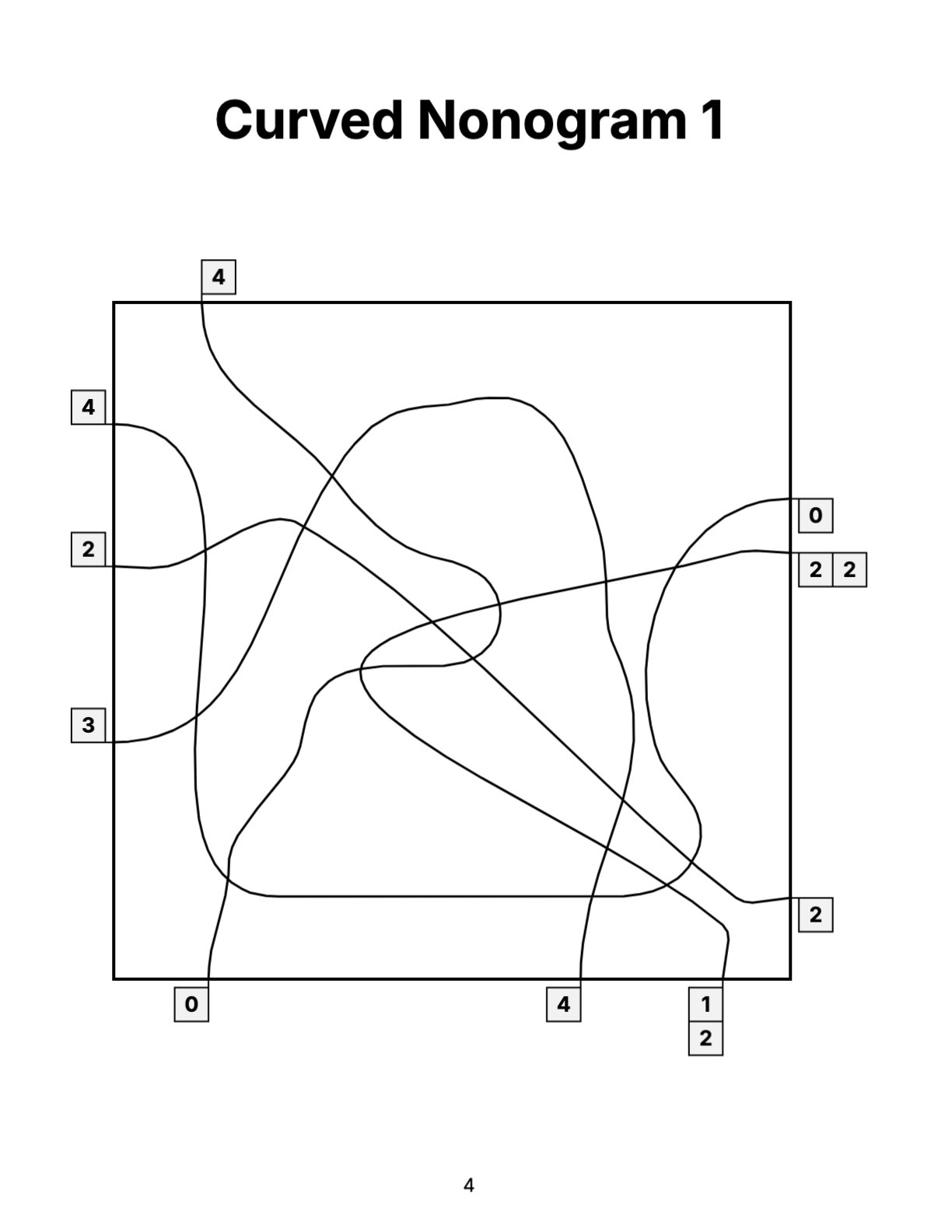
Here the grid is gone. Lines bend across a square frame from edge to edge, splitting it into areas of all shapes, and those areas are what you shade. Each curve has two sides, and each side counts as a line of the puzzle: the flag at one end lists the blocks of shaded areas along the side it stands on, starting from that end, with the number farthest out first. Two blocks need at least one empty area between them, and where two curves cross twice a side can meet the same area again, which then counts again.
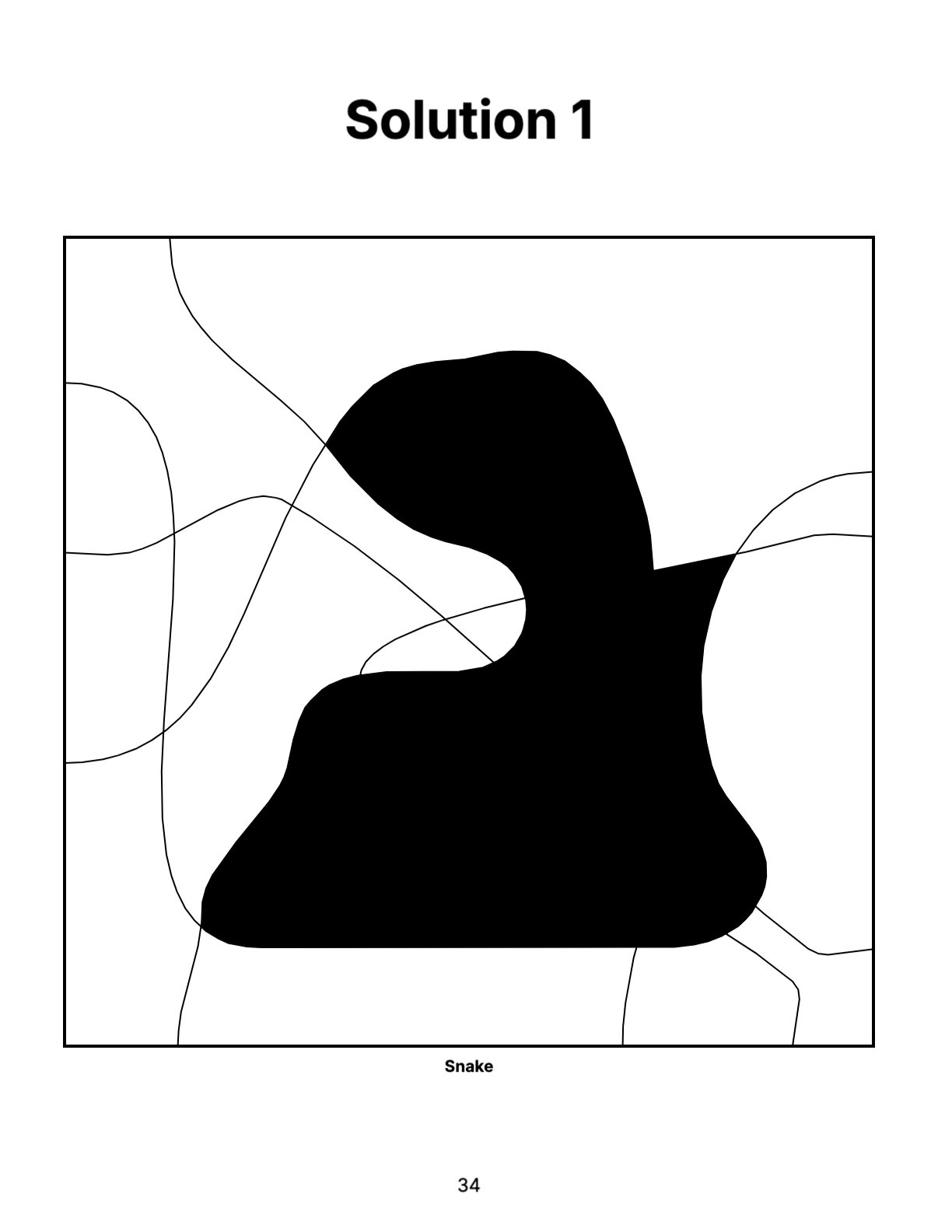
The page below has two zeros, and both settle a lot. The 0 on the right belongs to a curve that bends down, runs along the bottom and climbs back up to the 4 on the left, a wide U. Its flag stands below the curve’s end, so the 0 describes the outside of the U: every area between this curve and the frame on the right, along the bottom and on the left stays empty. The 0 at the bottom left empties the left side of the curve that climbs from there to the 4 at the top. What remains lies between the two curves, and each 4 asks for one unbroken block of four shaded areas on its inner side. The answer page shows why: the snake’s flat underside and its right flank follow the U.
The size is the number of curves added to the outline of the picture: Medium, the preset shown here, adds two, Hard four and Expert six. Pictures come from a library of silhouettes or from round patterns; your own images are not offered, because they are drawn in squares. Kids books keep fewer curves and larger areas, and Large Print books print bigger numbers in the flags. Create a curved nonogram book; the curved nonogram guide walks through reading the flags.
Which Variation for Which Solver
For someone new to picture logic, the classic type and the mosaic are the gentlest: one works line by line, the other digit by digit, and both have a Kids edition. Color nonograms are the friendliest step up, since a color tells the crossing line more than black ink does, as long as the book is printed in color.
Zebra and triangle puzzles are for people who already solve classic nonograms and want the familiar kind of picture with one new rule; neither has a Kids edition. The hexagon changes more, because a third direction alters how you read the whole grid, and it suits solvers who enjoy geometry. The curved nonogram goes furthest: with no grid left, every line has its own length and shape, so it suits solvers who like to trace a path before they shade.
A mixed puzzle book can hold several of these as chapters, say classic first and then zebra and triangle, within the types your plan includes. For word puzzles, our word search variations article takes the same tour through thirteen word search types.
In short
- A nonogram variation changes what a clue counts, where the clues stand, or the shape of the grid.
- The first move is the same in all seven: compare each clue with the room its line or block has.
- The classic nonogram is part of Pro and Publisher; the other six are Publisher types. The free trial has all seven with a watermark.
- Classic, color, mosaic, hexagon and curved books have a Kids edition; zebra and triangle books do not.
Tools for This Guide
Nonogram Puzzle Book Generator
Classic nonogram books with Kids and Large Print editions
OpenColor Nonogram Puzzle Book Generator
Color nonogram books with pictures in up to four colors
OpenMosaic Puzzle Book Generator
Mosaic books with the clues inside the grid
OpenHexagon Nonogram Puzzle Book Generator
Hexagon nonogram books with clues on three sides
OpenCurved Nonogram Puzzle Book Generator
Curved nonogram books with clue flags at the curve ends
OpenFree Nonogram Puzzle Generator
Free one-page nonogram maker, no sign-up needed
OpenFrequently Asked Questions
How many kinds of nonograms are there?
Puzzle magazines and websites print many. This article covers seven: the classic black and white nonogram, color, zebra, triangle, hexagon and curved nonograms, and the mosaic, which moves its clues inside the grid.
What is the difference between a nonogram and a mosaic?
A nonogram puts its clues outside the grid, and each clue describes a whole row or column. A mosaic has no clues outside: digits inside the grid count the shaded squares in the 3×3 block around them, so every step happens in a small area.
Which plan includes which nonogram type?
Classic nonograms are part of the Pro and Publisher plans. Color, zebra, triangle, hexagon and curved nonograms and mosaics are part of the Publisher plan only. The free trial includes all seven with watermarked pages; the Starter plan and credit packs include none of them.
Do color nonogram books need a color interior on Amazon KDP?
Yes. The clues and the solved pictures are in color, so the book has to be printed with a color interior, which costs more per page than black ink. The other six types print in black ink.
Can I turn my own pictures into nonograms?
On the Publisher plan and in the free trial, yes, for classic, color, zebra and triangle nonograms and mosaics: an uploaded image is converted to squares in your browser, or you draw one cell by cell in the pixel editor. Hexagon and curved nonograms use picture libraries of their own. Upload only pictures you are allowed to use.