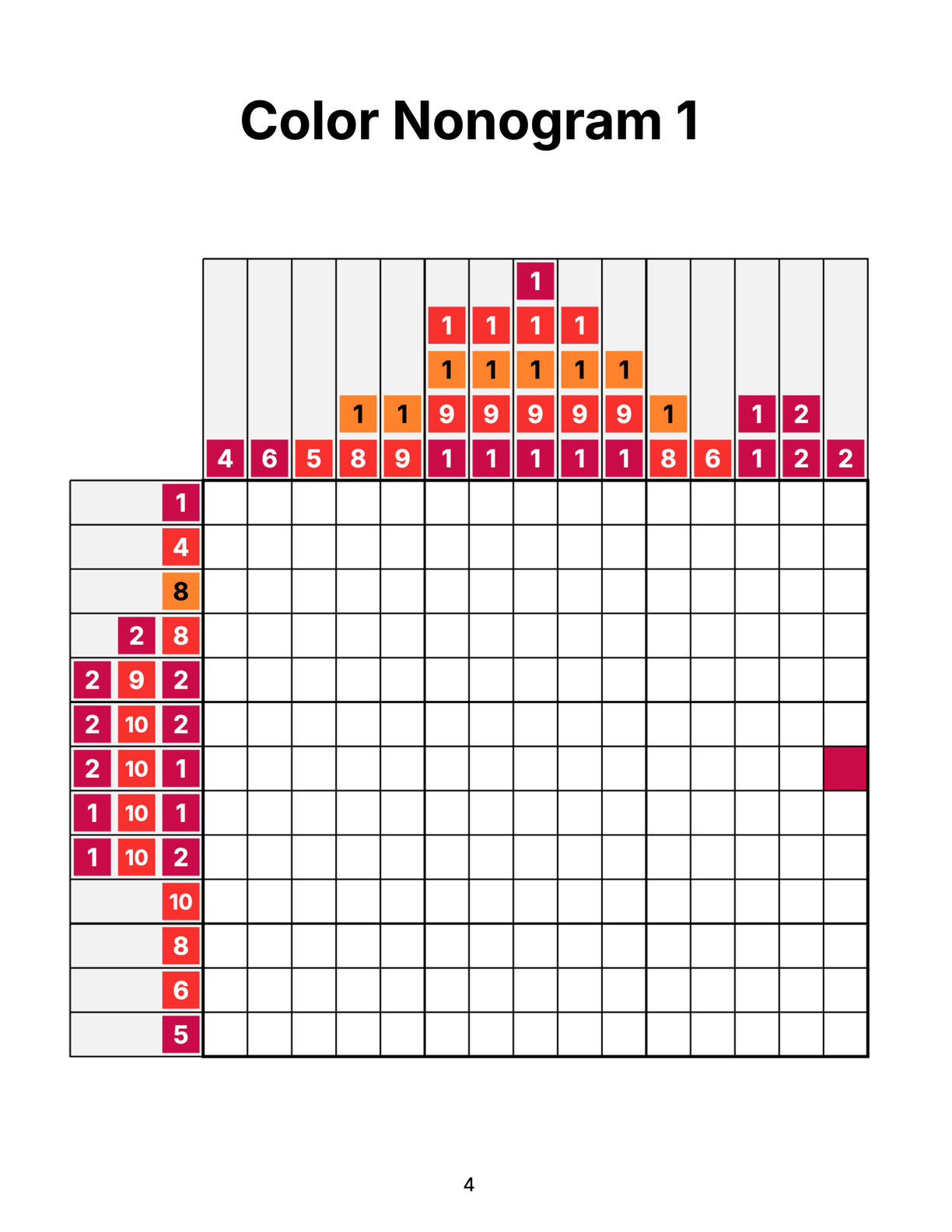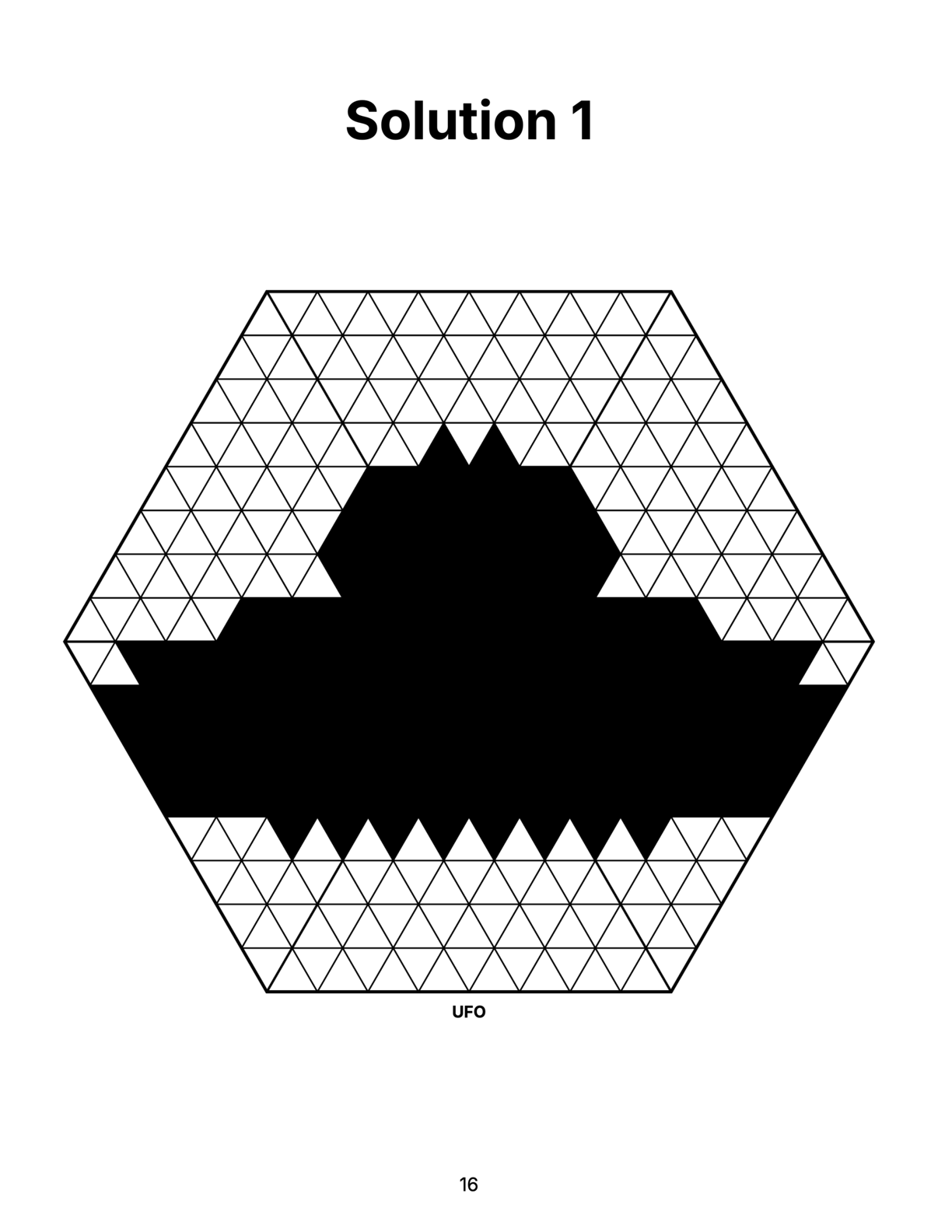
In short
A nonogram is a grid of empty squares with numbers beside every row and column; shading the squares the numbers describe reveals a picture. This guide explains the rules with real pages, the techniques that solve them, why a picture sometimes needs printed squares to stay fair, how grid size and logic set the difficulty, where the pictures come from, how the color, zebra and triangle variants differ, and how to position, build and export a nonogram book for Amazon KDP.
On this page
- 1.What Is a Nonogram? The Rules With an Example
- 2.Solving Techniques on Real Pages
- 3.Fair Pictures and Printed Givens
- 4.Grid Size, Logic and the 1–100 Score
- 5.Library Pictures, Patterns and Your Own Images
- 6.Classic, Color, Zebra or Triangle?
- 7.Editions, Readers and Book Titles
- 8.Building and Exporting the Book
- 9.Frequently Asked Questions
What Is a Nonogram? The Rules With an Example
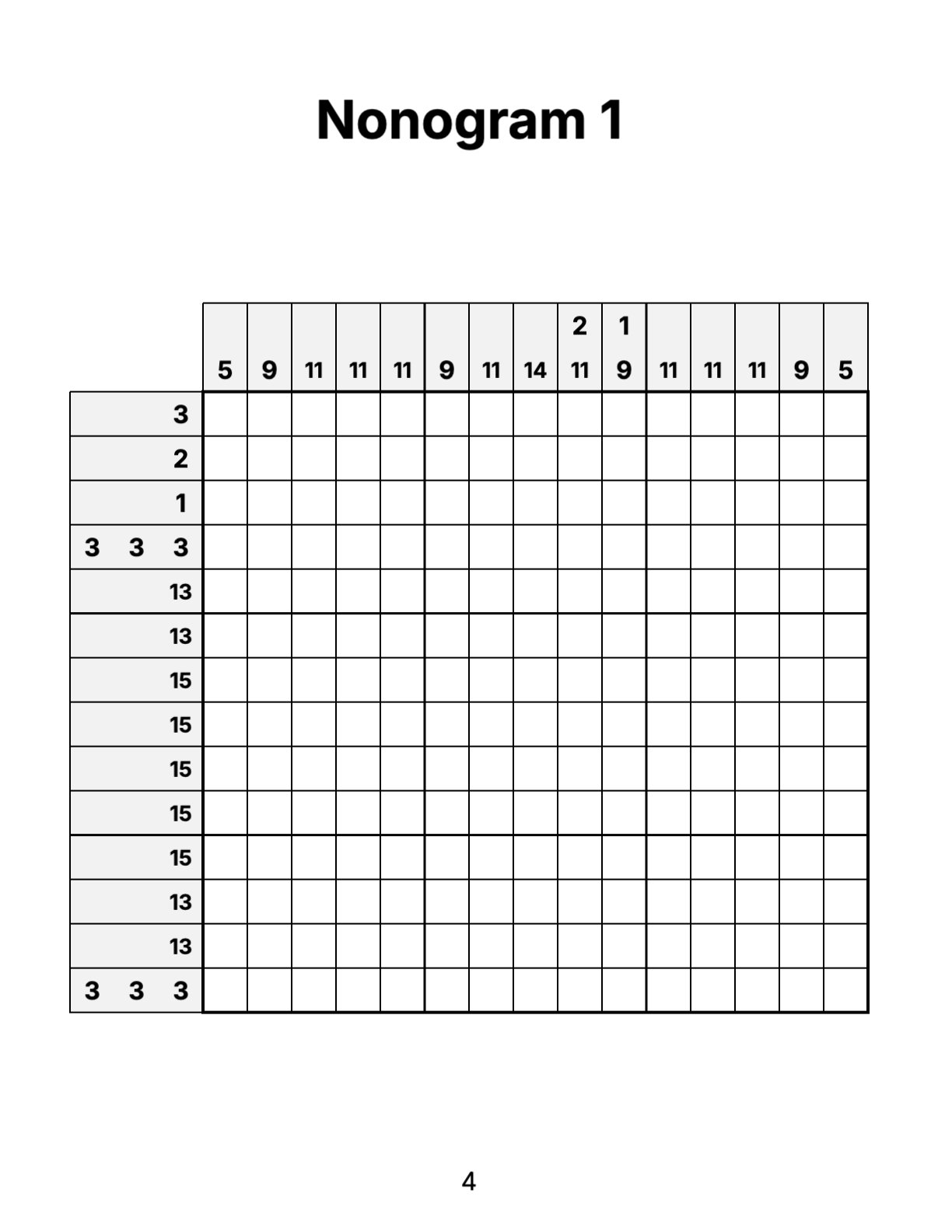
A nonogram, known as hanjie or paint by numbers too, is a picture hidden behind numbers. Each row has a list of numbers on its left and each column one above it. Every number is a block of filled squares in that line, the blocks come in the order of the numbers, and two blocks are separated by at least one empty square. A row marked “3 1” holds three filled squares, a gap of one or more, then a single square; how far each block sits from the edge is for the solver to find. When every line matches its numbers, the picture is there. Websites and video games sell the same puzzle as Griddlers® and Picross®. Griddlers® is a registered trade mark of Severex By, LLC; Wisdom Effect is not connected with Severex. Picross® is a registered trade mark of Nintendo; Wisdom Effect is not connected with Nintendo.
The puzzle comes from Japan. In 1987 the graphic editor Non Ishida and the puzzle maker Tetsuya Nishio came up with it independently; the British puzzle collector James Dalgety later named it nonogram, from Non and diagram, and The Sunday Telegraph printed one every week from 1990.
A nonogram needs no language, so one interior serves readers in every Amazon marketplace, and its reward, a finished picture, is understood at every age. In Wisdom Effect the classic nonogram is a black and white book type with grids from 5×5 to 30×30; its variants are book types of their own, compared further down.
Solving Techniques on Real Pages
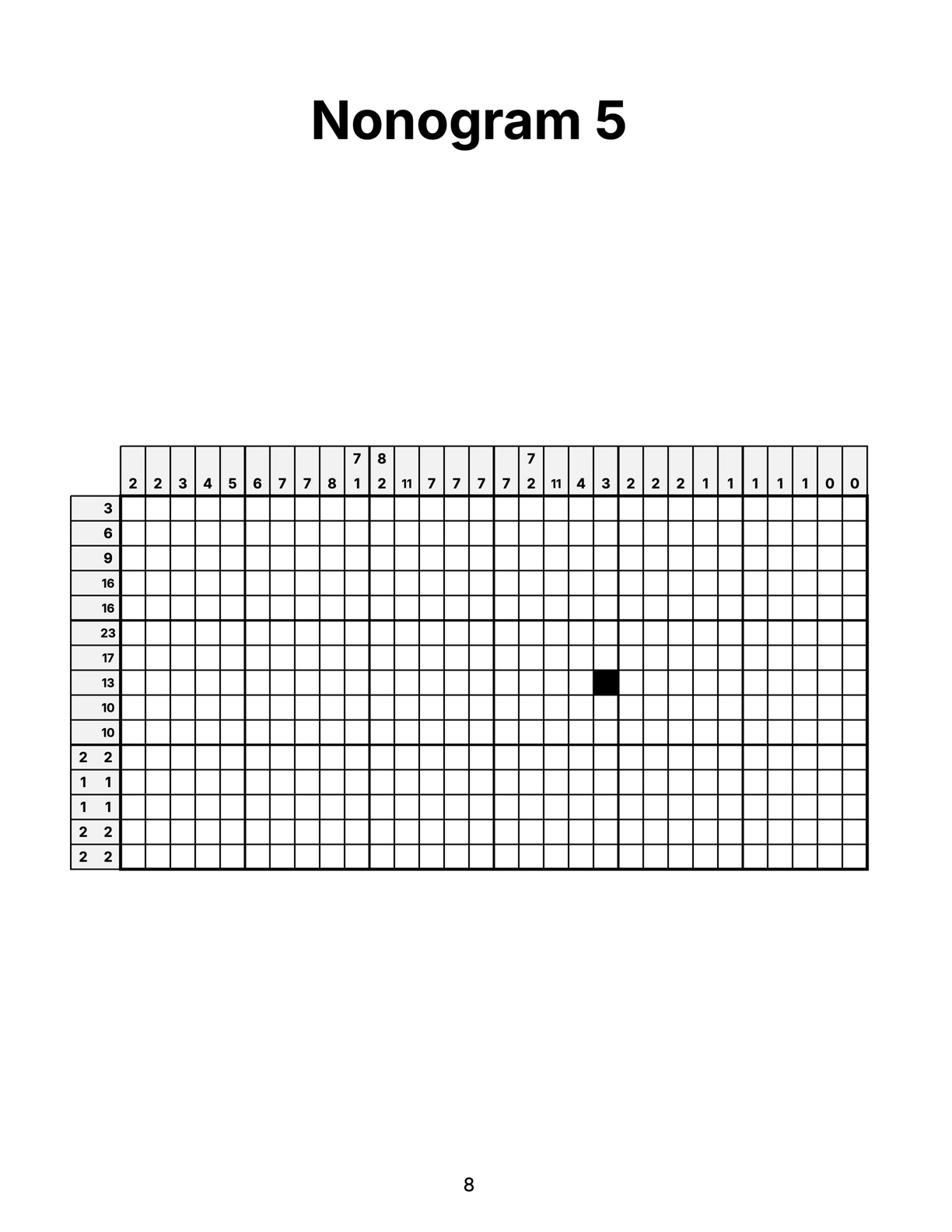
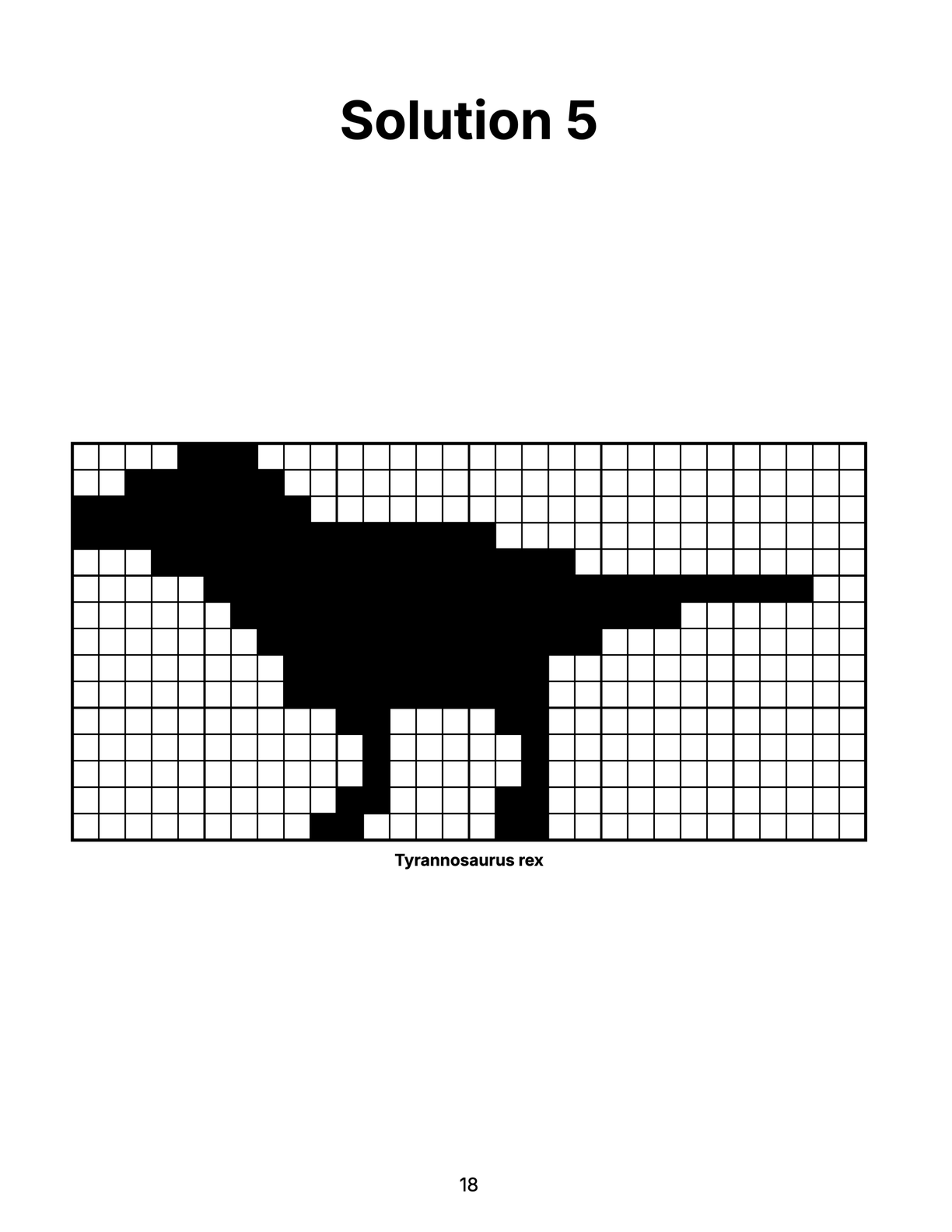
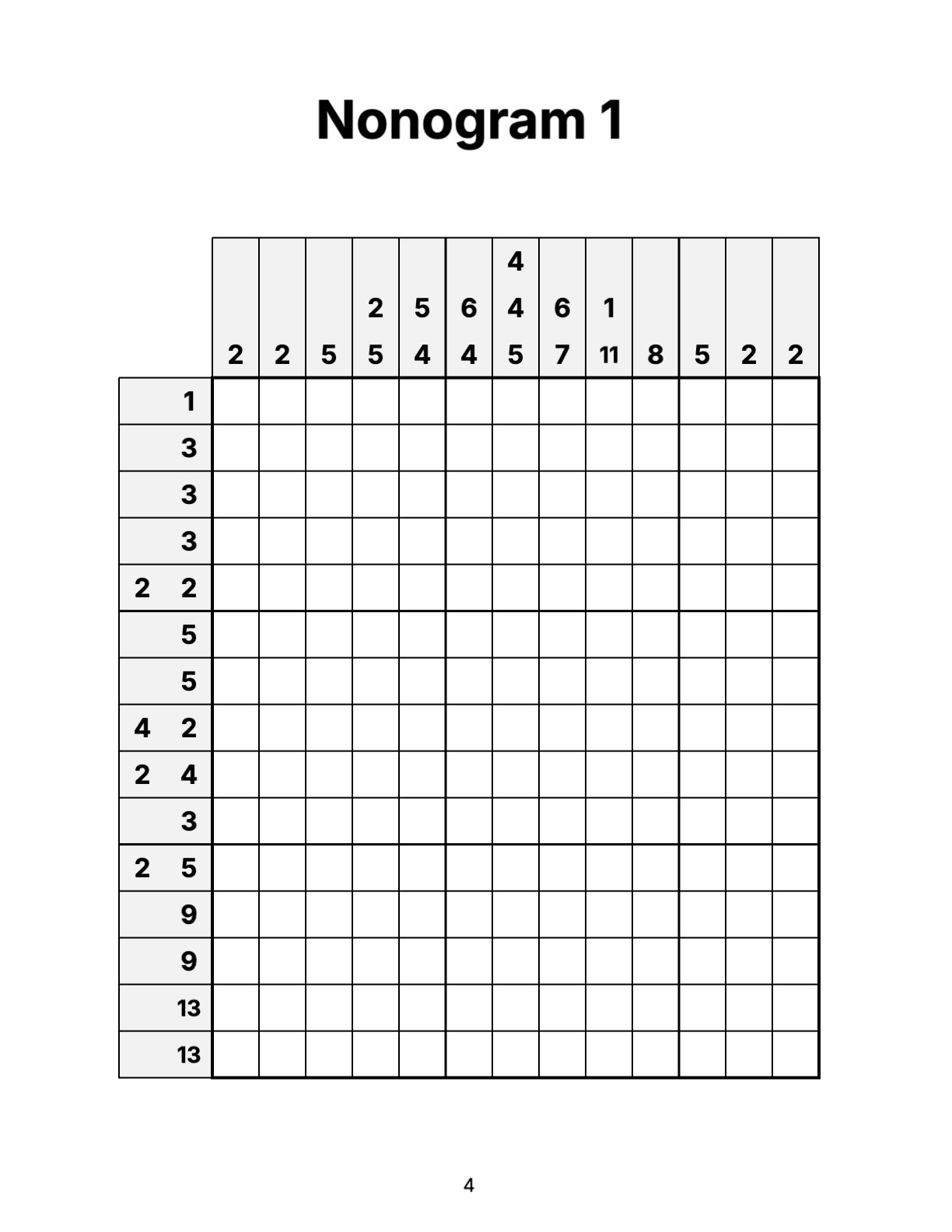
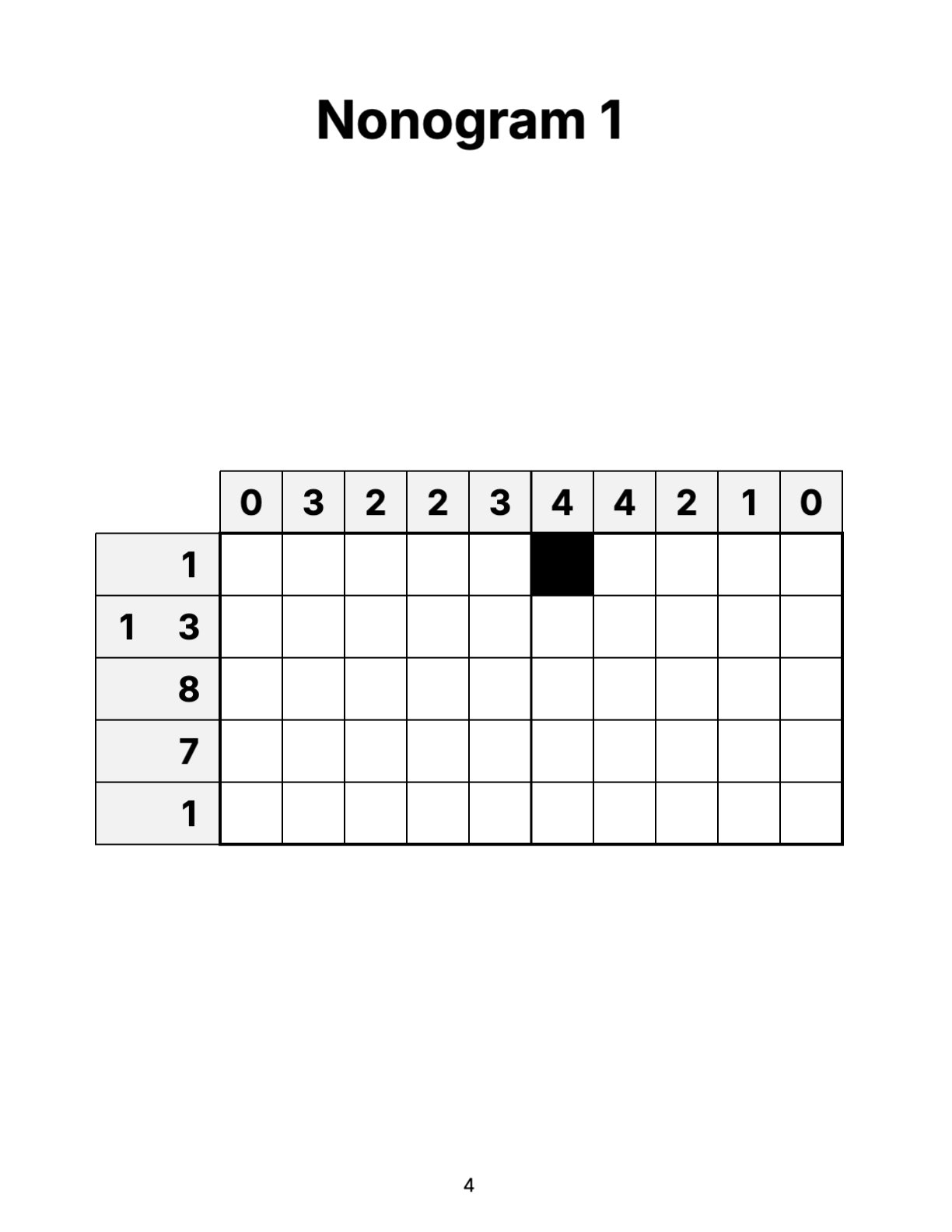
The kids page below shows the first moves of almost every nonogram. Its outer columns are marked 0, so they stay empty: dot them. That leaves eight squares in each row, and the row marked 8 fills all of them. The row marked 7 can start in one of two places inside those eight squares, and the six squares both positions cover, the third to the eighth, are filled for sure. The top row is marked 1 and its square is printed as a given, so the rest of that row is empty.
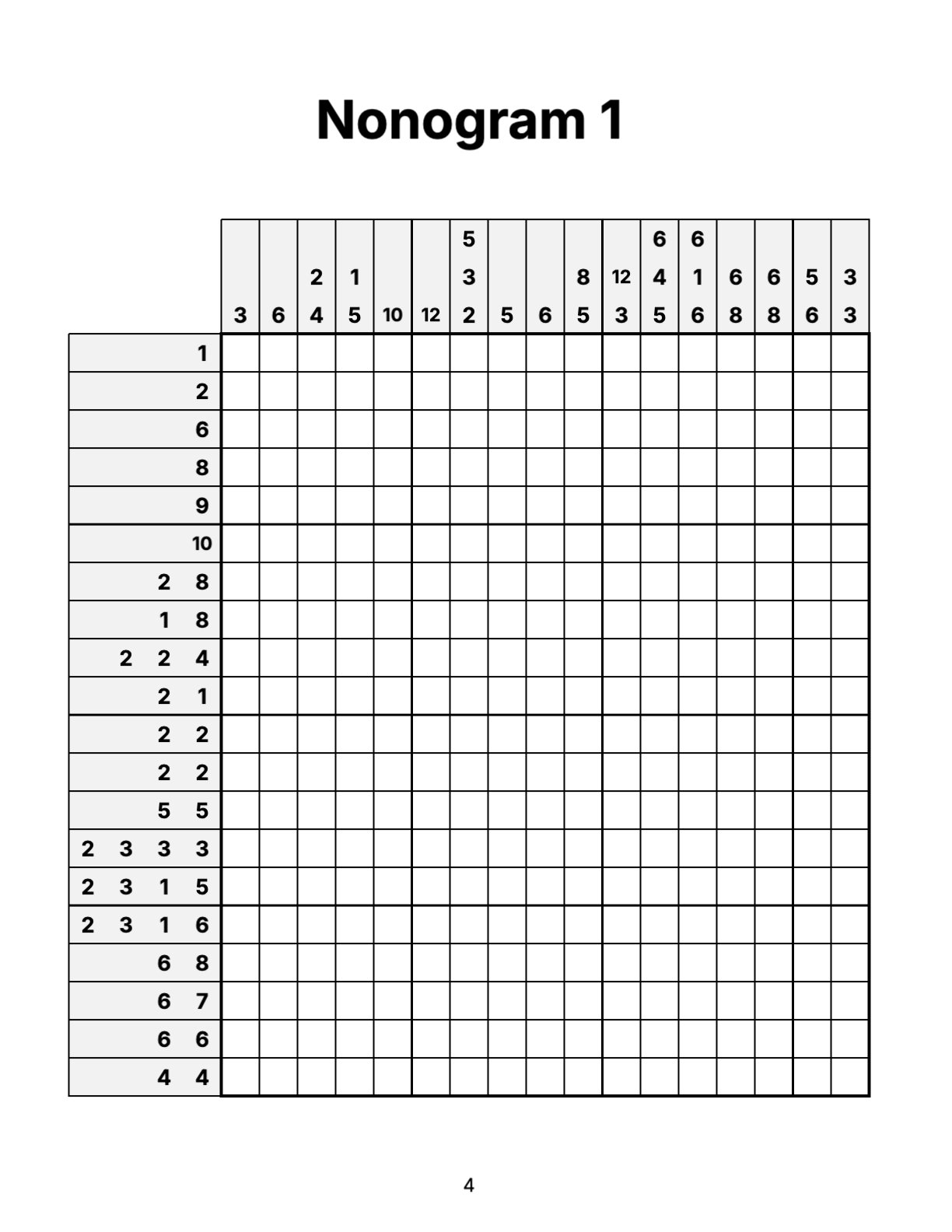
That overlap works in any line: slide the block as far left as it goes, then as far right, and fill what both positions share. In a line of 15, a 12 covers squares 4 to 12 either way. With several numbers, add them up with one gap between neighbours; when the total equals the line, as on the standard page above, the line is solved at once.
Edges and known squares tighten things further. In a line of 10 marked 4, a filled second square means squares 2, 3 and 4 are filled whichever way the block runs, and squares 6 to 10 stay empty because the block cannot reach them. Then switch between rows and columns: every square found in a row is a new fact for the column crossing it. Easy and Medium puzzles never need more than this line-by-line logic. Hard ones can stall; the solver then tries a square, follows what it forces, and when a line can no longer match its numbers, the square must be the other way.
Fair Pictures and Printed Givens
Not every picture makes a fair nonogram. Take two filled squares that touch only at a corner, inside an otherwise empty 2×2 patch: the mirror pair across the other diagonal gives the same numbers in all four lines, so nothing tells the solver which pair is right. A book with such puzzles teaches readers to guess, and half of them finish with a picture that differs from the answer key.
Wisdom Effect solves every puzzle with the logic of its level before it is printed. Where the numbers leave a choice, it prints a deciding square in the grid, usually a filled one, sometimes a dot for an empty one, and solves again until a single picture remains. The Book Check in the configurator shows how many of the first puzzles print such givens and how many squares that is. Pictures with bold areas and clean outlines need few or none; thin diagonal lines and checkerboard detail need more.
Grid Size, Logic and the 1–100 Score
Two dials set the difficulty: the size of the grid and the logic a puzzle may require. Easy and Medium fall to line-by-line logic; Hard allows the trial step described above. The library is ordered by complexity, so Easy books draw the simpler pictures and Hard books the most involved ones.
Each puzzle also gets a complexity score from 1 to 100. It weighs the grid size, the longest chain of deductions, how little the first sweep over all lines reveals and how much trial the solve needs; printed givens lower it. The book can print the score under each grid and can run from the lowest score to the highest, so the first pages build confidence.
| Preset | Grid | Logic | Credits per puzzle |
|---|---|---|---|
| Easy | 10×10 | Line by line, simpler pictures | 1 |
| Medium | 15×15 | Line by line | 1 |
| Hard | 20×20 | Trial and contradiction allowed | 1 |
| Expert | 25×25 | Trial and contradiction allowed | 2 |
Library Pictures, Patterns and Your Own Images
The picture library holds 330+ pictures across its black and white and color sets, in 13 themes: animals, nature and weather, food and drinks, travel and transport, home and everyday, sports, music and hobbies, space and fantasy, and six holidays. Each picture is drawn for the sizes it prints at, 10 to 25 squares on its longer side, and keeps its proportions, so a 15 grid may be 13 squares wide. A book never repeats a picture, the next book of a series continues where the last one stopped, and the library pictures are cleared for commercial use in your books.
When the chosen themes run out, abstract symmetric patterns made from the book code fill the remaining puzzles, and the Book Check tells you so. Patterns can also be the source of a whole book.
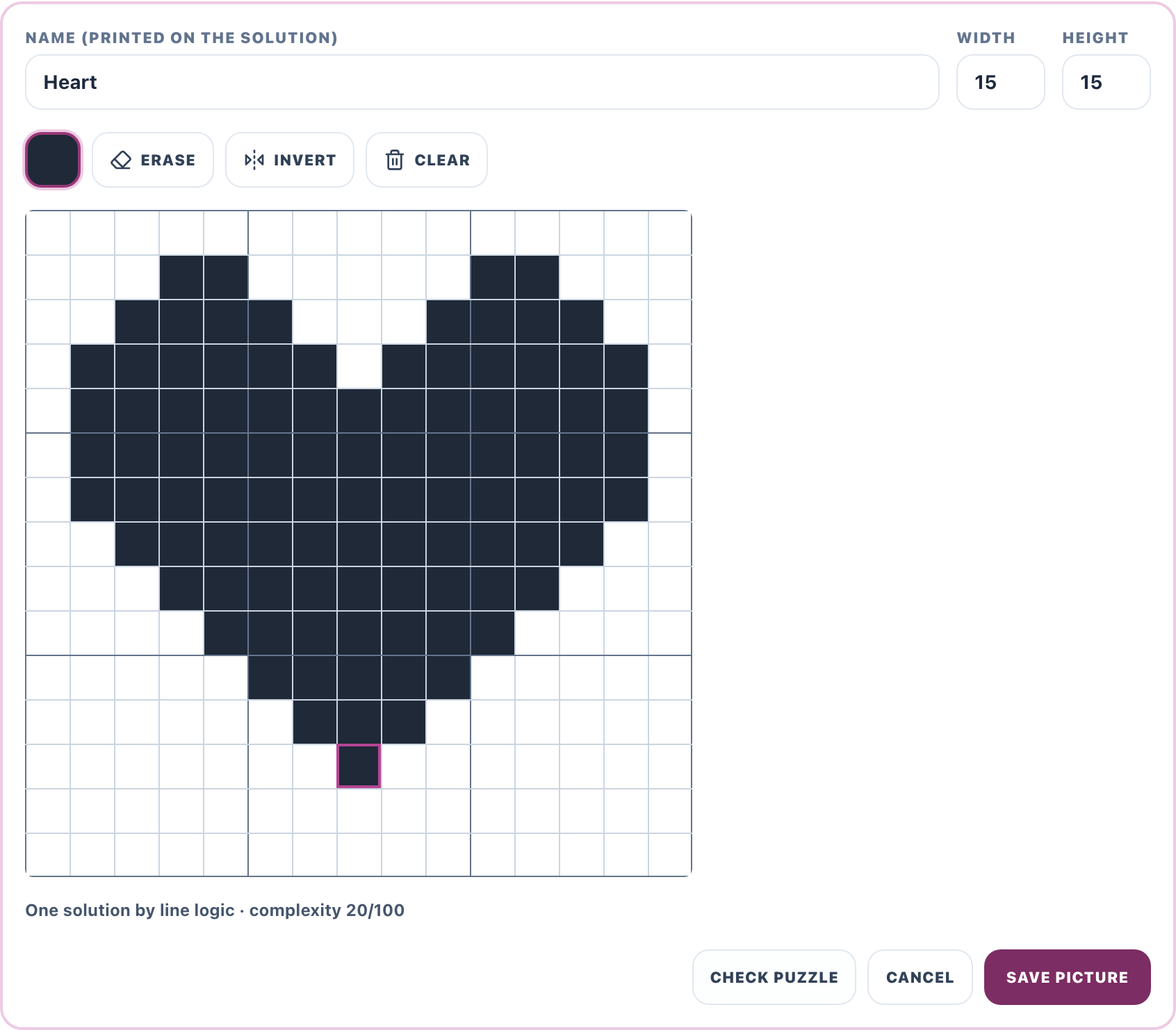
On the Publisher plan and in the free trial your own images become nonograms. Upload a PNG, JPEG, WebP or GIF of up to 8 MB: it is turned into squares in your browser, where you set the grid size and the black and white threshold, and nothing goes to a server. Or draw square by square in the pixel editor, up to 30×30. A book holds up to 200 own pictures, and each gets the same one-solution check as a library picture. Use only images you have the rights to; a pet portrait, a school mascot or the characters of your own series make a book personal.
Classic, Color, Zebra or Triangle?
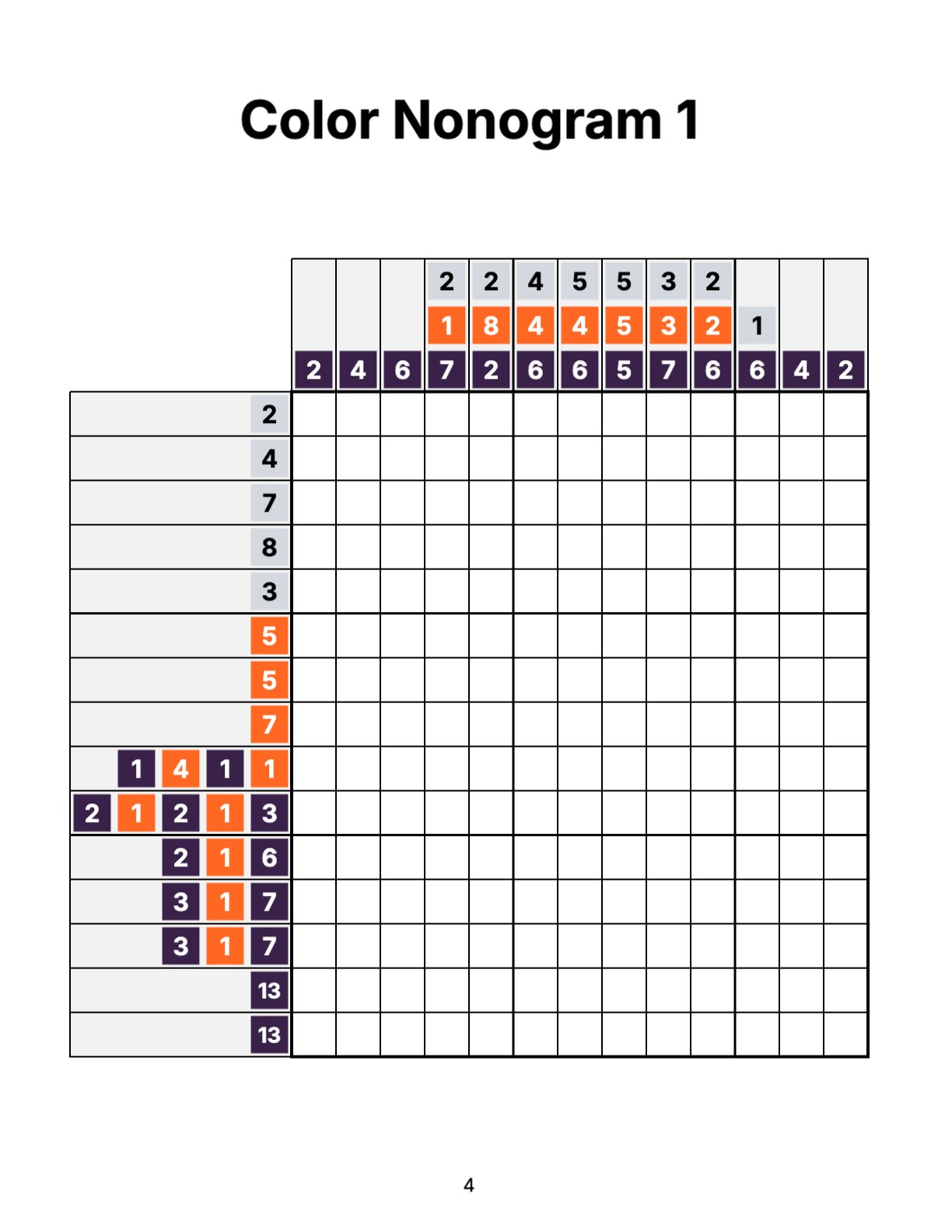
Three more book types share the nonogram engine and library, each with a clue rule of its own. They are for readers who know the classic rule and want something new from the same kind of picture, and they are part of the Publisher plan and the free trial.
Each has its own guide: color nonograms need a color interior on KDP, while zebra nonograms and triangle nonograms print in black ink. A mixed book can hold chapters of all four types, which makes a natural nonogram variety book: classic puzzles first, then the variants.
| Type | Clue rule | Kids edition | Credits per puzzle |
|---|---|---|---|
| Nonogram | Numbers give filled blocks, black and white | Yes | 1 (2 above 20×20) |
| Color Nonogram | Numbers in up to four colors; blocks of different colors may touch | Yes | 2 |
| Zebra Nonogram | Every second row and column counts the empty squares | No | 2 |
| Triangle Nonogram | Half squares in the clues give the pictures 45° edges | No | 2 |
Editions, Readers and Book Titles
Children start on small grids, and a nonogram trains counting, planning and patience while the picture keeps them going. Adults are happiest between 15×15 and 25×25. Seniors care more about clear print than grid size, so the Senior edition keeps to 20×20 and prints one large puzzle per page.
Buyers search by puzzle name as much as by theme, so put “nonogram” and an alias such as hanjie or paint by numbers into the title or subtitle, never a trade mark. Two examples: “Nonograms for Adults: Hidden Picture Logic Puzzles, Medium to Hard” and “Large Print Nonograms for Seniors: Easy Picture Puzzles with Solutions”. A holiday edition puts the season’s pictures first for a Christmas or Halloween gift title, and the answer key of finished pictures is worth showing in the Look Inside preview.
| Edition | Grids | Presets | Puzzles per page |
|---|---|---|---|
| Kids | 5×5 to 15×15 | Small, Bigger, Tricky | 1 or 2 |
| Standard | 5×5 to 30×30 | Easy, Medium, Hard, Expert | 1, 2 or 4 |
| Senior | 10×10 to 20×20, large print | Relaxed, Classic, Challenging | 1 |
Building and Exporting the Book
On /create choose the edition and the Nonograms card. The configurator sets the preset, the picture source, the grid and the logic, and its Book Check solves the first puzzles in front of you: how many have one solution, their score range, how many need trial and how many print givens. The Book Code makes a book reproducible, so the same code always gives the same puzzles.
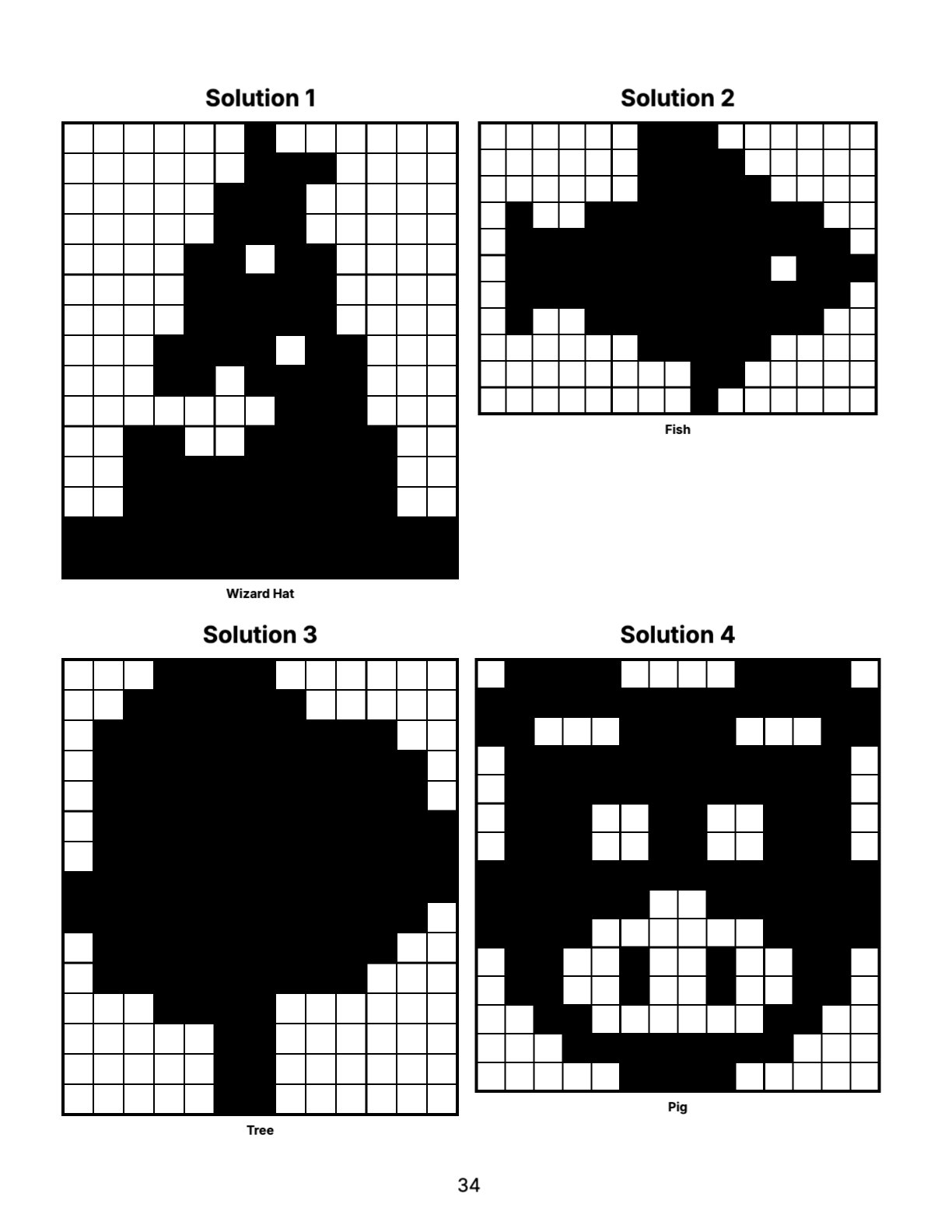
In the editor the Puzzle Design panel switches the instruction, the 1–100 rating and the picture names under the solutions, shades the clue areas and sets the line weights and the number size. Solutions print up to nine per page in standard books and up to four in Kids and Senior books. The editor guide walks through every panel; export the interior PDF once the KDP summary confirms the page count for your trim.
Three mistakes to avoid: very large grids on a small trim (keep 25×25 and 30×30 for 8.5×11 or A4), puzzles in random order instead of easiest first, and a cover that promises color when the interior is black and white.
Key rules
- Each number is a block of filled squares, in order, with a gap between blocks.
- Overlap, edges, dots and switching between rows and columns solve most puzzles.
- A fair picture has one solution; printed givens fix the ones that would allow two.
- Grid size and logic set the level; the 1–100 score orders the book easiest first.
Tools for This Guide
Nonogram Puzzle Book Generator
Black and white nonogram books from library pictures, patterns or your own images, Kids & Large Print.
OpenFree Nonogram Puzzle Generator
A free printable nonogram page, Easy or Medium, with the finished picture as answer key.
OpenColor Nonogram Puzzle Book Generator
Color nonogram books: clue numbers in up to four colors reveal colored pictures.
OpenZebra Nonogram Puzzle Book Generator
Zebra nonogram books where every second line counts the empty squares.
OpenTriangle Nonogram Puzzle Book Generator
Triangle nonogram books: half squares in the clues give the pictures slanted edges.
OpenMine Finder Puzzle Book Generator
Mine Finder books: another grid logic puzzle solved square by square.
OpenFrequently Asked Questions
What are the rules of a nonogram, with an example?
Each number is a block of filled squares in its row or column, in order, with at least one empty square between blocks. A row of 10 marked “3 1” holds three filled squares, a gap, then one filled square; the solver works out where they sit.
What does a 0 mean in a nonogram?
The line has no filled squares at all. Dot every square of it; it is the easiest line of the puzzle.
Why are some squares already filled in?
They are givens. Some pictures would allow two solutions from the numbers alone, so the deciding squares are printed in the grid and the puzzle has exactly one solution.
Is a nonogram the same as paint by numbers?
In puzzle books, yes: paint by numbers and hanjie are other names for the nonogram. It is not the coloring activity with numbered areas.
What grid size suits seniors?
Print size matters more than grid size. The Senior edition uses 10×10 to 20×20 grids with big squares and one puzzle per page.
How many credits does a nonogram book cost?
One per puzzle up to 20×20 and two above that, so 60 Hard puzzles cost 60 credits. Nonograms are part of the Pro and Publisher plans and the free trial; your own pictures need Publisher or the trial.