In short
Most crossword books on Amazon KDP and Etsy are freeform: the words cross each other with open space around them instead of filling a symmetric newspaper grid. That makes any themed word list a puzzle, but a good book still needs fair clues, the right number of words for its audience and a grid that stays compact. This guide explains each decision — numbered clues, grid size, kids and large print — and shows, screen by screen, how to make a complete book in Wisdom Effect.
On this page
- 1.Freeform vs. Newspaper Crosswords
- 2.Numbered Across and Down Clues
- 3.What Makes a Fair Clue
- 4.Pick the Audience: Grid and Words
- 5.Answer Keys and Page Layout
- 6.Step 1: Create the Book
- 7.Step 2: Words, Clues and Grid Look
- 8.Step 3: Difficulty and Grid Size
- 9.Step 4: Book Settings, Design and Export
- 10.Frequently Asked Questions
Freeform vs. Newspaper Crosswords
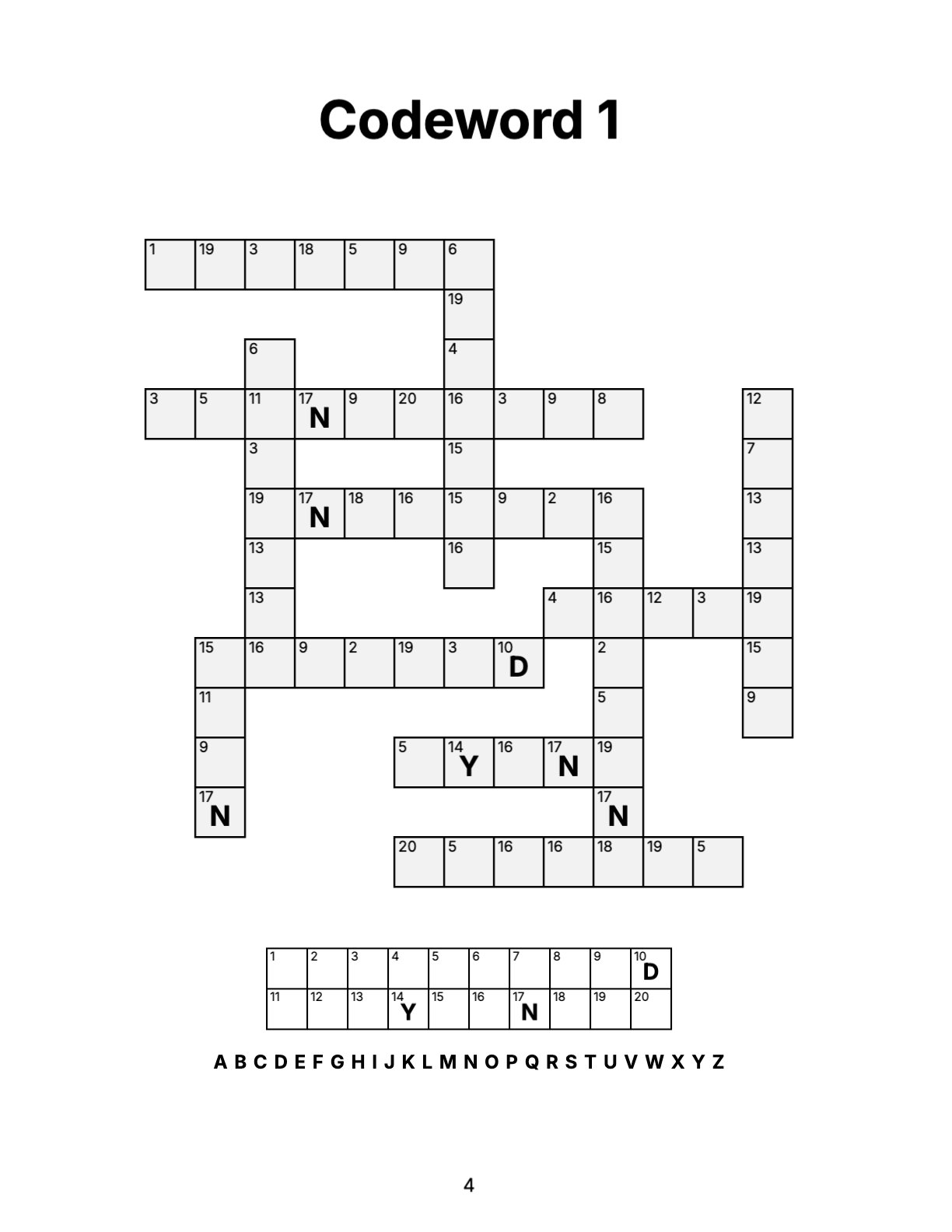
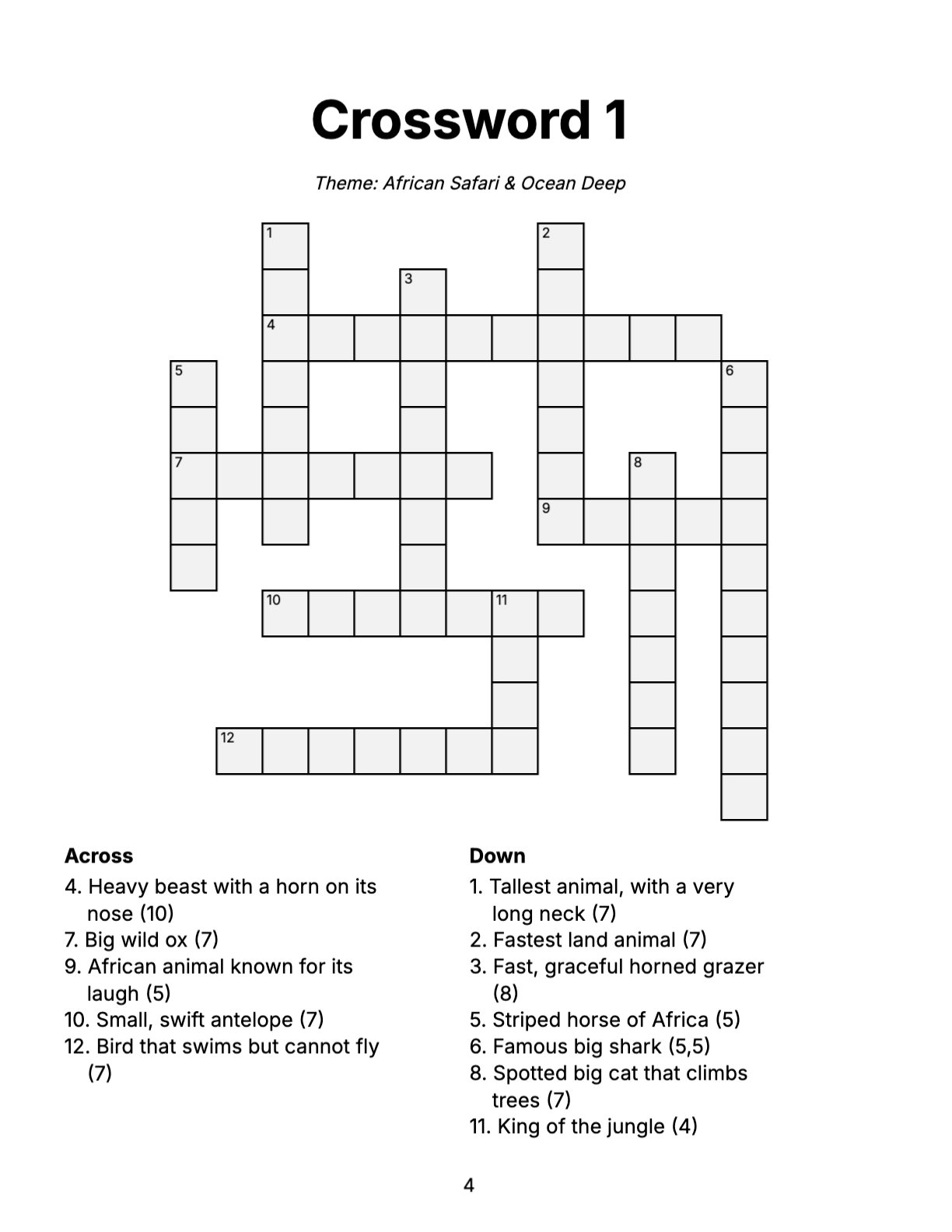
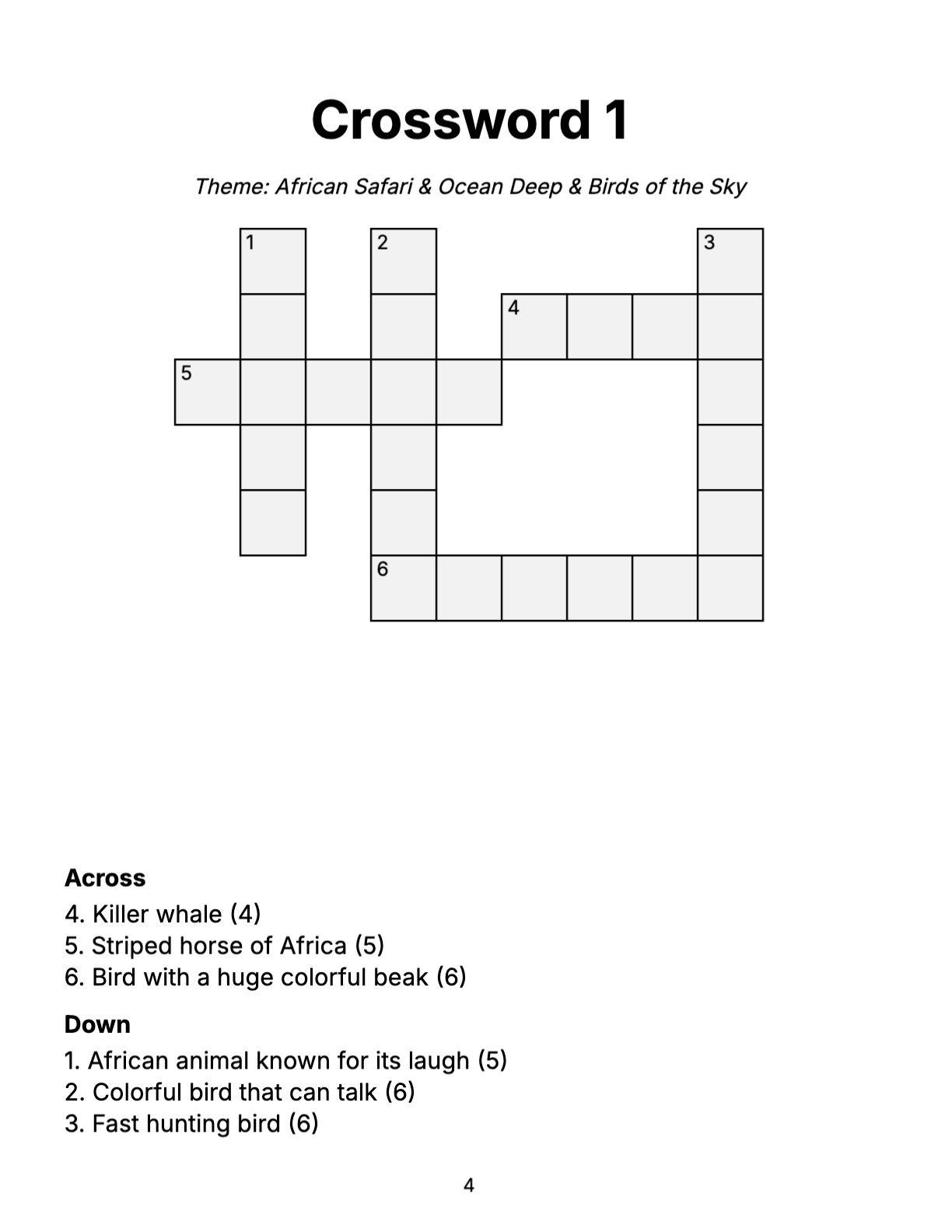
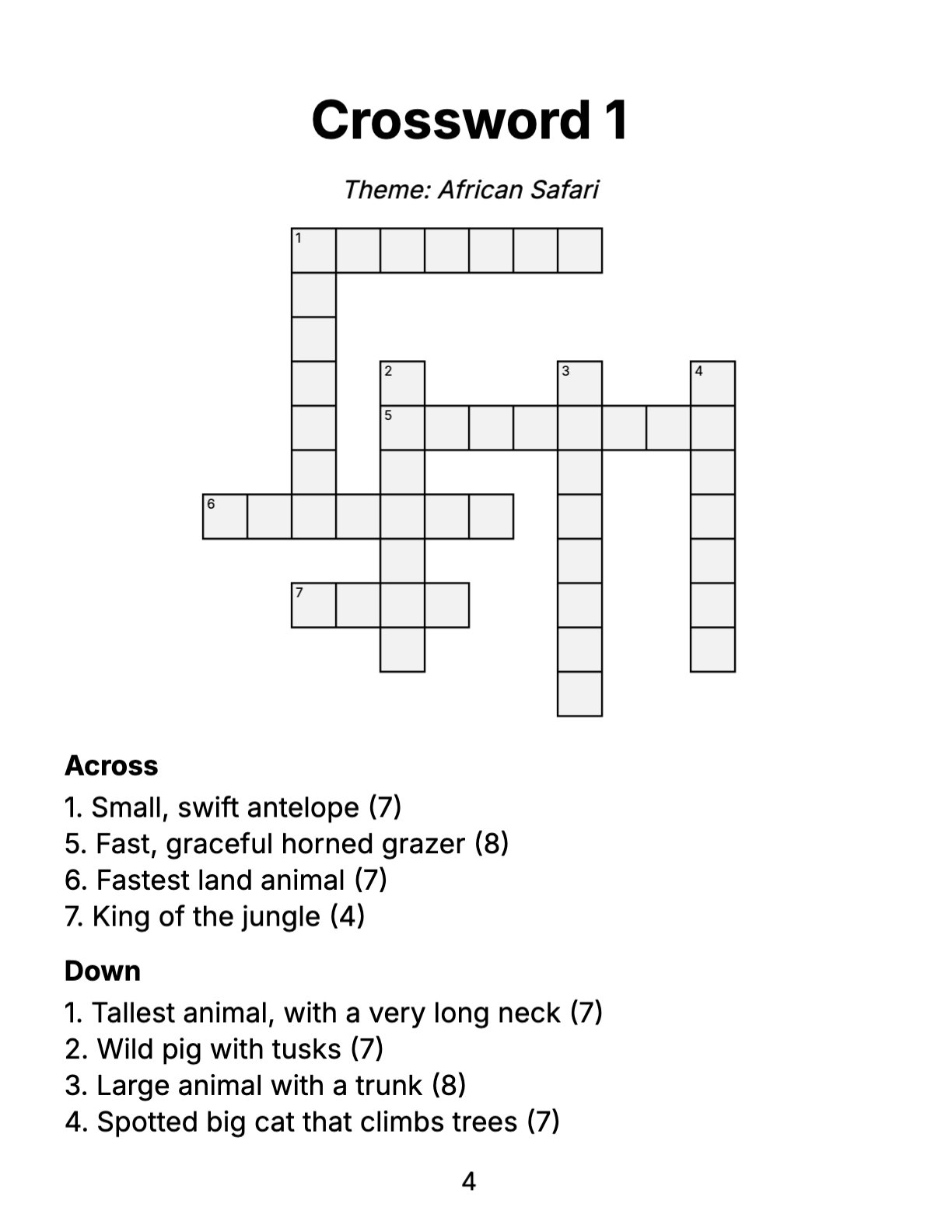
A newspaper (American or British style) crossword fills a square grid with rotational symmetry: every white square belongs to a word, and building one needs a huge dictionary and hours of construction. A freeform crossword — also called criss-cross — works the other way round: it starts from a word list and lets the words cross each other freely. Only the answer squares print; around them is empty space, or black squares if you prefer a boxed look. The rows do not have to be full and the grid has no symmetry.
That is why freeform is the standard of activity books, classroom worksheets and themed crossword books on Amazon KDP and Etsy: every theme — dinosaurs, Christmas, gardening — becomes a puzzle, and readers recognize the format at once. It also makes a strong chapter of a mixed activity book, next to a word search.
Numbered Across and Down Clues
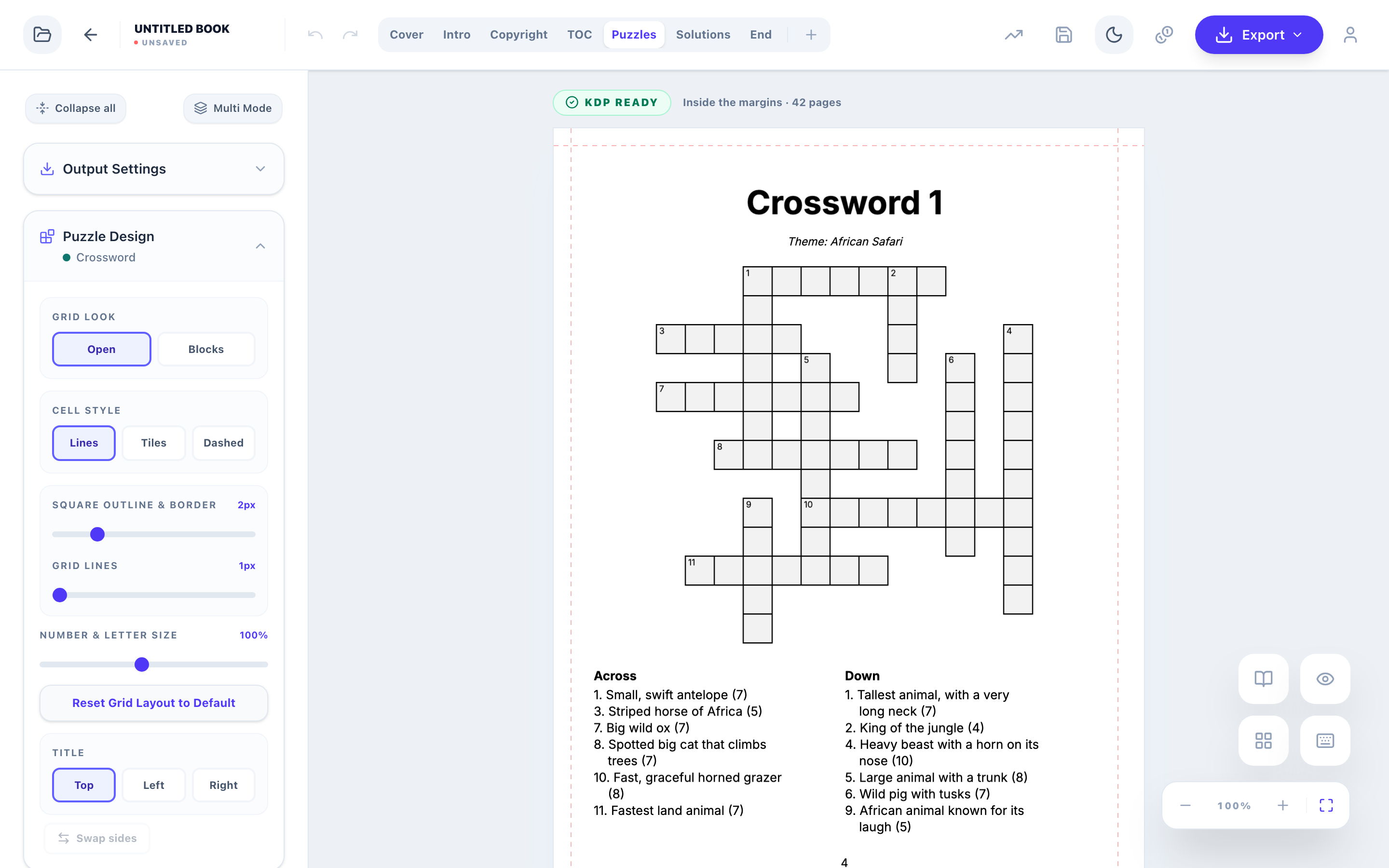
Each answer gets a number in its first square and a clue under the grid, grouped into Across and Down, with the letter count in brackets — “7. Largest planet (7)”. Phrases show the length of each word: ICE CREAM is (3,5). The solver works out the answers from the clues and checks them against the crossings.
Where two words start in the same square, they share its number: 3 Across and 3 Down. The numbers run from the top left, row by row, so the clue lists stay easy to follow even in a large freeform grid.
What Makes a Fair Clue
A clue must lead to exactly one answer of the given length and must never contain the answer itself — “Snow leopard: big cat of snowy peaks” gives it away. Keep clues short (under 60 characters fits two text columns), concrete and suited to the audience: “It says moo” for kids, “Bovine dairy producer” for adults.
Wisdom Effect ships over 1,100 hand-written English clues for five themes — animals, food, nature, space and sports — and an automated check makes sure none of them contains its answer. For your own topics, upload a CSV with the columns Title, Word and Clue: the rows with the same title become one crossword, and the configurator lists every word it cannot use and why.
Pick the Audience: Grid and Words
The number of words decides how long a puzzle takes. Children need 4 to 8 short words in big squares they can write in; adults enjoy 12 to 16 words, experts up to 20 longer ones. Seniors prefer fewer words (6 to 12) in large print. The grid size is the largest box the words may use, so a bigger grid allows longer answers and more crossings.
| Edition | Grid | Words per puzzle | Word length |
|---|---|---|---|
| Kids | 7×7 to 11×11 | 4–10 | 3–7 letters |
| Standard | 9×9 to 17×17 | 6–20 | 3–15 letters |
| Senior | 9×9 to 14×14 | 5–14 | 3–10 letters, large print |
Answer Keys and Page Layout
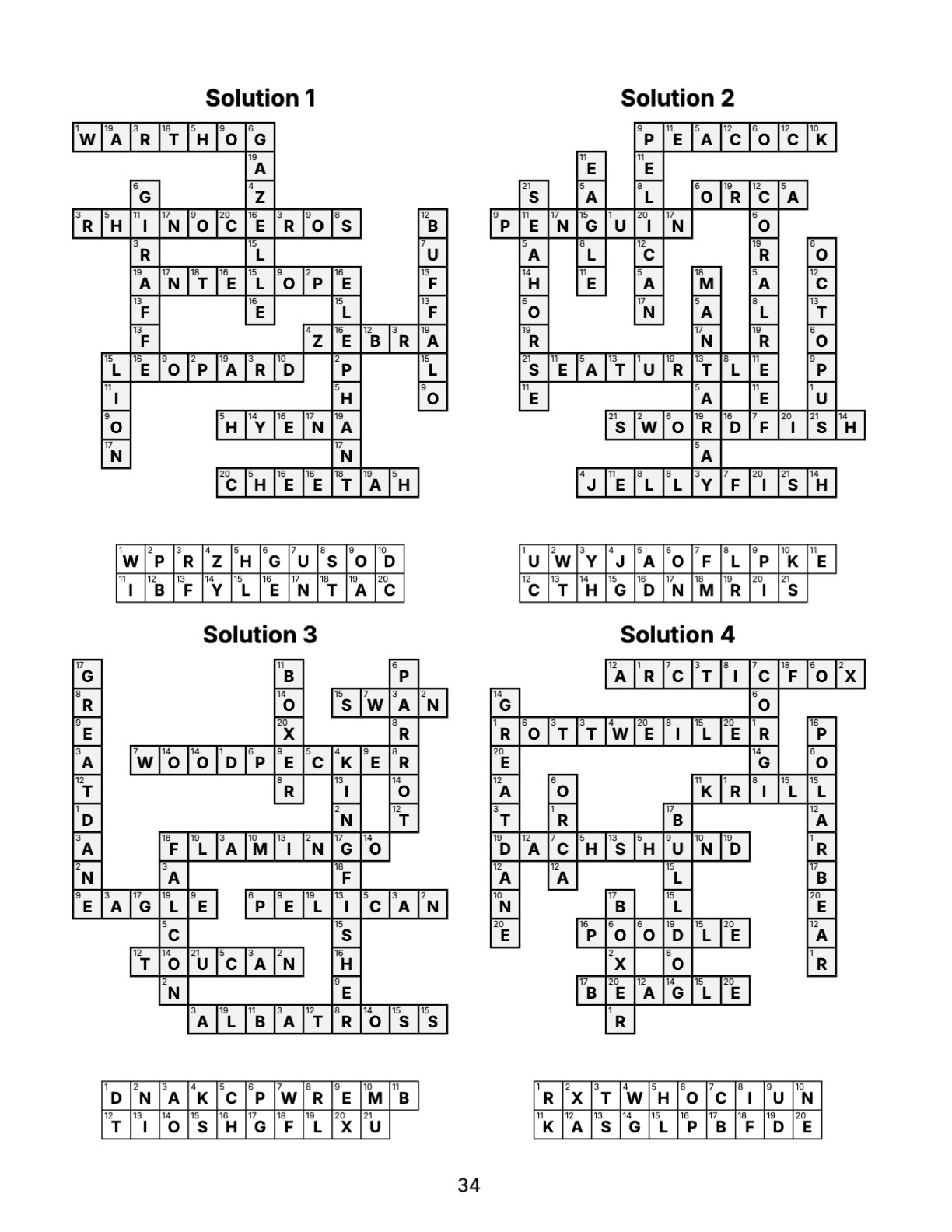
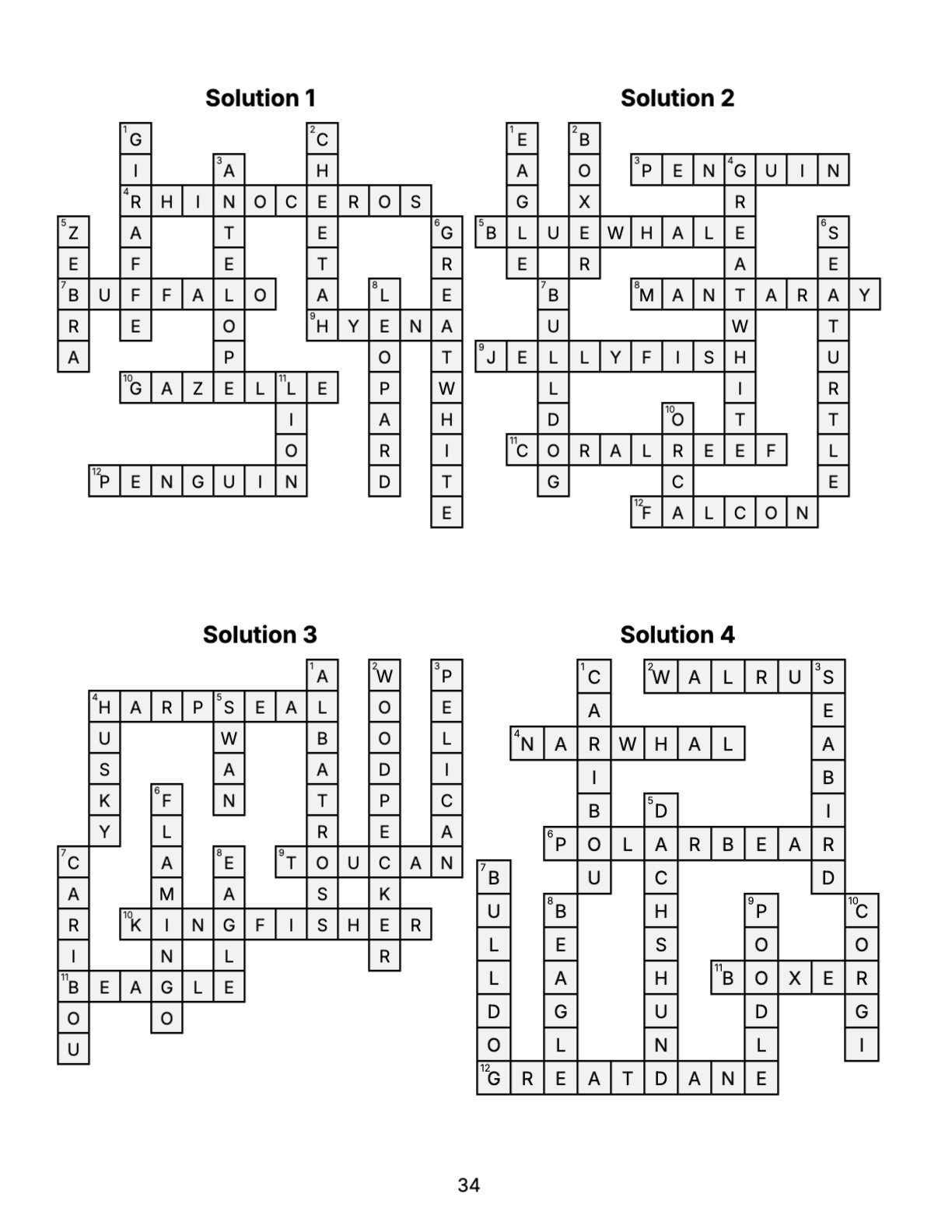
The answer key prints every square filled in, smaller and several to a page: standard books fit 1, 2, 4 or 6 solutions per page, Kids and Senior books fewer, in bigger print. Puzzle pages hold one crossword (or two small ones in the standard edition), because the clues need room.
When a puzzle has many long clues, Wisdom Effect first flows them into two or three columns, then makes the text a little smaller — never the squares below a size you can still write in. The configurator warns you when the grid gets too large for its page.
Step 1: Create the Book
On /create choose the edition at the top (Standard, Kids or Senior) and click the Crossword card. Holiday editions such as Christmas or Halloween keep the clued themes and add holiday colors and title fonts. A crossword can also be one chapter of a Mixed Book.
Step 2: Clues, Words and Grid Look
Grid Look chooses between the open look — only the answer squares — and black squares inside the grid’s box. Word Source picks one of the five clued themes, or your own CSV with the columns Title, Word and Clue: words without a clue are left out, and the configurator lists every word it cannot use and why.

Step 3: Difficulty and Grid Size
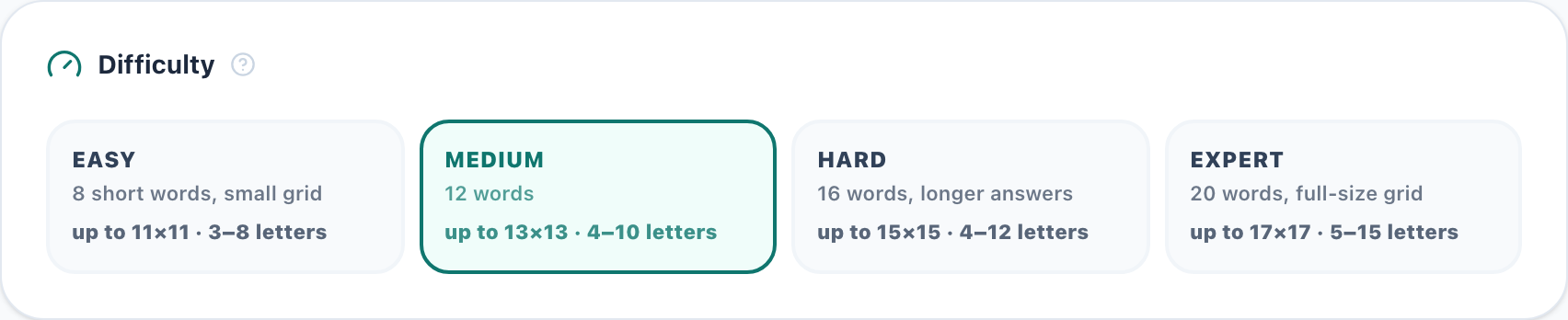
Difficulty sets the grid, the number of words and the word lengths in one click: Easy (11×11, 8 words), Medium (13×13, 12 words), Hard (15×15, 16 words) and Expert (17×17, 20 words). Kids books offer Tiny, Small, Big and Giant (ages 5 to 9+), Senior books Relaxed, Classic, Challenging and Master. Fine-tune the grid size, the words per puzzle and the word lengths below; the book code makes every book unique and reproducible.
Step 4: Book Settings, Design and Export
Pick the trim size, the number of puzzles (1 crossword of up to 17×17 squares = 1 credit, 2 at Expert) and the puzzles and solutions per page. The page preview shows the first puzzle and solution page, and the KDP summary counts the pages and checks the page range KDP prints in the trim size (24–590 pages at 8.5×11 on white paper, up to 828 at 8×10 and smaller).
Launch Crossword Editor opens the book. The Puzzle Design panel switches the grid look, sets the weight of the outer border and the square lines and the size of numbers and letters. The other panels change fonts, colors and the cover and edit the title, copyright, contents and end pages. When the book is ready, export the interior PDF and the cover PDF for KDP, or PNG and SVG files. You can also try a single page for free before you make the whole book.
Key rules
- Freeform crosswords turn any themed word list into a puzzle — the KDP and Etsy standard.
- Write short, concrete clues for kids and seniors, and bring your own CSV for books in other languages.
- Never let a clue contain its answer; keep it short and suited to the reader.
- Choose the number of words by audience and check the answer key and page count before you export.
Tools for This Guide
Crossword Puzzle Book Generator
Freeform crossword books with built-in clues or your own in any language, Kids & Large Print.
OpenFree Crossword Puzzle Generator
A free printable crossword page with your own words and clues and an answer key.
OpenKids Puzzle Book Generator
Kids puzzle books: crosswords, word search, mazes and more, with big squares and short words.
OpenFrequently Asked Questions
What is a freeform crossword?
A crossword whose words cross each other freely with open space around them, instead of filling a symmetric square grid. It is the usual style of KDP and Etsy crossword books.
How many puzzles should a crossword book have?
Most books contain 50–100 crosswords, one per page, plus the answer key at the back. KDP needs at least 24 pages for a paperback.
Can I use my own words and clues?
Yes. Upload a CSV with the columns Title, Word and Clue; the rows with the same title become one crossword, and words without a clue are left out.
Can I make a crossword book in German or Spanish?
Yes, with your own CSV of words and clues in that language; the built-in clues are English. Other languages than English need the Publisher plan or the free trial.
How many credits does a crossword book cost?
One credit per crossword of up to 17×17 squares, so a 50-puzzle book costs 50 credits; an Expert crossword (a grid over 15×15 or more than 16 words) costs 2. The book type is part of the Pro and Publisher plans.