In short
A wordoku is a sudoku with letters, and the best ones hide a word in the solution. Choose words with no repeated letter, match the grid size and the difficulty to your readers, and make sure every grid has a single solution. This guide explains each decision and shows, screen by screen, how to make a complete wordoku book in Wisdom Effect.
On this page
What Makes a Good Wordoku
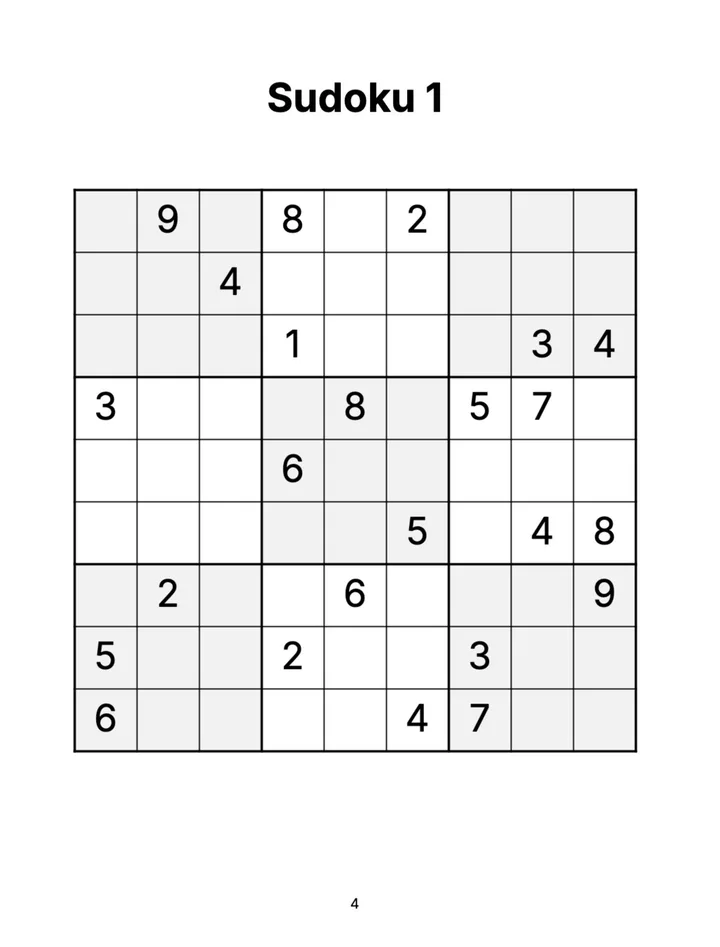
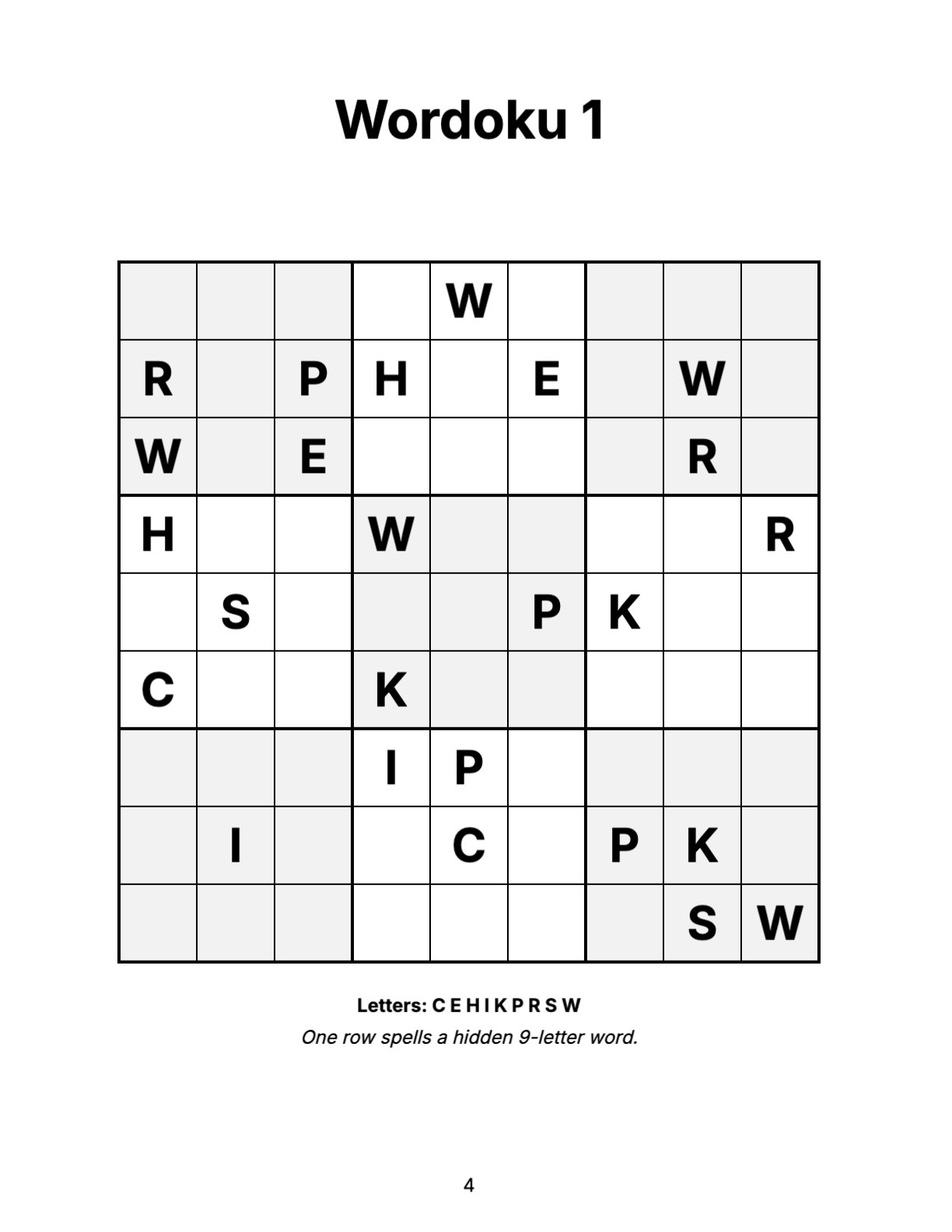
A wordoku follows the sudoku rules — every symbol once in each row, column and box — but uses letters instead of numbers. On its own that is only a change of symbols.
What turns it into its own puzzle is the hidden word: the nine letters come from one word, and one row of the solution spells it. Readers get a second small reward when the grid is solved, and the word gives every puzzle in the book a name.
Choosing the Words
A word for a 9×9 grid needs nine different letters — no letter twice. Such words are called isograms: SUNFLOWER, DRAGONFLY, BLUEPRINT, FARMHOUSE. Kids grids need 4 or 6 different letters: BEAR, STAR, PLANET, ORANGE.
Themed word lists make a book easier to sell: garden words, animals, a holiday, names of a family or a class. Avoid words that may upset a reader, and for children prefer words they can read.
| Grid | Boxes | Letters per word | Examples |
|---|---|---|---|
| 4×4 | 2×2 | 4 | BEAR, STAR, FISH |
| 6×6 | 2×3 | 6 | PLANET, ORANGE |
| 9×9 | 3×3 | 9 | SUNFLOWER, DRAGONFLY |
Grid Size and Difficulty
Difficulty comes from two things: how many letters are given, and which solving techniques the grid needs. Easy grids can be filled one letter at a time by looking at a single row, column or box; harder grids need longer chains of logic.
Whatever the level, a published puzzle must have exactly one solution. A grid with two solutions feels broken — the reader finishes it and the hidden word does not appear.
Hints, Kids and Large Print
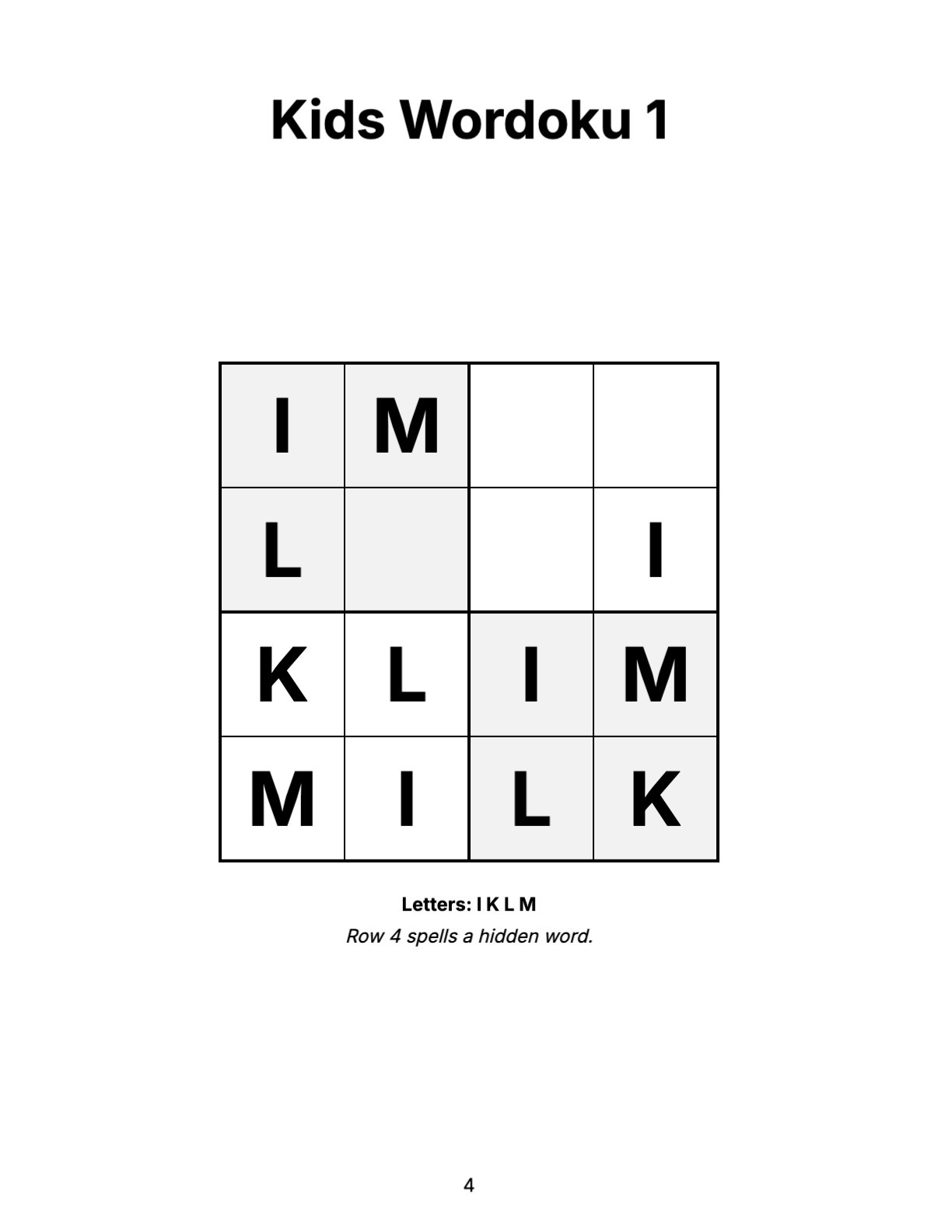
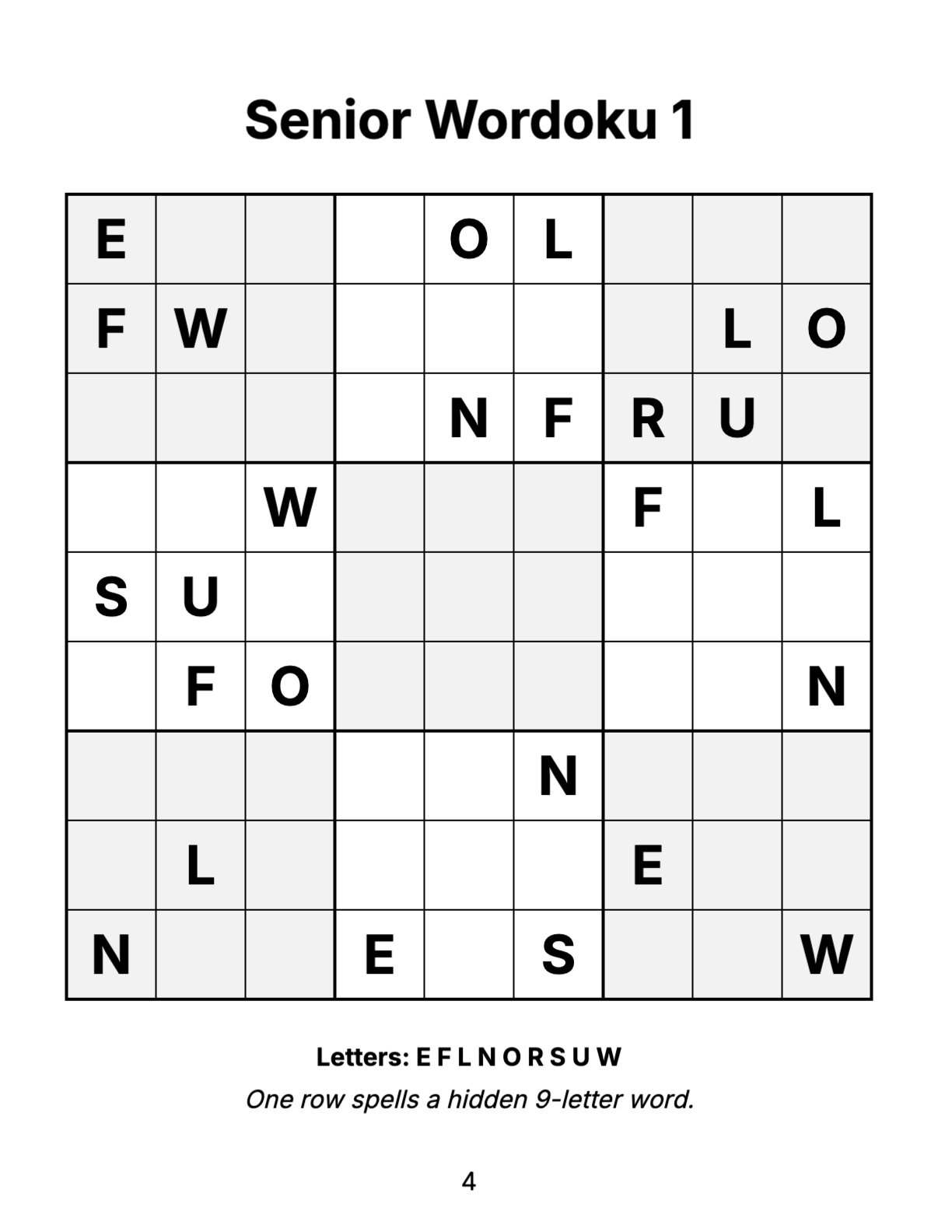
Under each grid you can say how the word is hidden: "one row spells a hidden word" for adults, or name the row for children ("Row 4 spells a hidden word"). In the answer key, highlight the word row so parents and teachers can check at a glance.
For kids, start with 4×4 grids and move to 6×6; one or two puzzles per page leave room for big letters. For seniors, print 9×9 grids one per page with big letters, and start with Easy.
| Edition | Grid | Difficulty | Default hint | Puzzles per page |
|---|---|---|---|---|
| Kids | 4×4 or 6×6 | Easy, Medium | Row named | 1–2 |
| Standard | 4×4, 6×6 or 9×9 | Easy to Inferno (4×4 and 6×6: Easy to Master) | Find the word | 1, 2, 4 or 6 |
| Senior | 9×9 | Easy to Master | Find the word | 1 |
Answer Keys
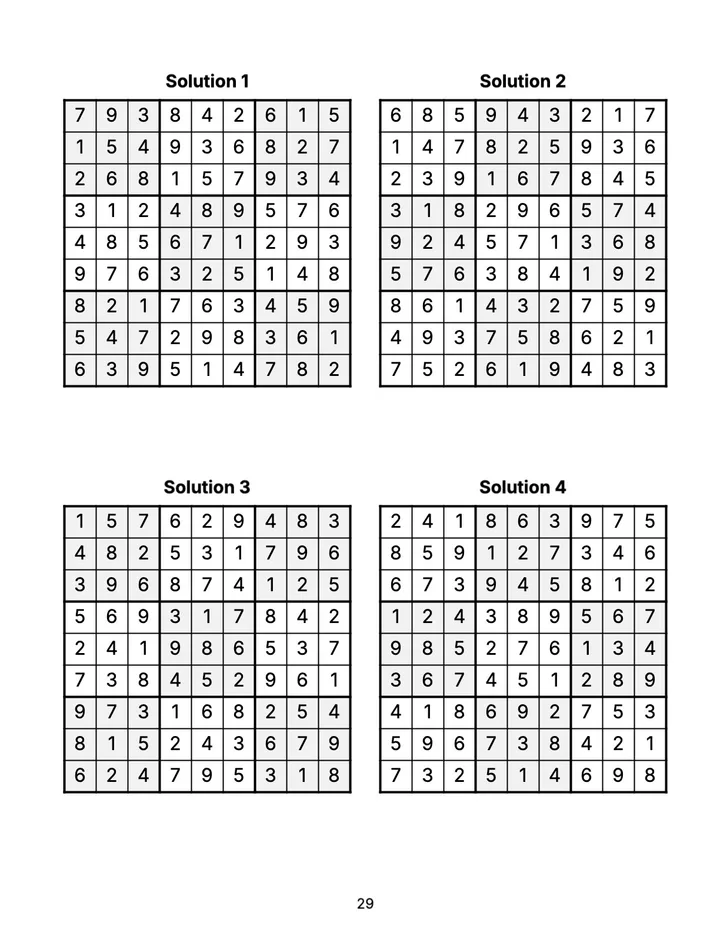
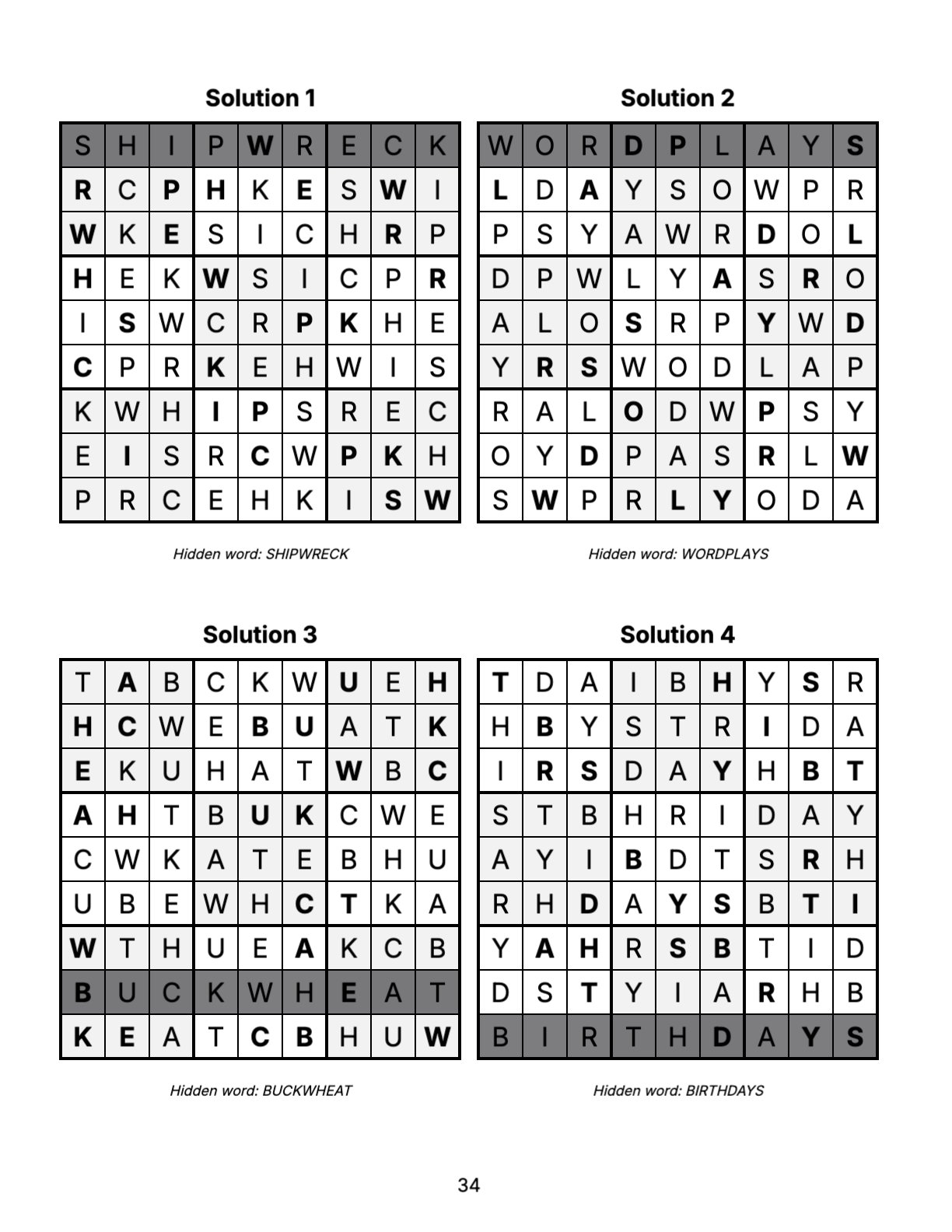
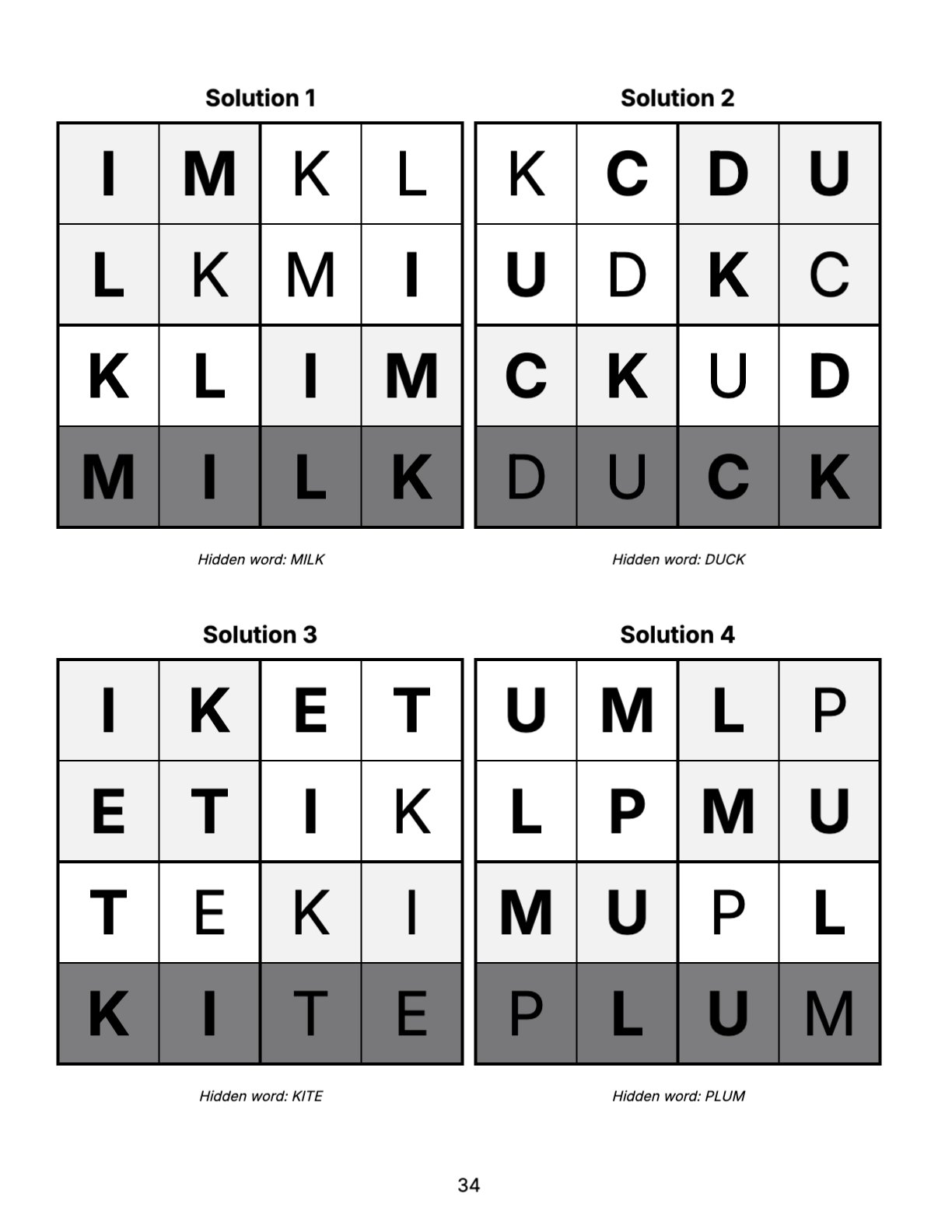
The answer key goes at the back of the book. Every solution shows the full grid with the given letters in bold, the row of the hidden word highlighted and the word printed under the grid.
Standard books print 1, 2, 4, 6, 9 or 12 solutions per page (4 by default); Kids and Senior books 1, 2 or 4, so the keys stay readable. The highlight is the dark gray of every answer key by default (it prints the same in black and white); change it under Hidden Word Row in the Color Palette, or turn it off.
Step 1: Create the Book
On /create choose the edition at the top (Standard, Kids or Senior) and click the Wordoku card. Wordoku books are part of the Pro and Publisher plans; on Starter the card shows Unlock (Pro). Wordoku chapters can also go into a Mixed Book next to Sudoku, Mazes and the word puzzles.
Step 2: Difficulty, Words and Hints
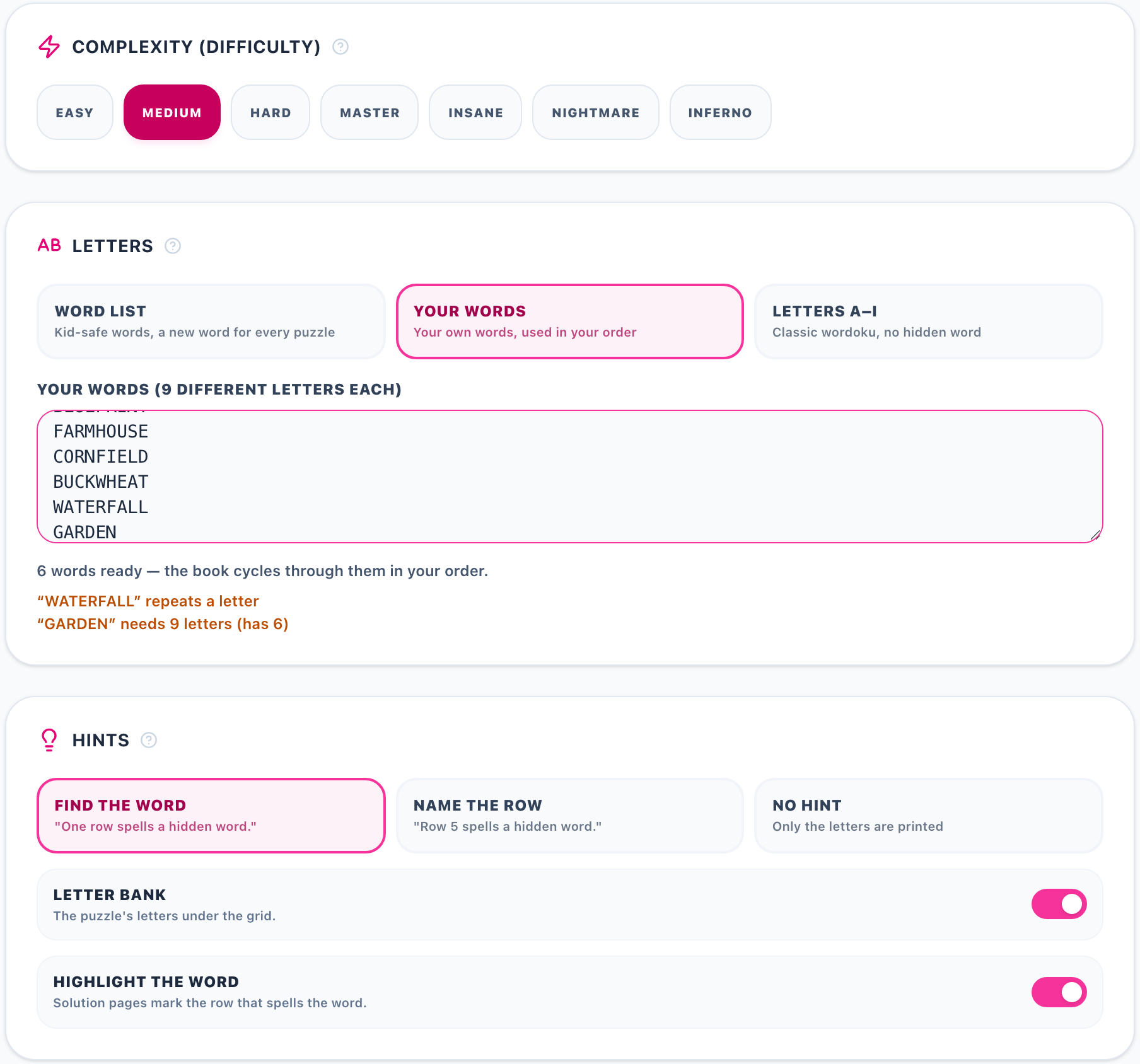
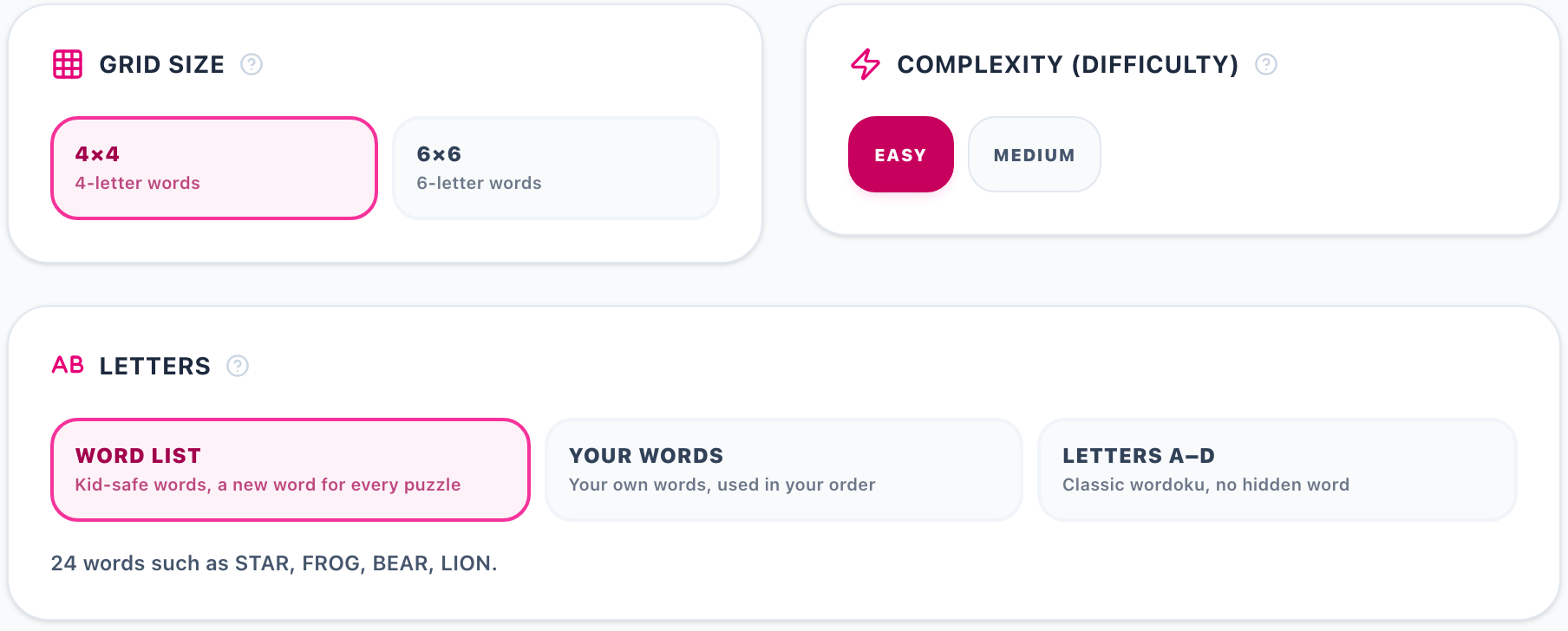
The configurator starts with the difficulty. You can select several levels at once; the puzzles are then split evenly between them, easiest first. Kids books first choose the grid size: 4×4 with 4-letter words or 6×6 with 6-letter words.
Letters sets where the letters come from. Word list uses a built-in list of kid-safe words (24 or 25 per grid size) and gives every puzzle a new word. Your words takes your own list, one word per line or separated by commas, up to 200 words, used in your order; the configurator lists every word it cannot use and why (wrong length or a repeated letter). Letters A–I makes a classic wordoku with plain letters and no hidden word.
Hints sets the line under each grid: Find the word ("One row spells a hidden word."), Name the row ("Row 5 spells a hidden word.") or no hint. The letter bank can be switched off, and so can the highlight of the word on the solution pages.
Step 3: Book Settings
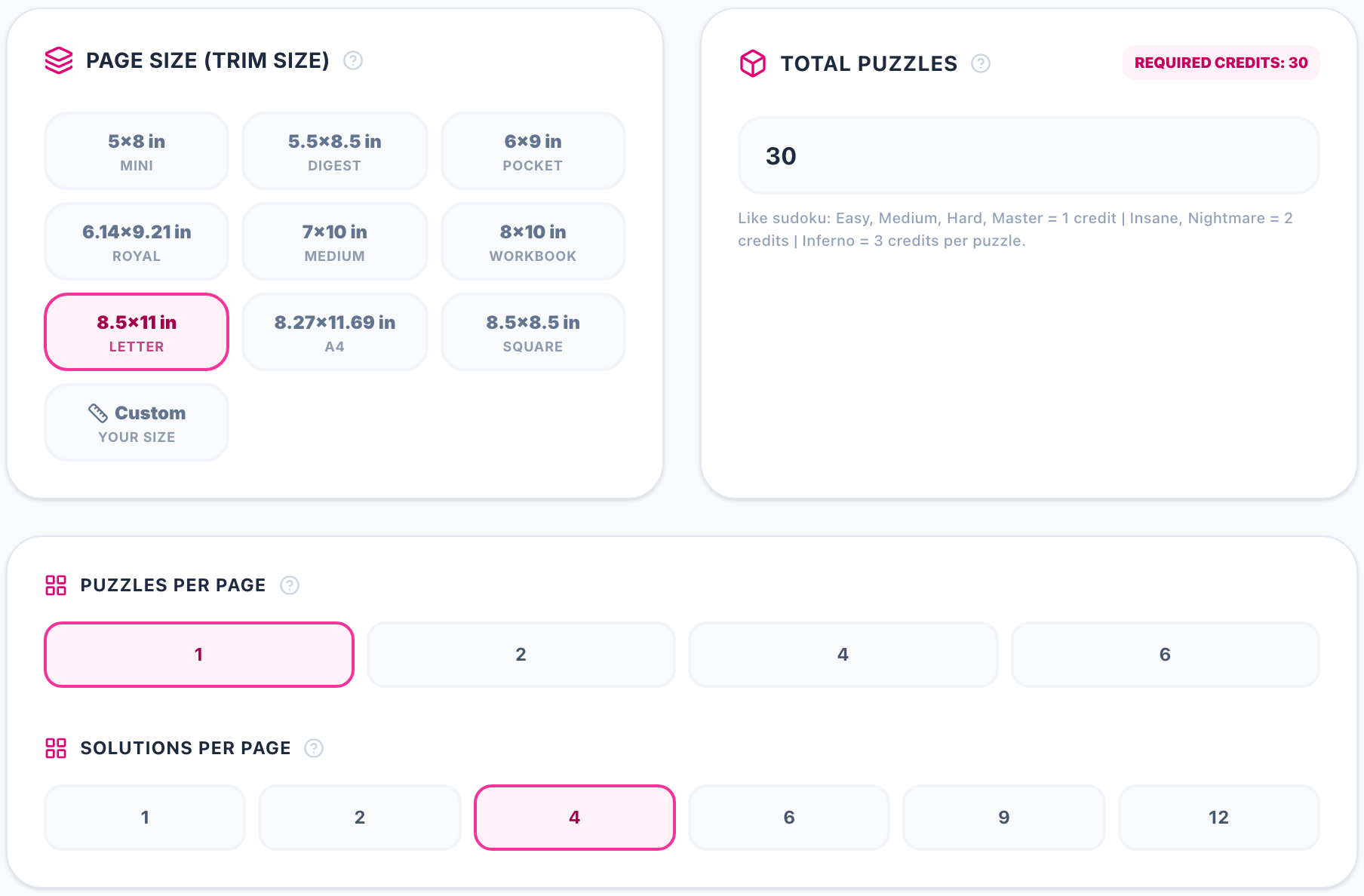
Further down, set up the book: the trim size (from 5×8 to 8.5×11, A4, square or your own size), the number of puzzles, how many puzzles and solutions go on a page and the book language.
A wordoku costs what a sudoku of the same level costs: Easy, Medium, Hard and Master 1 credit, Insane and Nightmare 2 credits, Inferno 3 credits per puzzle. The summary at the bottom counts the pages and checks that the book fits the KDP paperback limits (24 to 590 pages at 8.5×11 on white paper, up to 828 at 8×10 and smaller). Then click Launch Wordoku Editor.
Step 4: Design and Export
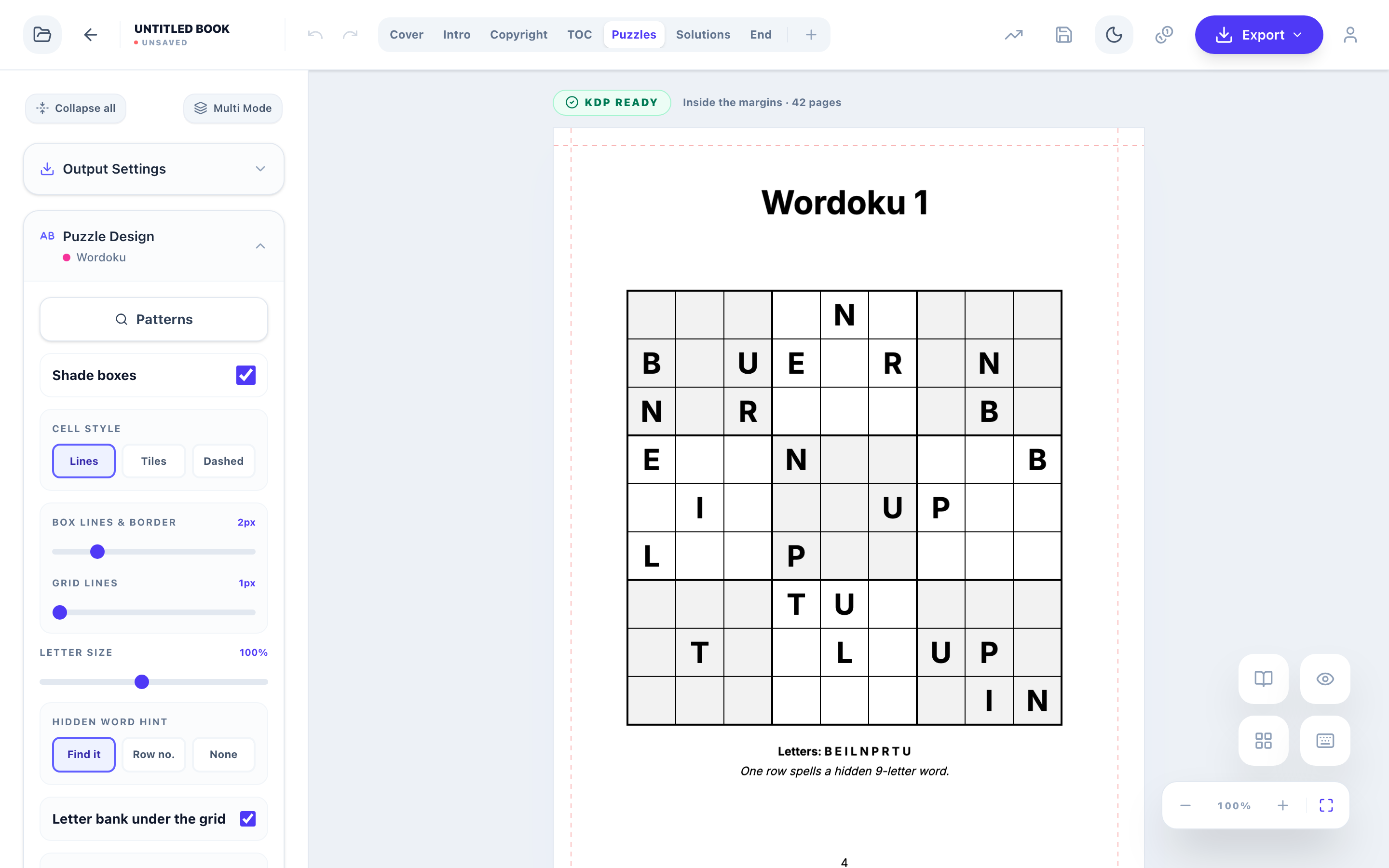
The Puzzle Design panel in the editor changes the whole book at once: the box shading (a pattern picker and an on/off switch, like in sudoku), the thickness of the box lines and border and of the cell lines, the letter size, the hidden word hint, the letter bank and the highlight in the solutions. Colors of the grid lines, the letters and the hidden word row are in the Color Palette.
The other panels change fonts and the cover, add images and decorations and edit the title, copyright, contents and end pages. The page tabs (Cover, Intro, Copyright, TOC, Puzzles, Solutions, End) switch between the parts of the book.
When the book is ready, export the interior PDF and the cover PDF for KDP, or PNG and SVG files. The puzzles come from the sudoku bank, and the ones you export are marked as used, like in a sudoku book, so your next book gets new grids.
Key rules
- Use words with no repeated letter, sized to the grid.
- Check every grid for a single solution.
- Match grid size, difficulty and hints to the audience.
- Highlight the hidden word in the answer key.
Tools for This Guide
Frequently Asked Questions
How many wordokus should a book have?
Most books contain 50–150 puzzles, one to four per page, plus the answer key at the back. KDP paperbacks need at least 24 pages.
Is wordoku the same as sudoku?
The rules are the same; only the symbols change. Letters make the grid feel new, and a hidden word adds a second goal.
What if I have fewer words than puzzles?
The book cycles through your words in your order, so a word appears again with a different grid and usually in a different row.
Which plan do I need?
Wordoku books are part of the Pro and Publisher plans, which make Mixed Books with their puzzle types; Publisher adds zebra nonograms and 10 book languages.