
Fill the sure squares first
A region of one square holds a 1. A region with one empty square left gets the number it still misses.
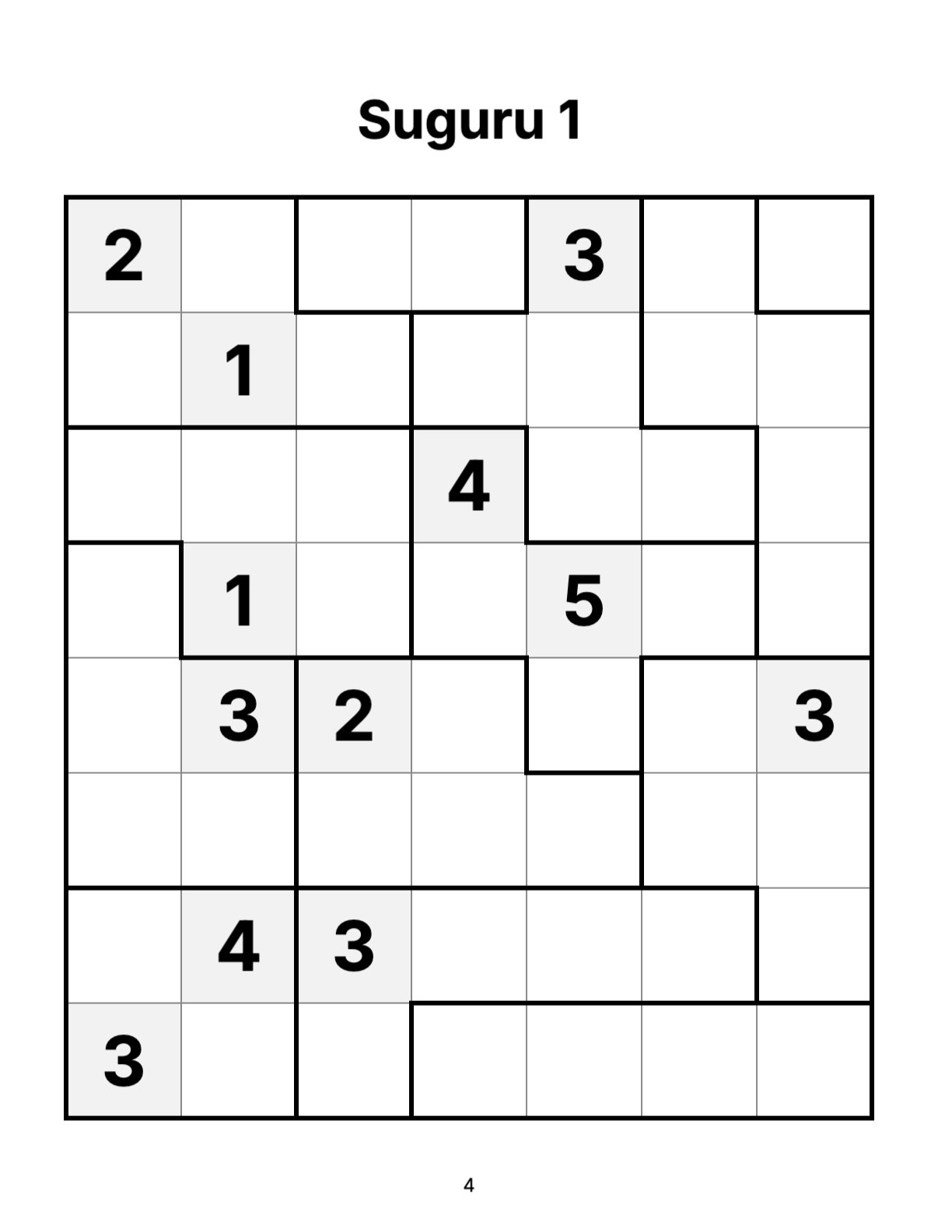
Fill outlined regions with the numbers 1 to the size of the region, so equal numbers never touch.
The grid is split into outlined regions, usually of one to five squares. Some books use regions of up to six.
A region of five squares holds the numbers 1 to 5, a region of three squares the numbers 1 to 3, and a region of one square just a 1. Each number appears once in its region.
Two equal numbers never touch, not across, not down and not diagonally, and not across a region border either.
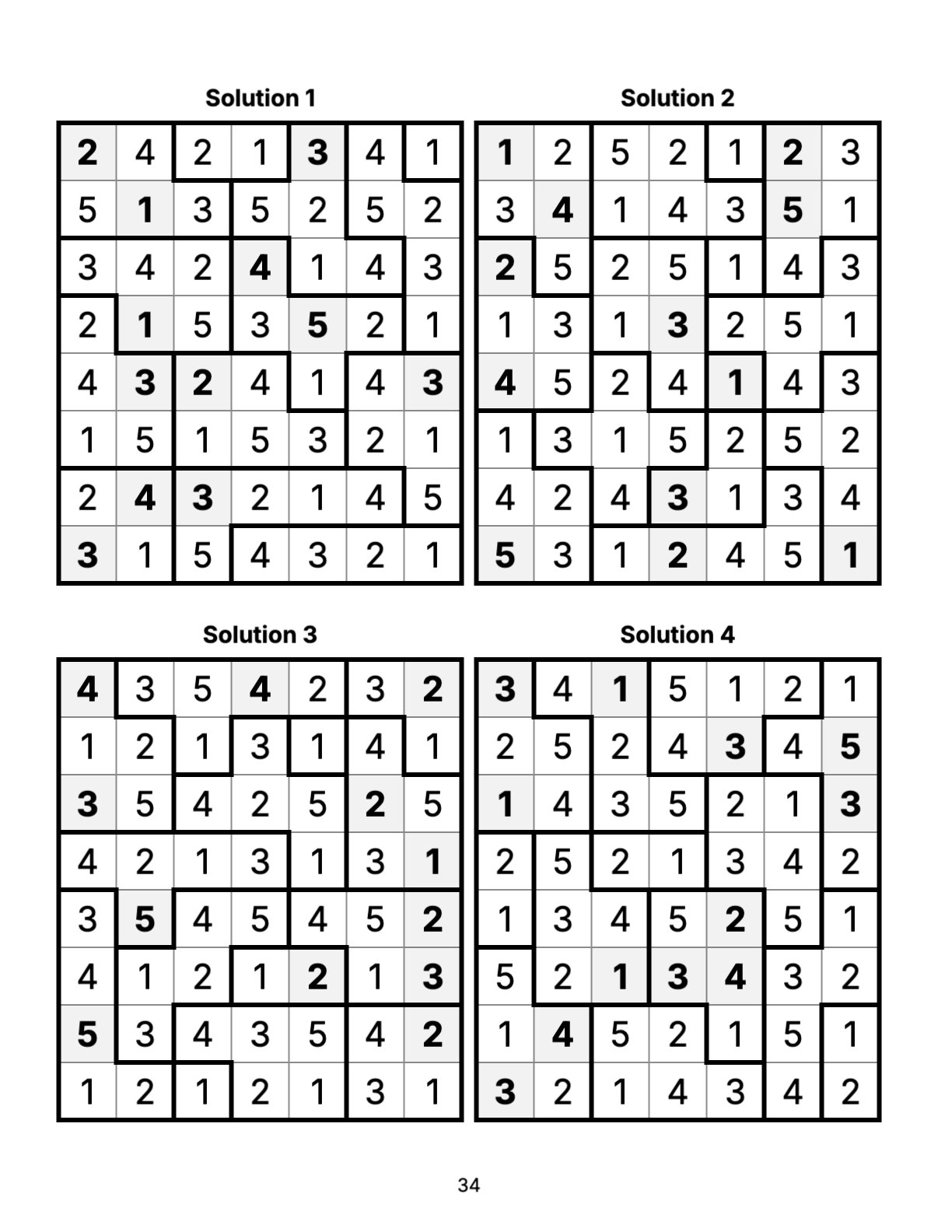
A few numbers are given. Fill in the rest; every puzzle has exactly one solution.
Start with the first way and move on when it gives nothing new.
A region of one square holds a 1. A region with one empty square left gets the number it still misses.
Look at the eight squares around an empty square. A region of three still needs 1, 2 and 3; if one of its empty squares touches a 2 and a 3, that square is the 1.
A square that touches every empty square of a neighbouring region cannot hold any number that region still needs. A square touching both empty squares of a two-square region is neither 1 nor 2. A square of a four-square region that touches all three squares of an empty three-square region can only be 4.
Write the numbers a square can still hold small in its corner. If two squares of a region can only hold 2 and 4, no other square of that region holds a 2 or a 4, and a square that touches both of them cannot hold a 2 or a 4 either.
Who made Suguru, when and where, and its other names: puzzle types.
Print-ready Suguru books for Amazon KDP, every puzzle with its answer key.
Suguru book generatorJust one page? Free Suguru Puzzle Generator