
Close the short gaps
If 14 and 16 are given and only one empty square sits next to both, 15 goes there.
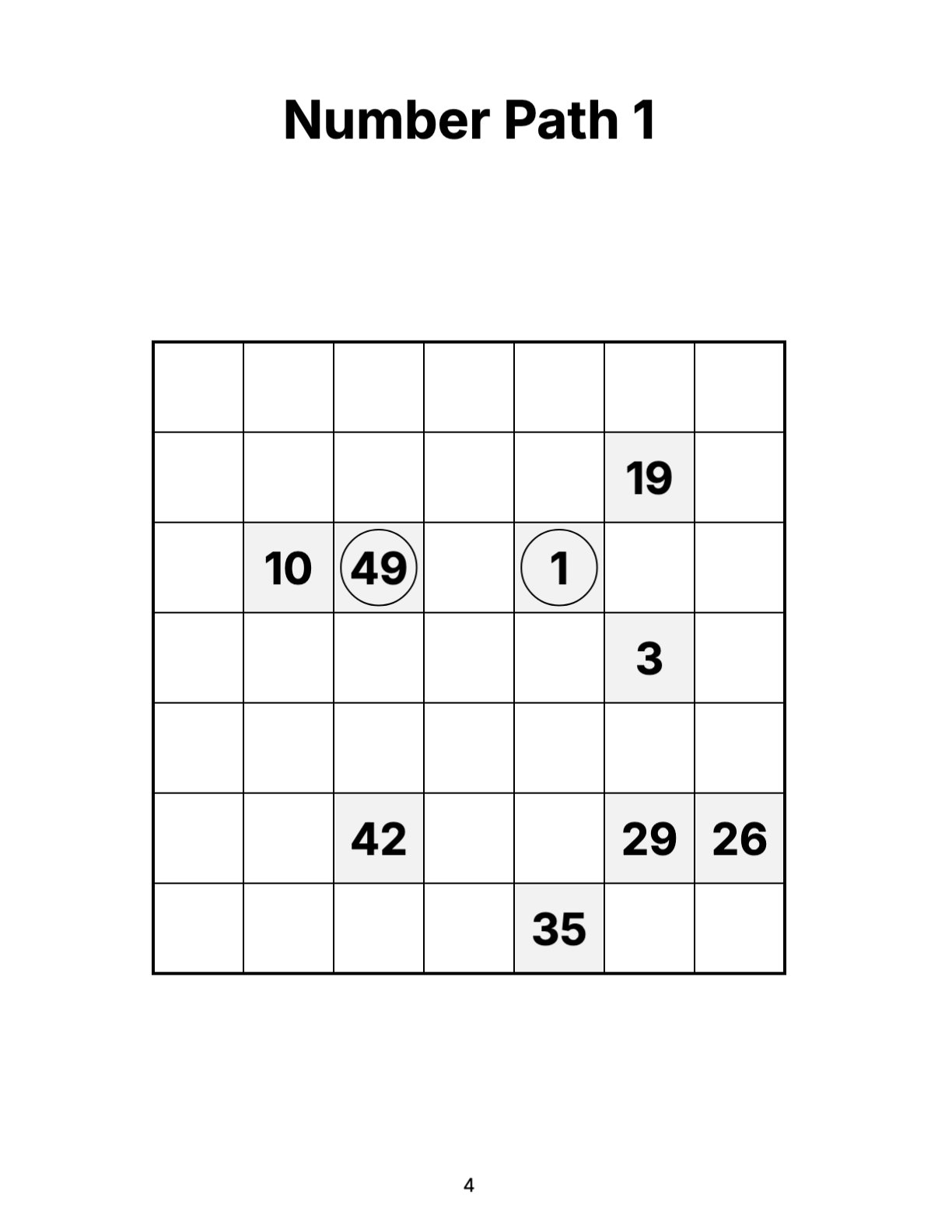
Fill the grid with one path of numbers in which every number sits next to the next, never diagonally.
The numbers from 1 to the number of squares fill the grid: 1 to 36 in a 6×6 grid.
Each number sits next to the one after it, up, down, left or right, never diagonally, so the numbers form one unbroken path.
Some numbers are given, always the first and the last (both ringed). Fill in the rest.
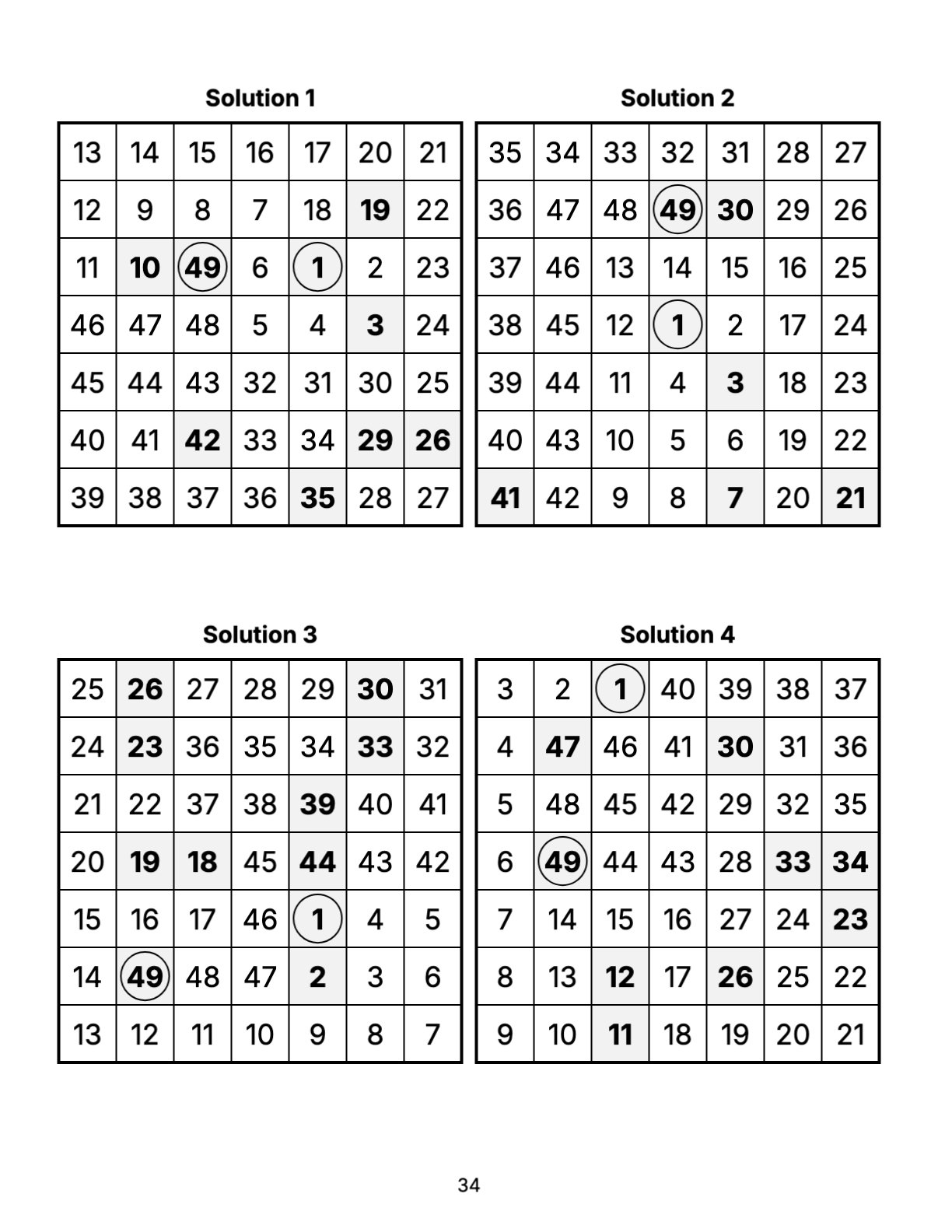
Every puzzle has exactly one solution, and the path can be built in pieces from any given number.
Start with the first way and move on when it gives nothing new.
If 14 and 16 are given and only one empty square sits next to both, 15 goes there.
Color the grid like a checkerboard: every step changes the color, so all odd numbers stand on one color and all even numbers on the other. If 9 stands on a dark square, 12 can never go on a dark one.
From 20 to 24 the path takes four steps. A square more than three side steps from either number cannot hold 21, 22 or 23, and when 20 and 24 stand four squares apart in a straight line, the path between them runs straight.
Every empty square needs the number before it and the number after it among the squares beside it. A corner has only two neighbours, so an empty corner next to 30 and 32 can only be 31.
A piece of the path that cuts a group of empty squares off from the rest only works if the missing numbers can fill exactly that group in one run. Before you write a number, check that every empty square can still be reached.
Who made Number Path, when and where, and its other names: puzzle types.
Print-ready Number Path books for Amazon KDP, every puzzle with its answer key.
Number Path book generatorJust one page? Free Number Path Puzzle Generator