
Fill the full islands
An island that needs every bridge its neighbours can give gets two bridges to each: a 4 with two neighbours, a 6 with three, an 8 with four.
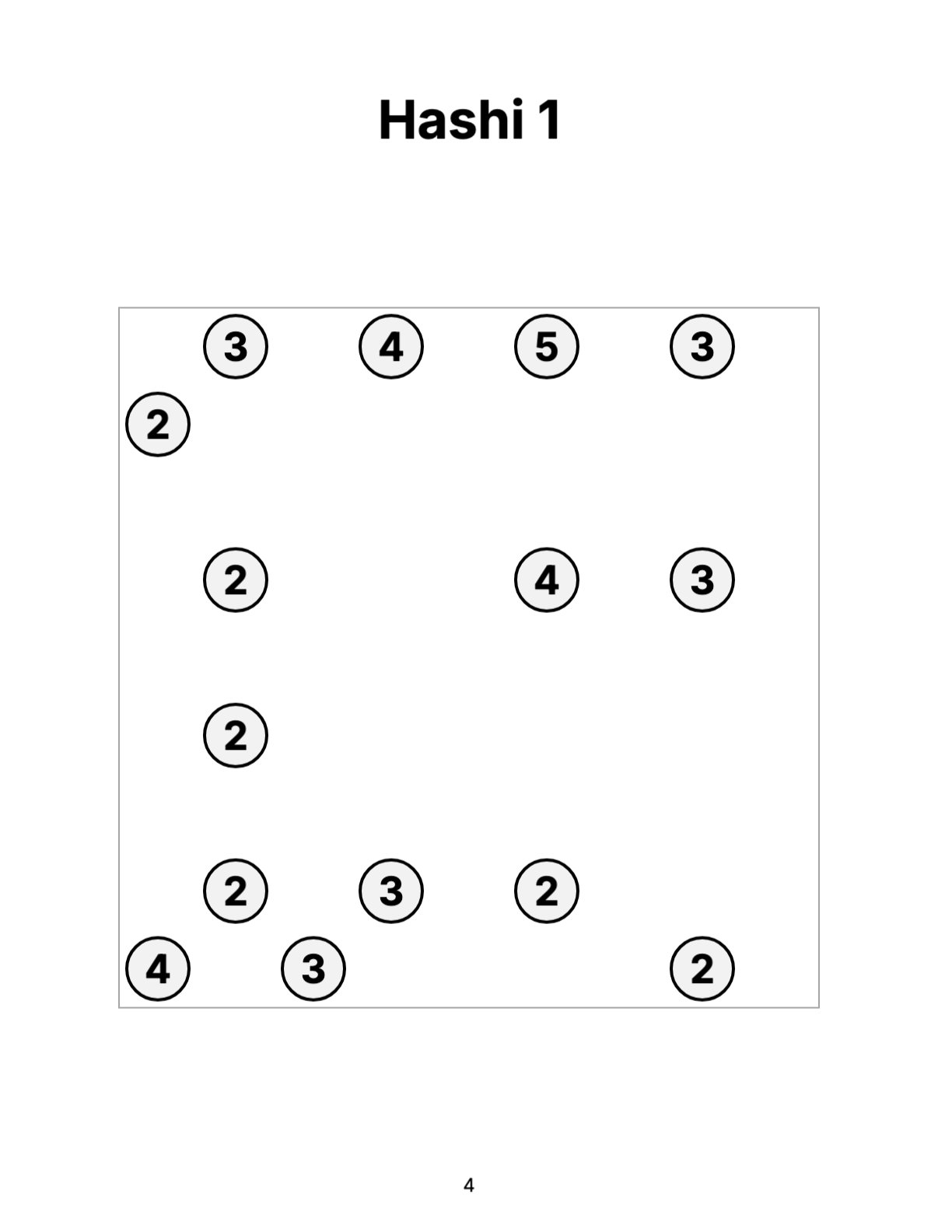
Join numbered islands with bridges until each island has as many bridges as its number.
Each circle is an island with a number from 1 to 8.
Bridges run in straight lines across or down between two islands. They never cross each other or pass over another island.
At most two bridges join the same pair of islands.
Every island gets exactly as many bridges as its number.
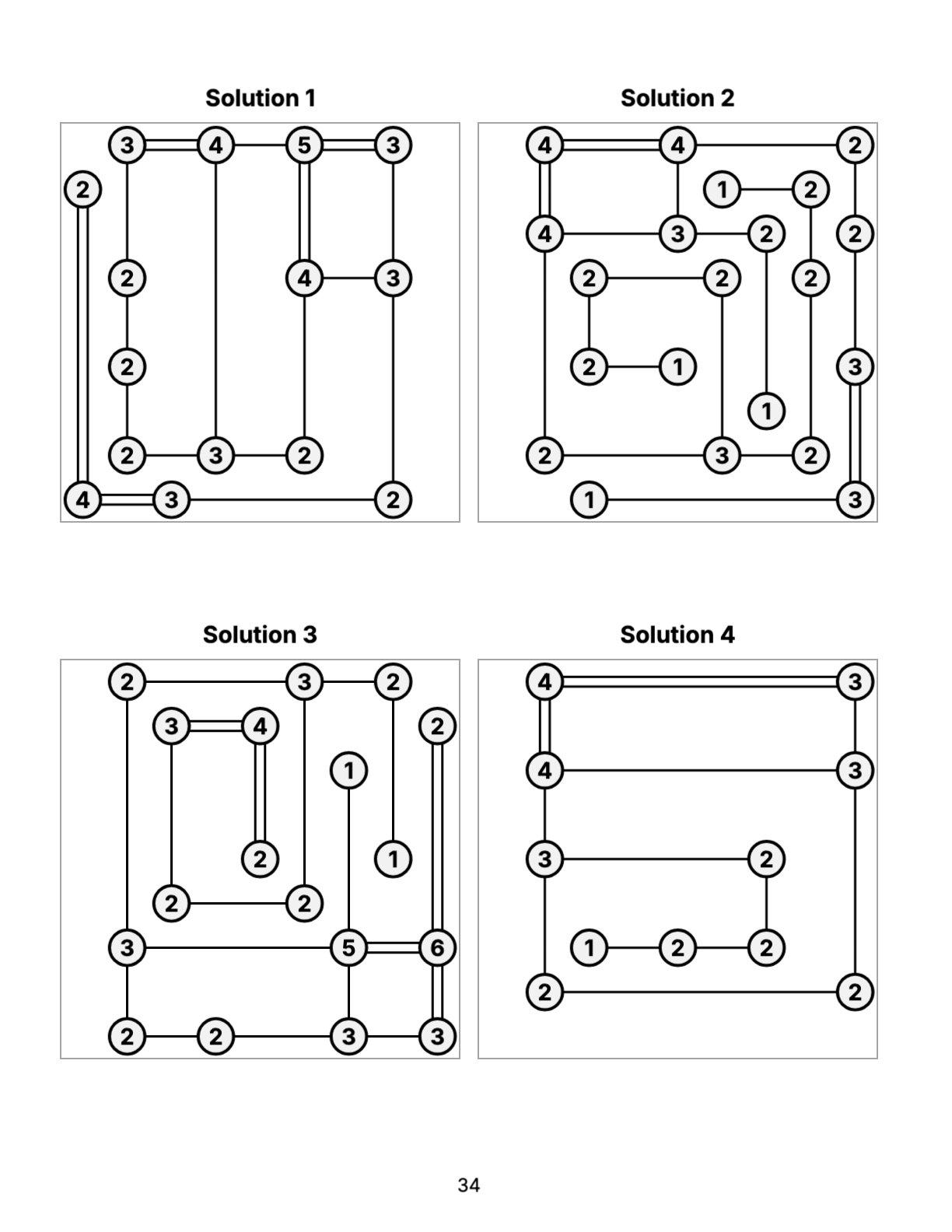
In the end all islands are connected into one group: you can walk from any island to any other over the bridges. Every puzzle has exactly one solution.
Start with the first way and move on when it gives nothing new.
An island that needs every bridge its neighbours can give gets two bridges to each: a 4 with two neighbours, a 6 with three, an 8 with four.
A 3 with two neighbours, a 5 with three and a 7 with four get at least one bridge to each neighbour. Draw those now and add the rest later. If one neighbour of a 3 is a 1, the other neighbour gets two bridges.
An island that can reach only one other island takes all its bridges from it: a 2 with one neighbour gets a double bridge.
Two 1s never join each other, and two 2s never join with a double bridge: they would make a small group cut off from the rest. A 1 that sees another 1 and one more island bridges to that other island.
Mark an island once it has all its bridges. Each new bridge also blocks the bridges that would cross it, so look again at the islands it passes: some have lost a neighbour.
When nothing is sure, ask where a bridge would leave an island or a group with no way to the rest. Every puzzle has one solution, so a bridge that breaks the rules a few steps later is wrong now.
Who made Hashi, when and where, and its other names: puzzle types.
Print-ready Hashi books for Amazon KDP, every puzzle with its answer key.
Hashi book generatorJust one page? Free Hashi Puzzle Generator