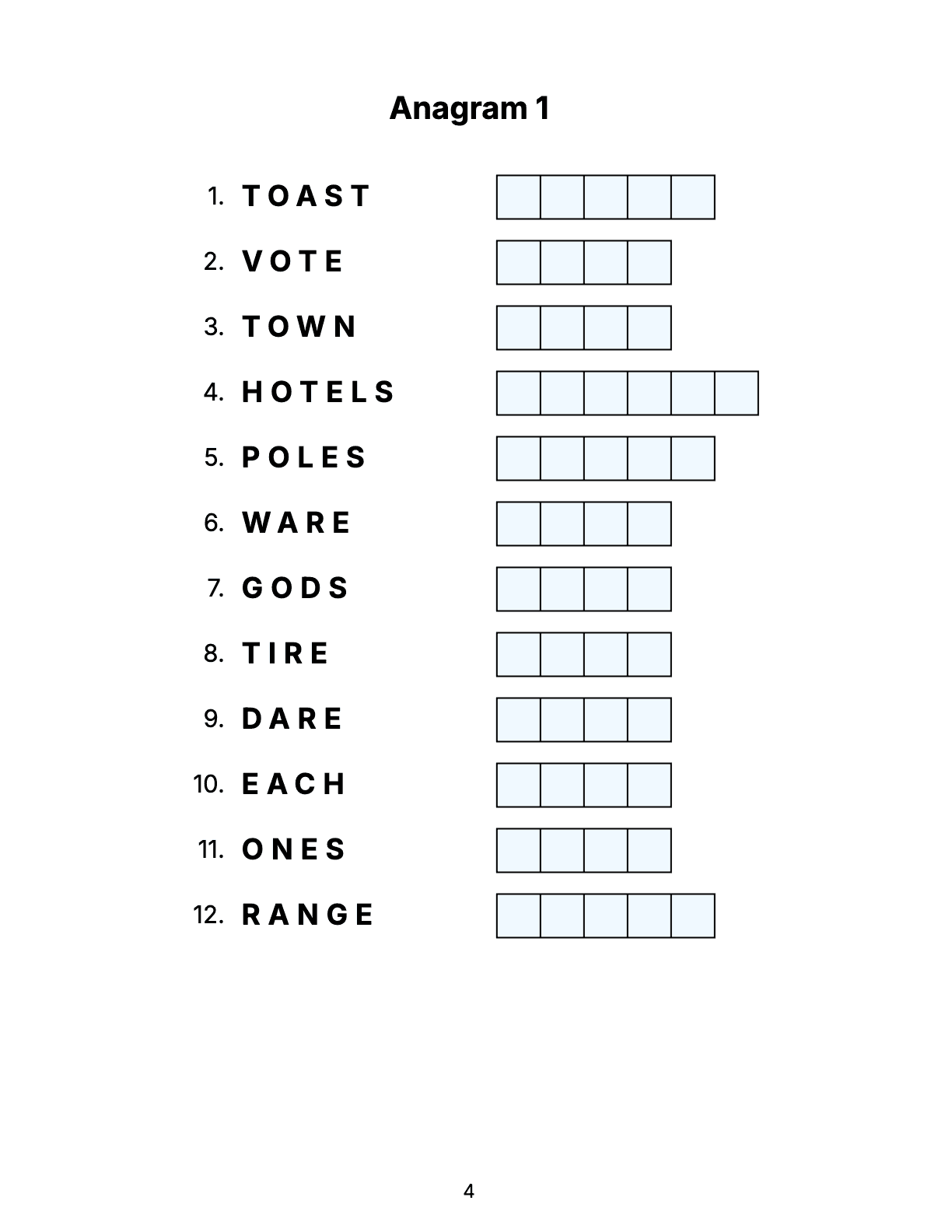
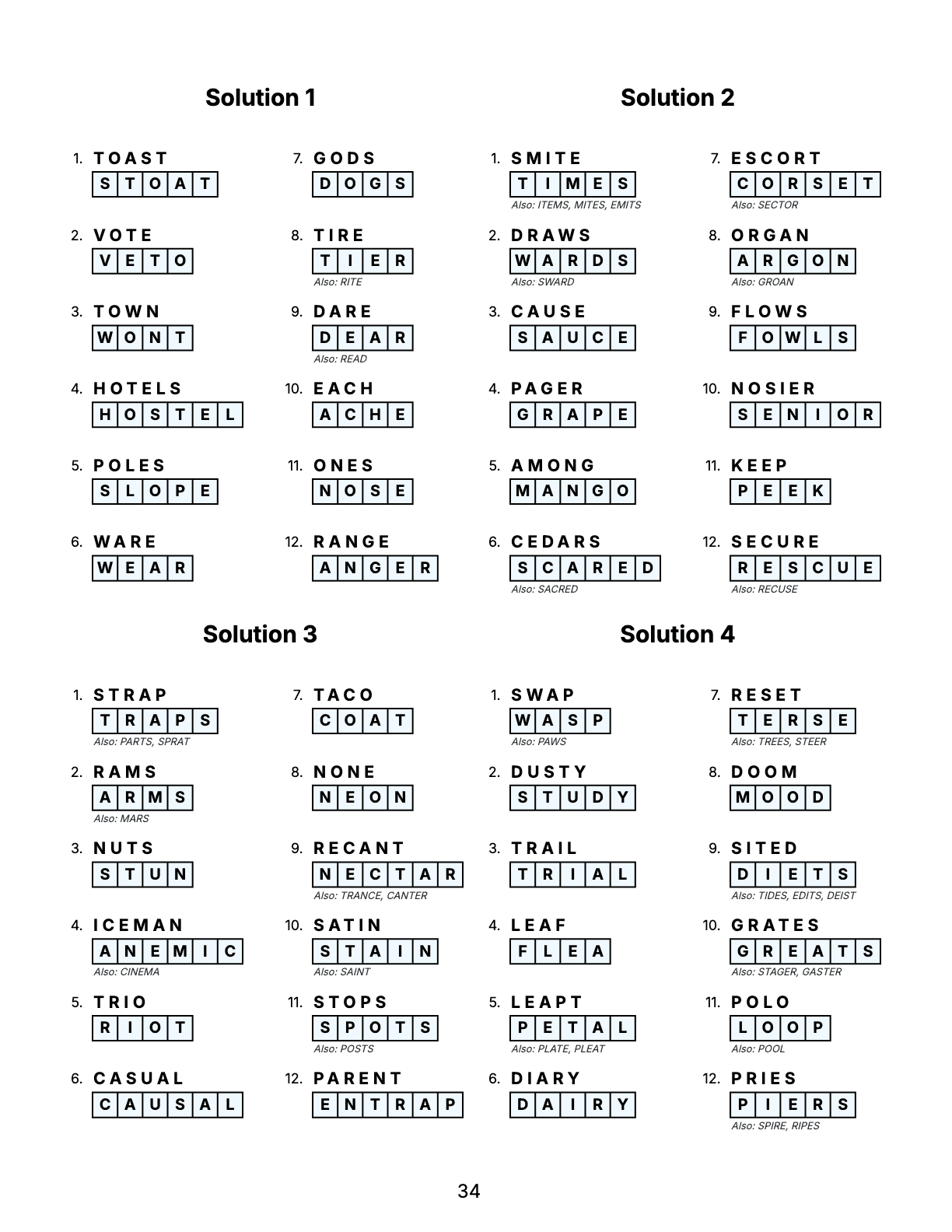
In short
A word search asks the solver to find words; a word scramble asks them to rebuild them. We printed the same Solar System list as both, and show what changes on the page, how each type gets harder, and the one trap that only scrambles have.
On this page
Finding vs Rebuilding Words
A word search gives the solver the words and hides them in a grid of letters. It rewards patience and pattern spotting: the solver never has to know how a word is spelled, only to recognise it. A word scramble gives the letters and hides the word. It rewards vocabulary and spelling: the solver has to come up with the word themselves.
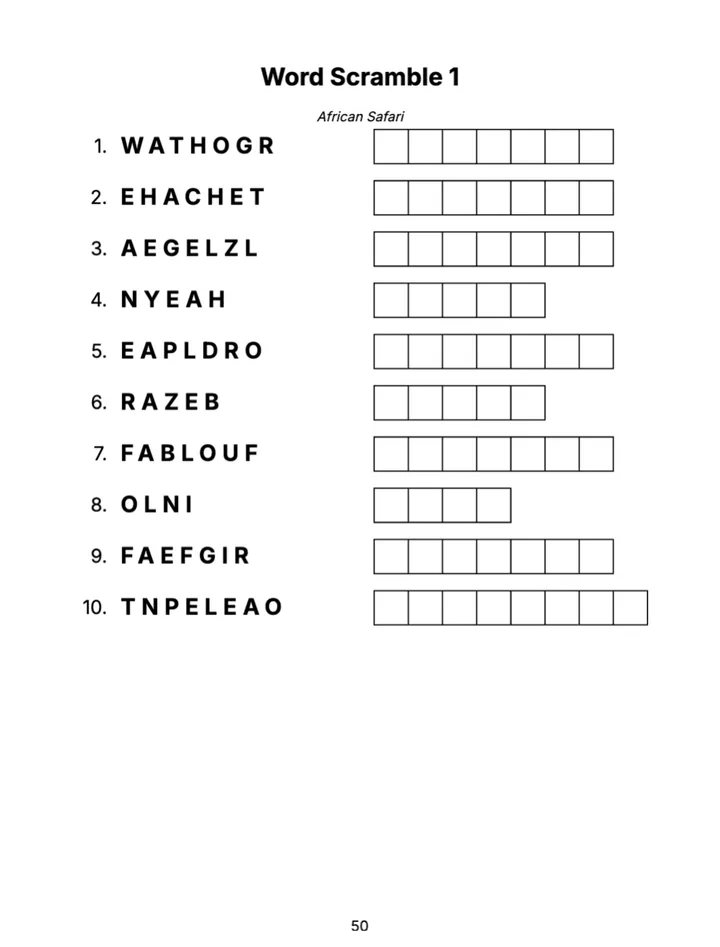
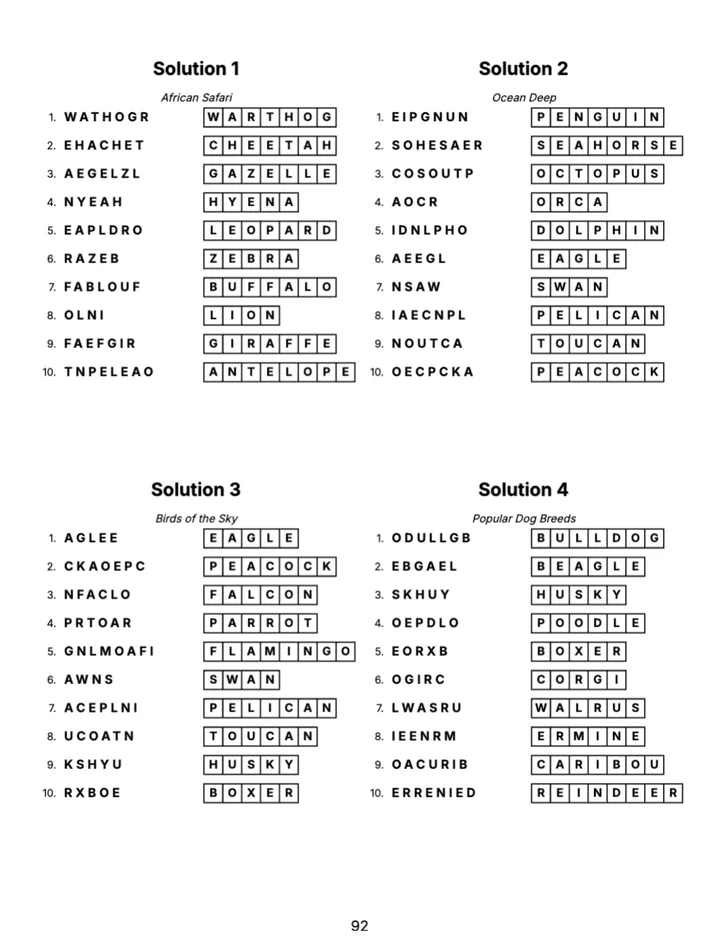
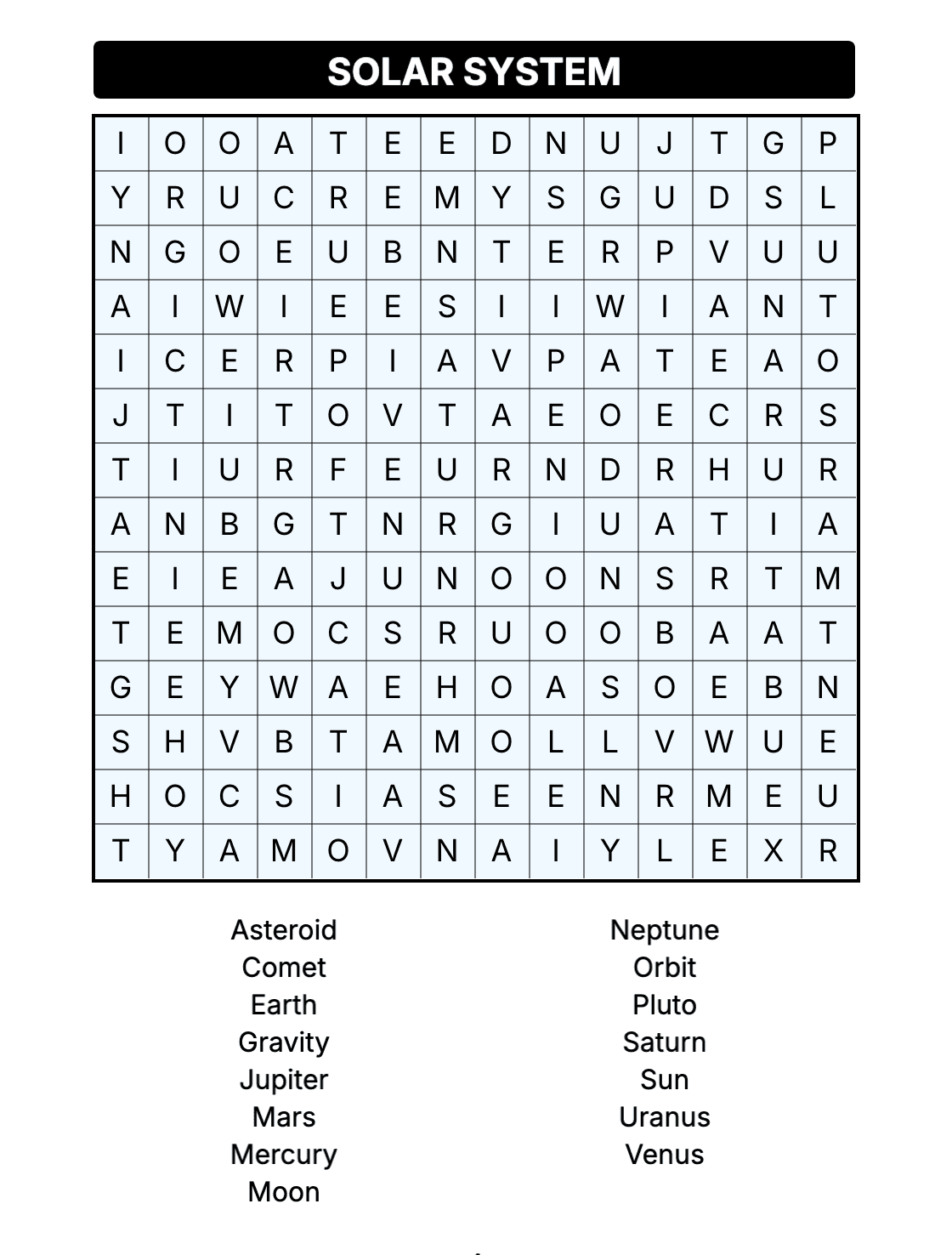
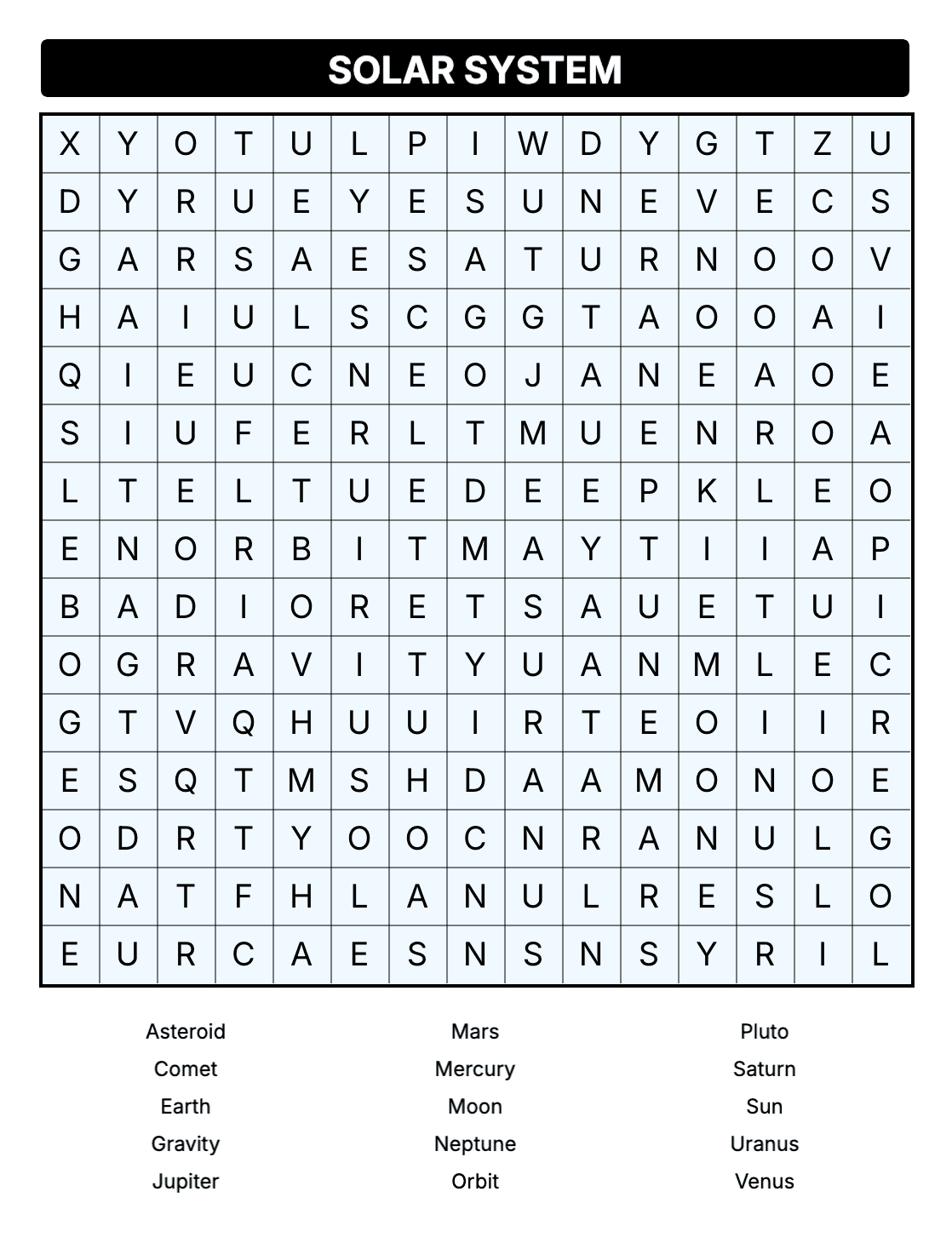
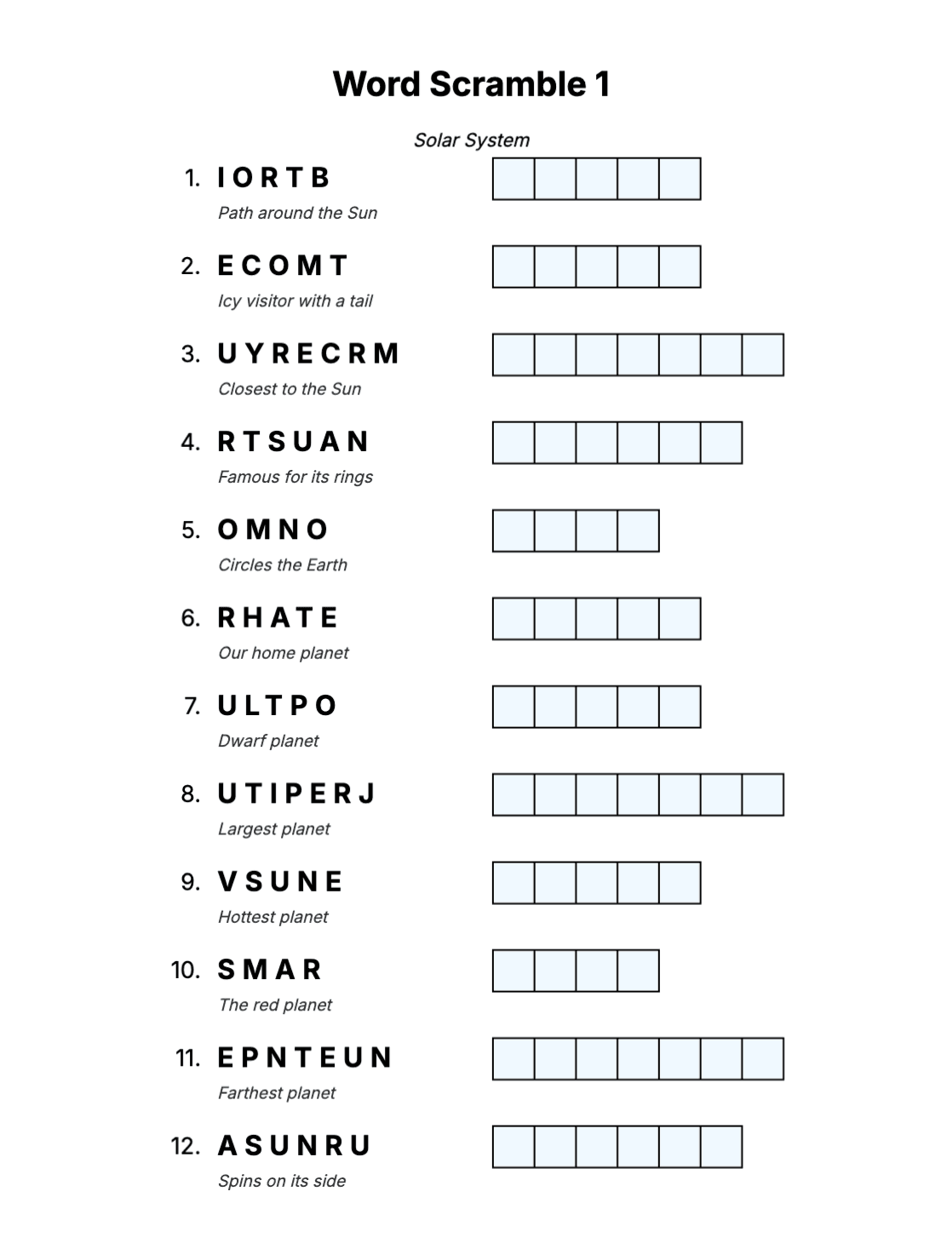
Both can be built from the same list. Below is the Solar System list from our themes printed both ways: one word search grid with a word bank of 15 words, and one word scramble with 12 of the same words, letter boxes and a clue under each word.
The pages hold a similar number of words, about 10 to 20. What differs is the work per word: in a word search every word is listed and only has to be found, in a scramble every word is a small riddle of its own.
How Each Type Gets Harder
A word search gets harder through grid size and directions. Standard grids go from 12×12 to 24×24, words can run across, down, diagonally and backwards, and one, two or four grids fit on a page. The kids edition keeps 6×6 to 10×10 grids with 3–9 words that only run right and down.
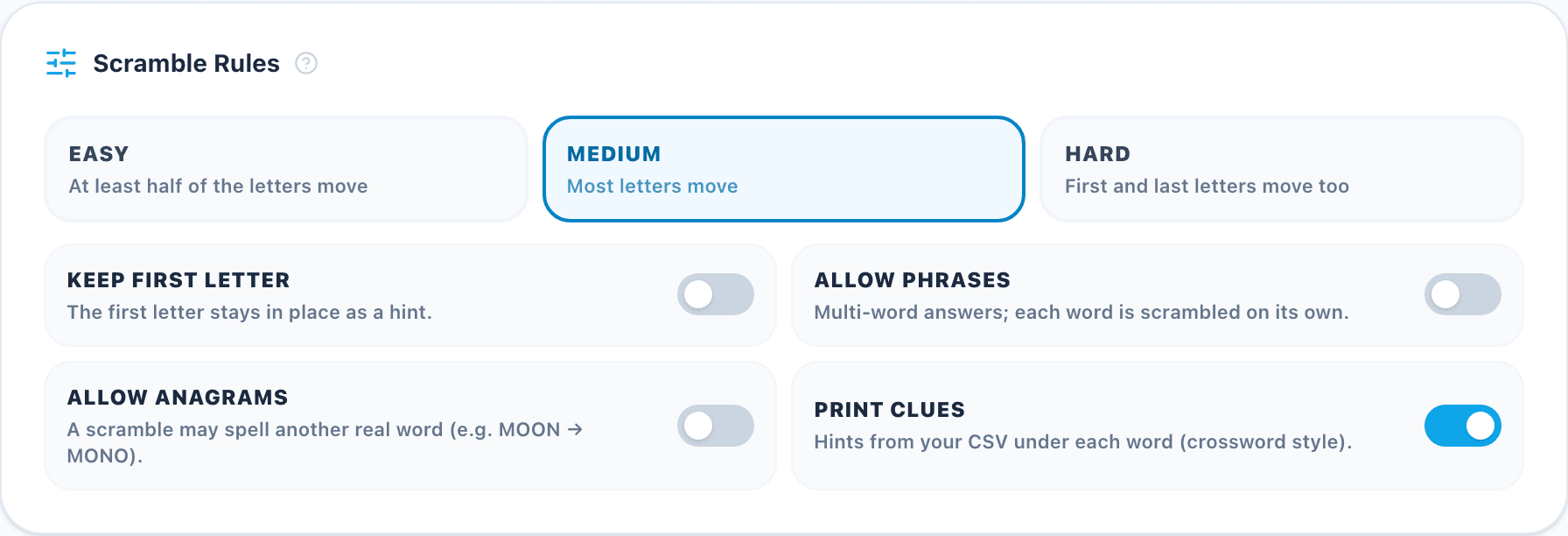
A word scramble gets harder through word length and how much the letters move. Our presets go from Easy (3–6 letters, 10 words, first letter kept in place) to Expert (8–12 letters, 20 words). The scramble rule sets how many letters must leave their place: at least half on Easy, most of them on Medium, and on Hard the first and last letters move too. Clues and a kept first letter make any level gentler.
One rule is always on: a scramble never spells another real word (MOON is never printed as MONO), unless you allow it. The number of words per puzzle is also limited by the page: clues and a secret word take space, so the generator offers only as many words as fit.
| Word search | Word scramble | |
|---|---|---|
| Main dial | Grid size (12×12 to 24×24) | Word length (3 to 15 letters) |
| Second dial | Directions: across, down, diagonal, backwards | How far letters move (Easy, Medium, Hard) |
| Easier | Kids grids 6×6–10×10, right and down only | First letter kept, clues printed |
| Per page | 1, 2 or 4 grids | 1 or 2 puzzles of 4–25 words |
| Answer key | Words marked in the grid | Answers written in the boxes |
The Scramble Trap: Words with Two Answers
A word search has one answer by design: the word is listed. A scramble can have two. RHATE in the picture is EARTH, but HEART uses the same letters. MARS could be ARMS, METEOR could be REMOTE, SEAHORSE could be SEASHORE. The answer key shows the word from your list, so a solver who wrote HEART is right by the letters and wrong by the key.
Short words are the risk. We checked every word in our themes against a 208,000-word English list: 43% of words with 3–6 letters have another real word with the same letters, 19% of words with 6–10 letters and 10% of words with 8–12 letters. That list includes rare words most solvers never think of, so the real risk is lower, but the trend is clear.
Three things make the intended word clear: the puzzle title (every theme puzzle is printed under its topic, like "Solar System"), clues, and longer words.
Who Each Book Is For
Both types come in Standard, Kids and Large Print (senior) editions. Word searches suit the youngest solvers, because finding a word does not need spelling: the kids grids are small and words only run right and down. Scrambles fit children who already read and spell; our kids presets start at 3–4 letter words with the first letter kept.
For seniors both work well in large print with one puzzle per page. Word searches are the familiar choice; scrambles add vocabulary practice, and the senior presets keep the first letter on the easier levels.
Word search and word scramble books are both part of every paid plan, including Starter.
Combining Both in One Book
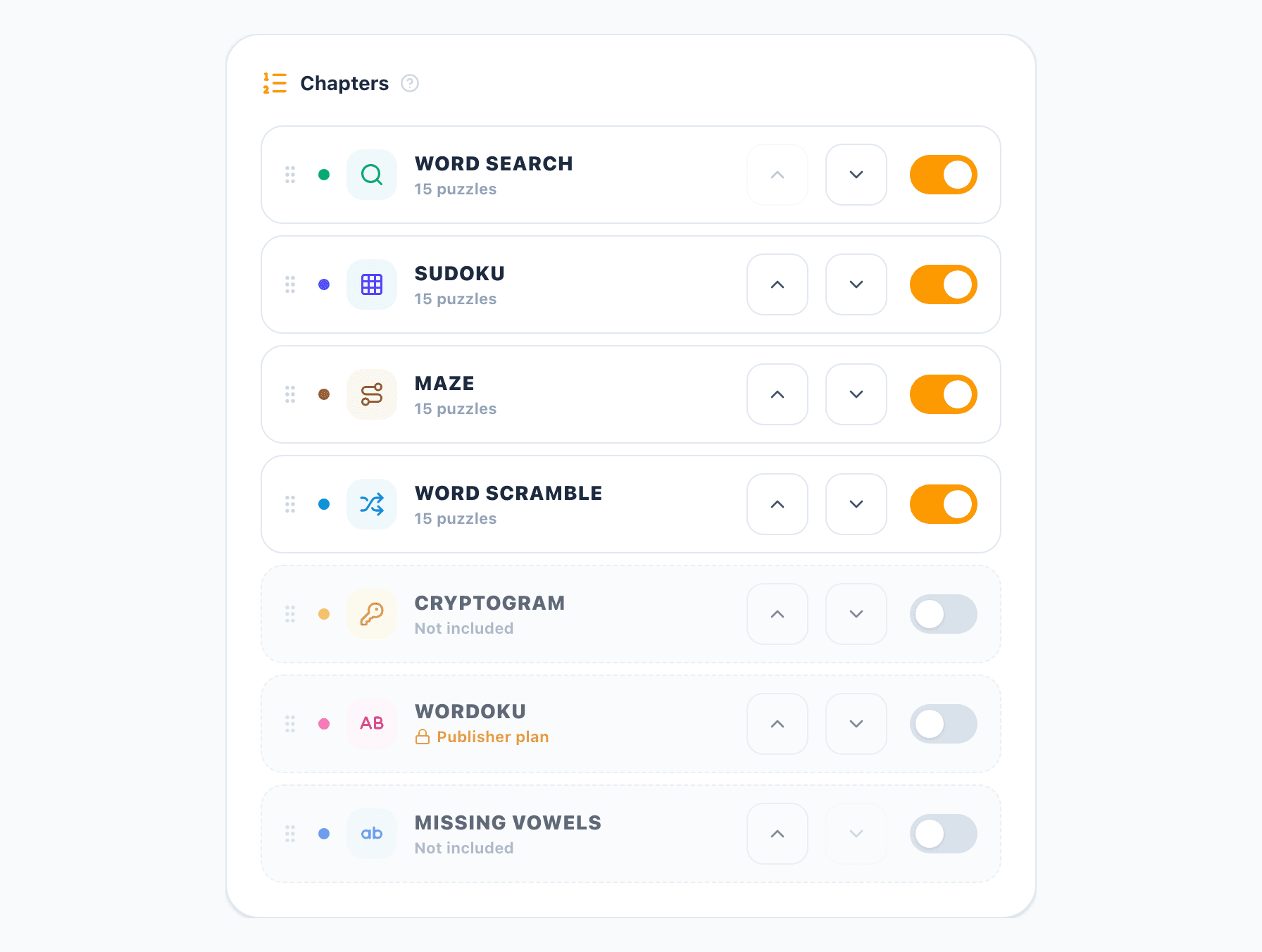
You do not have to choose. A mixed book combines chapters of different puzzle types: switch chapters on or off, change their order and set the number of puzzles per chapter. Starter mixes the classic types, word search and word scramble among them; Pro and Publisher mix every type.
Word search and word scramble chapters work well together: the word search is the quick win, the scramble the thinking puzzle. Both can use the same theme, so a "Space" activity book can have a chapter of each.
Key rules
- Word search = find the word; word scramble = rebuild it. Same list, different skill.
- Word searches get harder with bigger grids and more directions, scrambles with longer words and more moved letters.
- Short scramble words can have two answers (EARTH/HEART): use titles, clues or longer words.
- A mixed book can hold both chapters, so you do not have to choose.
Tools for This Guide
Mixed Puzzle Book Generator
One activity book with word search, word scramble and five more chapter types.
OpenWord Scramble Book Generator
Word scramble books with clues, letter boxes and secret words.
OpenWord Search Book Generator
Word search books from 900+ themes or your own word lists.
OpenFree Word Search Generator
A free printable word search page from a theme or your own words.
OpenFree Word Scramble Generator
A free printable word scramble page from a theme or your own words.
OpenFrequently Asked Questions
Can I use the same word list for both?
Yes. Both use the same 900+ themes in 12 categories. Your own lists work for both too: the word scramble accepts the word search list format, and its own CSV can add a clue (Hint) and a secret phrase for every word.
Which is easier for young children?
A word search: the words are listed and only have to be found. Our kids grids are 6×6 to 10×10 with words that run only right and down. Scrambles suit children who can already spell short words.
Can a word scramble have more than one answer?
Yes, when the letters spell two words, like EARTH and HEART. The generator makes sure the scramble itself is not a real word, and the puzzle title and clues from your CSV point to the intended answer.
Which plans include them?
Both are in every paid plan, Starter included. Both are in the free trial.