
Sums with one set of digits
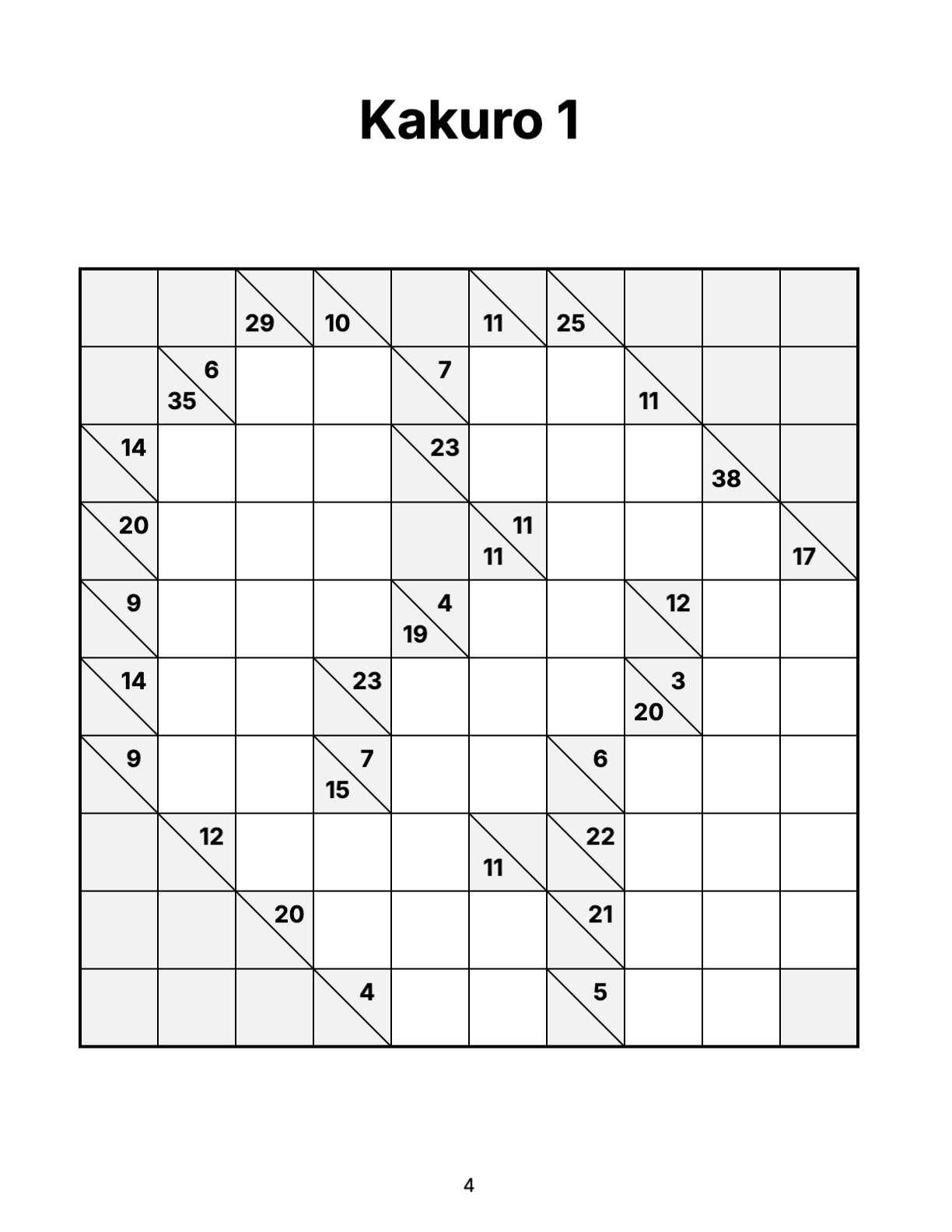
3 in two squares is always 1 and 2, 4 in two is 1 and 3, 16 in two is 7 and 9 and 17 in two is 8 and 9; 6 in three is 1, 2 and 3 and 24 in three is 7, 8 and 9. Start with these.
Write a digit from 1 to 9 in every white square, so that each run adds up to the sum before it and no digit repeats in a run.
The grid has white squares and clue squares. A clue square shows the sum of the white squares after it: the across sum above its diagonal, the down sum below it.
Write a digit from 1 to 9 in every white square.
The digits of each run, the white squares across or down between two clue squares, add up to its sum.
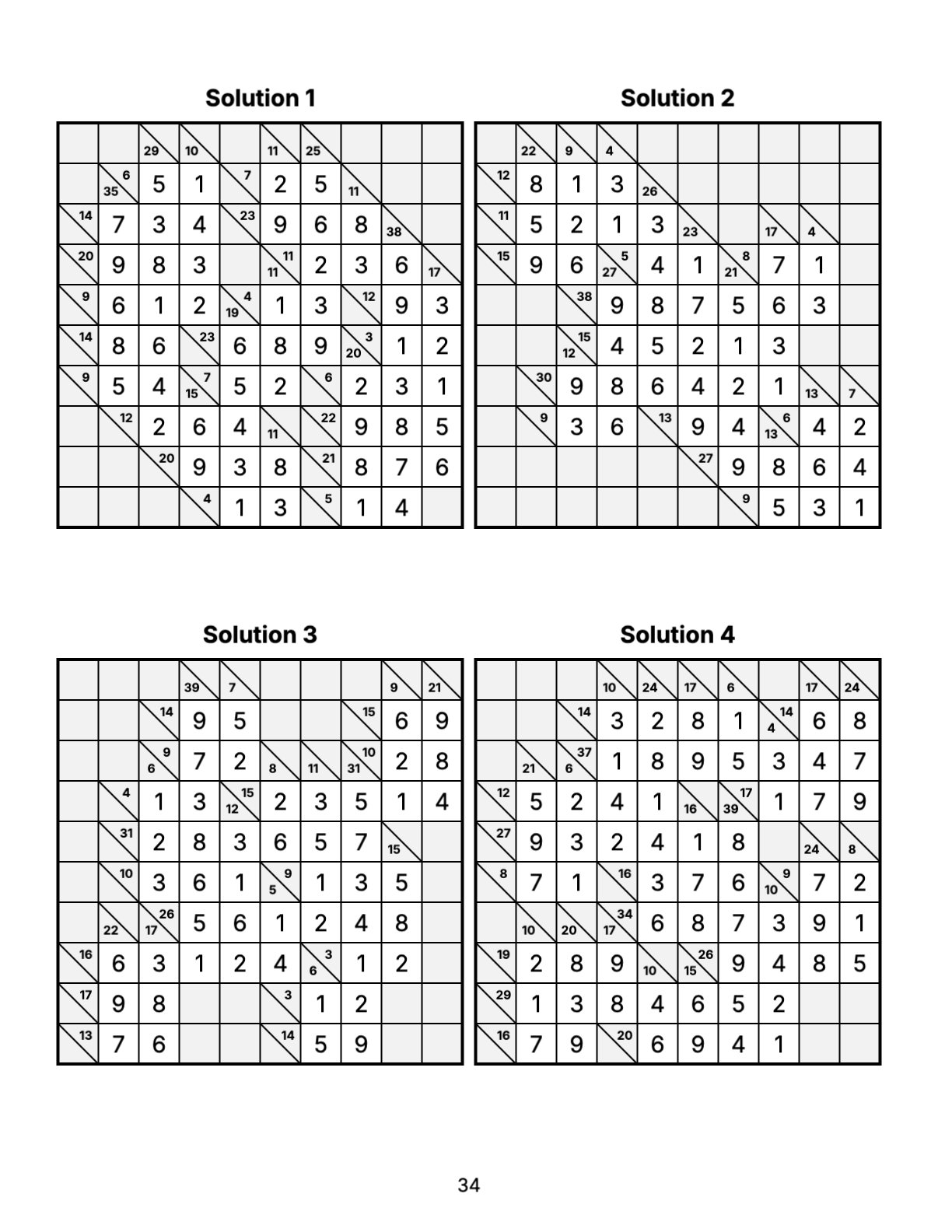
No digit repeats within a run. Every puzzle has exactly one solution.
Start with the first way and move on when it gives nothing new.
3 in two squares is always 1 and 2, 4 in two is 1 and 3, 16 in two is 7 and 9 and 17 in two is 8 and 9; 6 in three is 1, 2 and 3 and 24 in three is 7, 8 and 9. Start with these.
Every white square belongs to an across and a down run, so only a digit both runs can use fits. A 3 in two (1 or 2) crossing a 4 in two (1 or 3) leaves the 1.
When every set of digits a run can still use needs a digit and only one square of the run can take it, the digit goes there.
A digit stays in a square only when the other squares of the run can still take different digits that complete the sum. Once a few squares are known, a long run often has only one way left.
When a square has two candidates, follow one of them in your head: if a sum breaks a few steps later, the other one is right. Every puzzle has one solution, so this never needs a guess.
Who made Kakuro, when and where, and its other names: puzzle types.
Print-ready Kakuro books for Amazon KDP, every puzzle with its answer key.
Kakuro book generatorJust one page? Free Kakuro Puzzle Generator